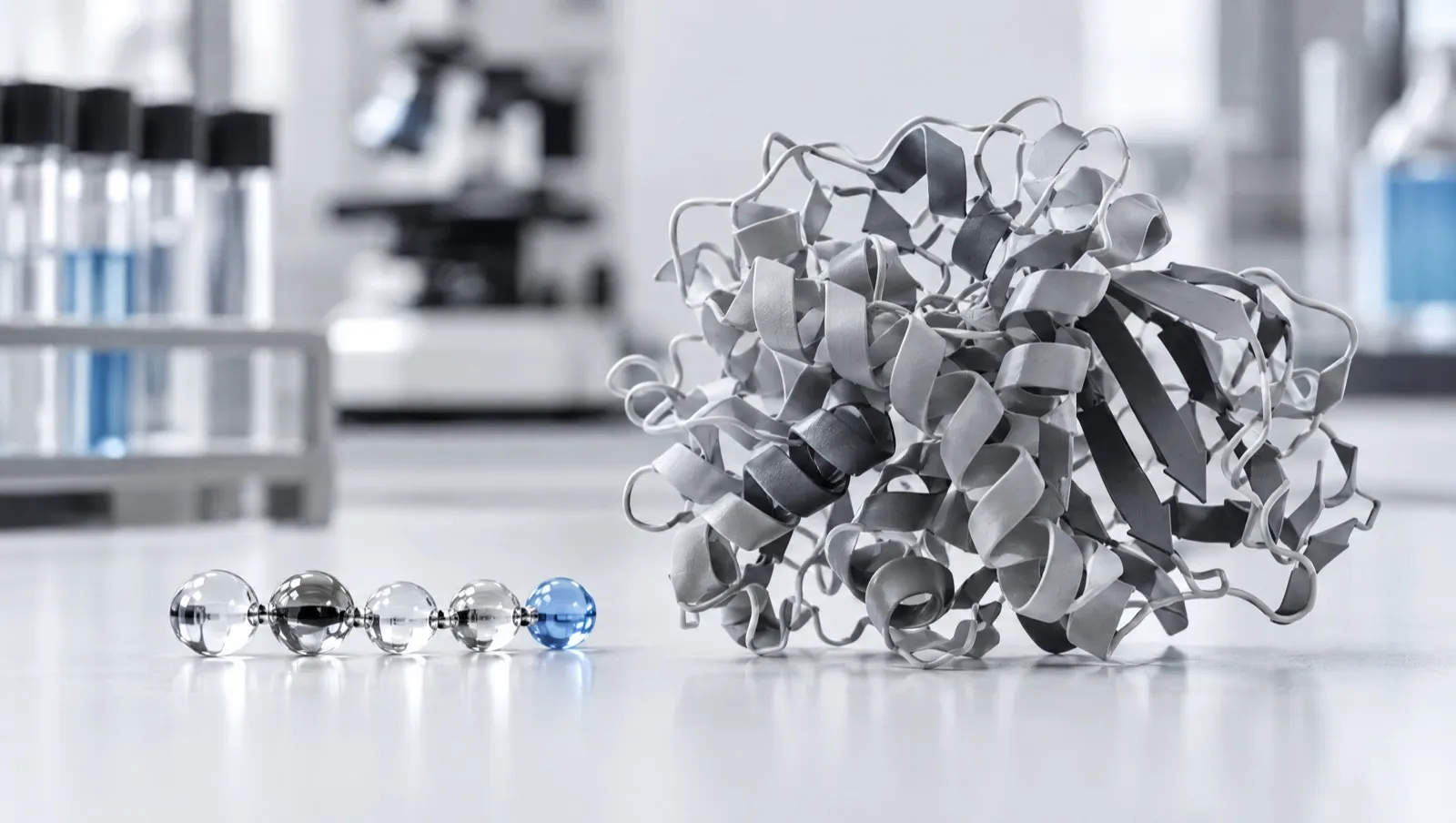
In plain English
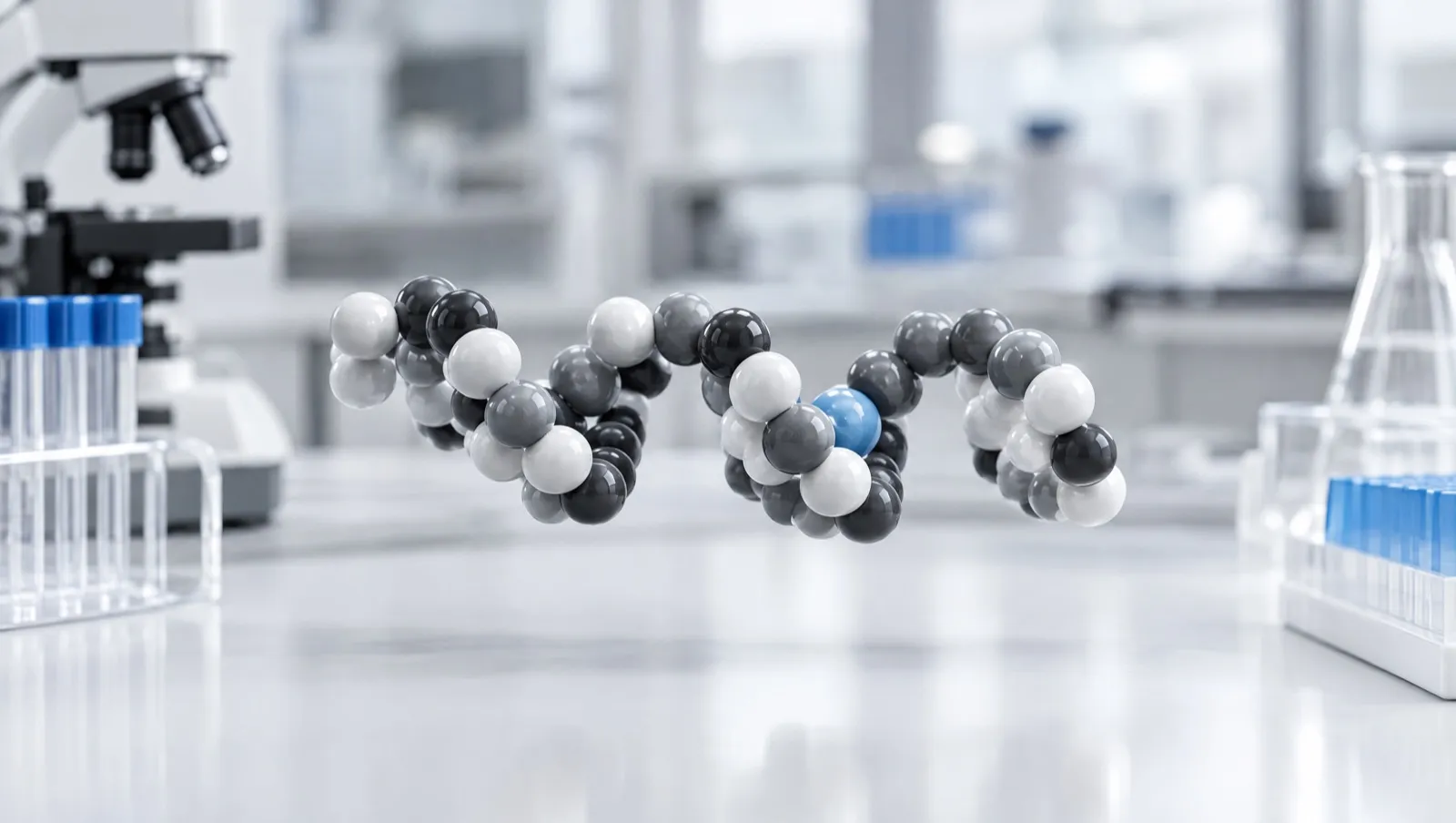
Think of amino acids as single beads. A few beads joined together make a peptide. Many beads joined together, with the string folded into a fixed shape, make a protein [1, 2].
Scientists do not agree on one exact number where a peptide becomes a protein. The international naming rules say chains of more than about 50 amino acids are usually called proteins, but they also say that authors “differ greatly” on this [2]. A US regulation uses more than 40 amino acids as its cut-off [3].
Size is not the only difference. Long proteins usually fold into a stable shape. Short peptides often do not have a fixed shape and can be floppy in solution [4].
Insulin, at 51 amino acids, sits right on the border. It is often called a peptide hormone, but it counts as a protein under the US rule [3, 5].
The short version
- Amino acid: one building block [1].
- Peptide: a short chain of amino acids [1, 2].
- Protein: a long chain with a stable folded shape [2, 4].
At a glance
| Amino acid | Peptide | Protein | |
|---|---|---|---|
| What it is | A single building block with an amino group, a carboxyl group and a side chain [6] | A chain of amino acids linked by peptide bonds [2] | A long chain, or several associated chains, of amino acids [2, 3] |
| Typical size | One residue (glycine is about 75 g/mol) [7] | Therapeutic peptides typically about 500–5,000 Da [4] | Larger; growth hormone’s mature chain is 191 residues [8] |
| Structure | n/a | Natural peptides often lack the stabilising secondary and tertiary structure of proteins [4] | A defined folded three-dimensional structure |
| Example | Glycine [7] | Glutathione (3 residues), oxytocin (9) [9, 10] | Growth hormone (somatotropin) [8] |
What is an amino acid?
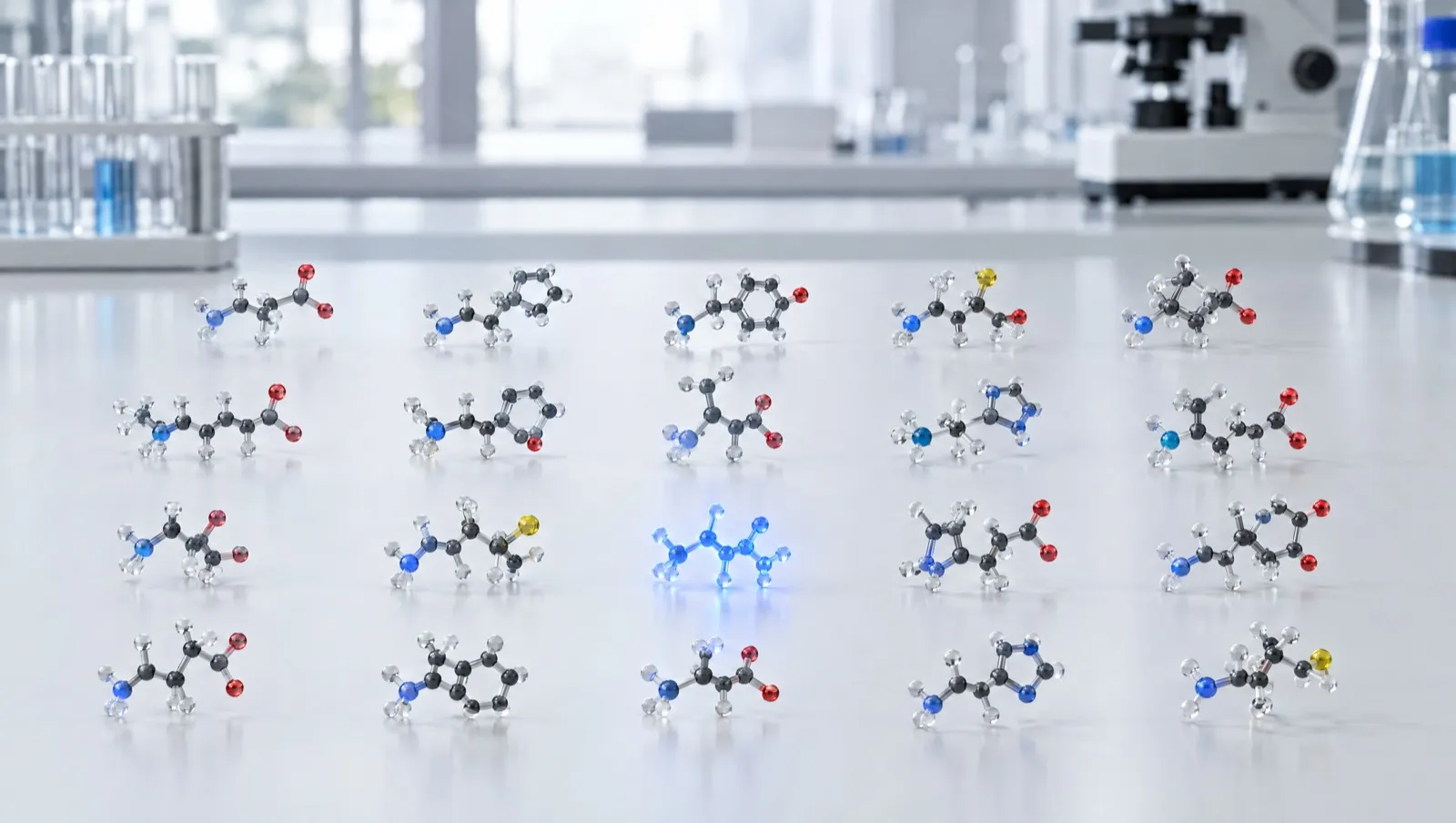
An amino acid is a small molecule with an α-carboxyl group, an α-amino group and a side chain, called the R group. Twenty standard amino acids build proteins, and they are also the building blocks of peptides [6]. Each one has an official three-letter and one-letter code, such as Gly or G for glycine [2].
On its own, an amino acid is not a peptide. It becomes part of one when its carboxyl group forms an amide bond with the amino group of another amino acid. For more detail, see Amino Acids: The 20 Building Blocks of Peptides.
What is a peptide?
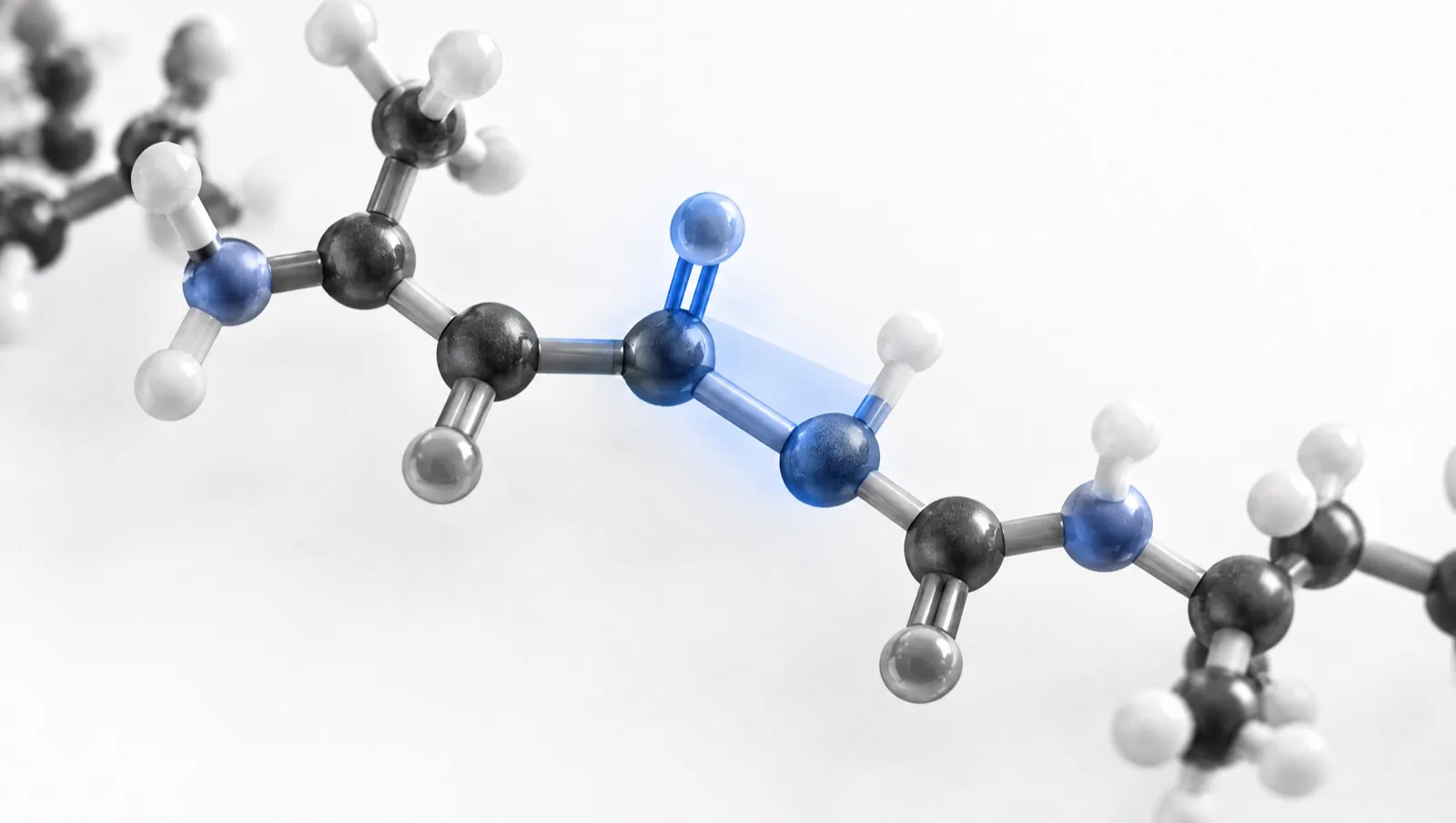
The IUPAC-IUB naming rules define a peptide as any compound produced by amide formation between a carboxyl group of one amino acid and an amino group of another. The amide bonds in peptides may be called peptide bonds [2].
Once an amino acid is built into a chain, it loses the elements of water and becomes an amino-acid residue [2]. Peptide lengths are therefore counted in residues.
Naming peptides by length
| Term | Meaning |
|---|---|
| Dipeptide, tripeptide, tetrapeptide… | 2, 3, 4… residues; a number prefix gives the exact count [2] |
| Oligopeptide | Fewer than about 10–20 residues [2] |
| Polypeptide | More than that [2] |
| Protein | Usually a polypeptide of specific sequence with more than about 50 residues, though authors differ [2] |
Some real examples help:
- Glutathione is a tripeptide, γ-glutamylcysteinylglycine. Its first link uses the side-chain carboxyl of glutamic acid rather than the usual backbone carboxyl, so it is described as a γ-glutamyl peptide [2, 9].
- Oxytocin is a nonapeptide. Its sequence is Cys-Tyr-Ile-Gln-Asn-Cys-Pro-Leu-Gly-NH₂, with a disulfide bond joining the two cysteines into a ring. Its molecular formula is C₄₃H₆₆N₁₂O₁₂S₂, about 1007.2 g/mol [10].
- Glucagon is a 29-amino-acid polypeptide hormone. In one spectroscopy study of glucagon products, about half of the structure was classed as “unordered”, with only about 14–17% α-helix [11].
What is a protein?
A protein is a long amino acid chain, or several chains working together, that folds into a defined three-dimensional shape. That shape depends on secondary structure, mainly α-helices and β-strands, which form through hydrogen bonds along the chain’s backbone [12]. Higher-order folding, called tertiary structure, can also be probed with spectroscopic methods such as circular dichroism [12].
Two well-characterised human examples from the UniProt protein database:
- Growth hormone (somatotropin). The gene product is 217 residues long. The first 26 are a signal sequence that is removed, leaving a mature chain of 191 residues held together by two internal disulfide bonds [8].
- Insulin. The gene product is 110 residues long. It is processed into a B chain of 30 residues and an A chain of 21 residues, joined by two disulfide bonds between the chains, with a third disulfide inside the A chain [5].
Where is the line between a peptide and a protein?
There is no single scientific line. Different sources draw it in different places.
| Source | Where it draws the line |
|---|---|
| IUPAC-IUB nomenclature (1983) | Chains of specific sequence with more than about 50 residues are “usually known as proteins”, but authors differ greatly [2] |
| US Code of Federal Regulations, 21 CFR 600.3(h)(6) | A protein is an alpha amino acid polymer of specific, defined sequence greater than 40 amino acids. When two or more chains associate as they do in nature, the residues in all chains are counted together [3] |
| Therapeutic peptide reviews | Typically about 500–5,000 Da, with the emphasis on structure: natural peptides often lack stabilising secondary and tertiary structure [4] |
Insulin shows why this matters. Its two chains total 51 residues [5]. That is close to the IUPAC rule of thumb and above the US regulatory threshold, which counts associated chains together [2, 3]. So insulin is often described as a peptide hormone in science writing but falls under the US definition of a protein for regulatory purposes.
The practical point is that “peptide” and “protein” are descriptive labels. When a document uses either word, check which definition it is using.
Why the difference matters in the laboratory
Size and structure change how a molecule behaves.
- Stability. Because short peptides often lack a stabilising folded structure, their amide bonds are more exposed to enzymes and to the environment. A 2022 review describes natural peptides as chemically and physically unstable, with short half-lives in vivo [4]. See Why Peptides Break Down.
- Synthesis route. Chemical synthesis of peptides under about 50 residues is now relatively routine, but longer chains remain challenging. Human insulin and growth hormone are examples made with recombinant DNA technology instead [4]. See How Peptides Are Made.
- Analysis. Peptide identity is usually checked by mass spectrometry and purity by HPLC. Folded proteins may also need tests of higher-order structure, such as circular dichroism, which reports secondary-structure content [12]. See How to Read a Peptide COA.
- Medicines. More than 80 peptide drugs have reached the market worldwide since insulin was introduced almost a century ago [13]. Each approved medicine is a specific, regulated product, and research material is not equivalent to it. See Research Peptides vs Approved Medicines.
What this means in Australia
Peptides are defined simply, and regulated as therapeutic goods. The TGA describes peptides as short chains of amino acids, the building blocks of proteins. It states that peptide products are regulated as therapeutic goods under the Therapeutic Goods Act 1989. Some peptide medicines, such as insulin products, are approved and included on the Australian Register of Therapeutic Goods (ARTG) [1].
Size labels do not decide legal status. The 40-amino-acid threshold above is a US regulatory definition [3]. In Australia, the Poisons Standard identifies substances by name and, in some cases, by class. For example, it lists “insulin-like growth factors” as a class in Schedule 4 and Appendix D, clause 5, and “growth hormone releasing hormones (GHRHs)” as a class in Schedule 4 and Appendix D, clause 5 [14]. Schedule 4 means prescription-only. Appendix D, clause 5 means possessing the substance without authority is illegal. Whether a class entry captures a specific compound is a legal question.
“Research use only” labels. The TGA has stated that a “research use only” disclaimer does not make supply lawful, and does not change a product’s regulatory status, permit importation, or remove advertising or supply obligations [1].
This is general information, not legal advice. Laws change; check the current Poisons Standard and TGA guidance.
Frequently asked questions
What is the main difference between a peptide and a protein?
Size and structure. Peptides are shorter chains, often without a stable fold, while proteins are longer chains with a defined three-dimensional shape [2, 4].
How many amino acids make a protein?
There is no single answer. IUPAC-IUB guidance says more than about 50 residues is usual, while a US regulation uses more than 40 [2, 3].
Is insulin a peptide or a protein?
Both labels are used. Insulin has 51 residues in two chains [5]. It is often called a peptide hormone, but it meets the US regulatory definition of a protein [3].
Is an amino acid a peptide?
No. A peptide needs at least two amino acids joined by an amide (peptide) bond [2].
What is the difference between an oligopeptide and a polypeptide?
Oligopeptides have fewer than about 10–20 residues; polypeptides have more. The boundary is approximate [2].
References
- Therapeutic Goods Administration. Understanding your responsibilities when importing, compounding and supplying unapproved peptide products. Safety advisory, 13 April 2026. tga.gov.au. Accessed 11 October 2026.
- IUPAC-IUB Joint Commission on Biochemical Nomenclature (JCBN). Nomenclature and symbolism for amino acids and peptides. Recommendations 1983. Biochem J. 1984;219(2):345–373. doi:10.1042/bj2190345. PMID: 6743224. Web version: iupac.qmul.ac.uk/AminoAcid. Accessed 11 October 2026.
- US Code of Federal Regulations. 21 CFR 600.3: Definitions, paragraph (h)(6). Electronic Code of Federal Regulations. ecfr.gov. Accessed 11 October 2026.
- Wang L, Wang N, Zhang W, et al. Therapeutic peptides: current applications and future directions. Signal Transduct Target Ther. 2022;7(1):48. doi:10.1038/s41392-022-00904-4. PMID: 35165272
- UniProt Consortium. UniProtKB entry P01308, Insulin (human). uniprot.org/uniprotkb/P01308/entry. Accessed 11 October 2026.
- Lopez MJ, Mohiuddin SS. Biochemistry, Essential Amino Acids (Archived). In: StatPearls. Treasure Island (FL): StatPearls Publishing; 2024. PMID: 32496725
- National Center for Biotechnology Information. PubChem Compound Summary for CID 750, Glycine. pubchem.ncbi.nlm.nih.gov/compound/750. Accessed 11 October 2026.
- UniProt Consortium. UniProtKB entry P01241, Somatotropin (human growth hormone). uniprot.org/uniprotkb/P01241/entry. Accessed 11 October 2026.
- National Center for Biotechnology Information. PubChem Compound Summary for CID 124886, Glutathione. pubchem.ncbi.nlm.nih.gov/compound/124886. Accessed 11 October 2026.
- National Center for Biotechnology Information. PubChem Compound Summary for CID 439302, Oxytocin. pubchem.ncbi.nlm.nih.gov/compound/439302. Accessed 11 October 2026.
- Bao Z, Cheng YC, Wei JJ, Luo MZ, Zhang JY. Secondary structure characterization of glucagon products by circular dichroism and nuclear magnetic resonance spectroscopy. Molecules. 2022;27(22):7805. doi:10.3390/molecules27227805. PMID: 36431905
- Kuril AK, Vashi A, Subbappa PK. A comprehensive guide for secondary structure and tertiary structure determination in peptides and proteins by circular dichroism spectrometer. J Pept Sci. 2025;31(1):e3648. doi:10.1002/psc.3648. PMID: 39135381
- Muttenthaler M, King GF, Adams DJ, Alewood PF. Trends in peptide drug discovery. Nat Rev Drug Discov. 2021;20(4):309–325. doi:10.1038/s41573-020-00135-8. PMID: 33536635
- Therapeutic Goods (Poisons Standard—October 2026) Instrument 2026 (F2026L01327). Federal Register of Legislation. legislation.gov.au/F2026L01327/latest/text. Accessed 11 October 2026.
Important information and disclaimer
General information only. This article is published for general educational and informational purposes. It summarises published scientific literature and public regulatory information as at the “last reviewed” date shown above. It is not medical, health, pharmaceutical, veterinary or legal advice, and it must not be relied on as a substitute for advice from a qualified professional about your circumstances.
Not for human or animal use. Nothing in this article recommends, endorses or describes the use of any substance in humans or animals. Findings from cell, animal or early human studies cannot be assumed to apply to people. The compounds discussed have not been evaluated by the Therapeutic Goods Administration (TGA) for safety, quality or efficacy unless the article expressly states otherwise. Any research materials offered by Iconic Peptides are supplied solely for in vitro and laboratory research.
No therapeutic claims. Iconic Peptides makes no claim that any product treats, cures, prevents, alleviates or diagnoses any disease, condition or symptom. References to published studies, clinical trials or medicines approved by regulators are factual descriptions of the scientific and regulatory record. They are not representations about any product we supply.
Regulatory status. Many peptides are scheduled substances under the Poisons Standard. Some are prescription-only (Schedule 4), and some may not be possessed without authority (Appendix D). The TGA has stated that a “research use only” label does not make supply lawful, change a product’s regulatory status, or remove advertising or supply obligations. State and territory laws may also apply. You are responsible for knowing and complying with all laws that apply to you. Regulatory information in this article may change after the review date.
Accuracy and third-party sources. We take care to cite and verify every source, but we do not warrant that this article is complete, current or error-free. Citing a study or organisation does not mean that its authors or that organisation endorse Iconic Peptides.
Limitation of liability. To the maximum extent permitted by law, Iconic Peptides, its owners, employees and contributors exclude all liability for any loss, damage, injury or expense, whether direct, indirect or consequential, arising from use of or reliance on this article or any misuse of any product. Nothing in this disclaimer excludes, restricts or modifies any right or remedy under the Australian Consumer Law that cannot lawfully be excluded.
Age restriction. This website is intended for adults aged 18 and over.