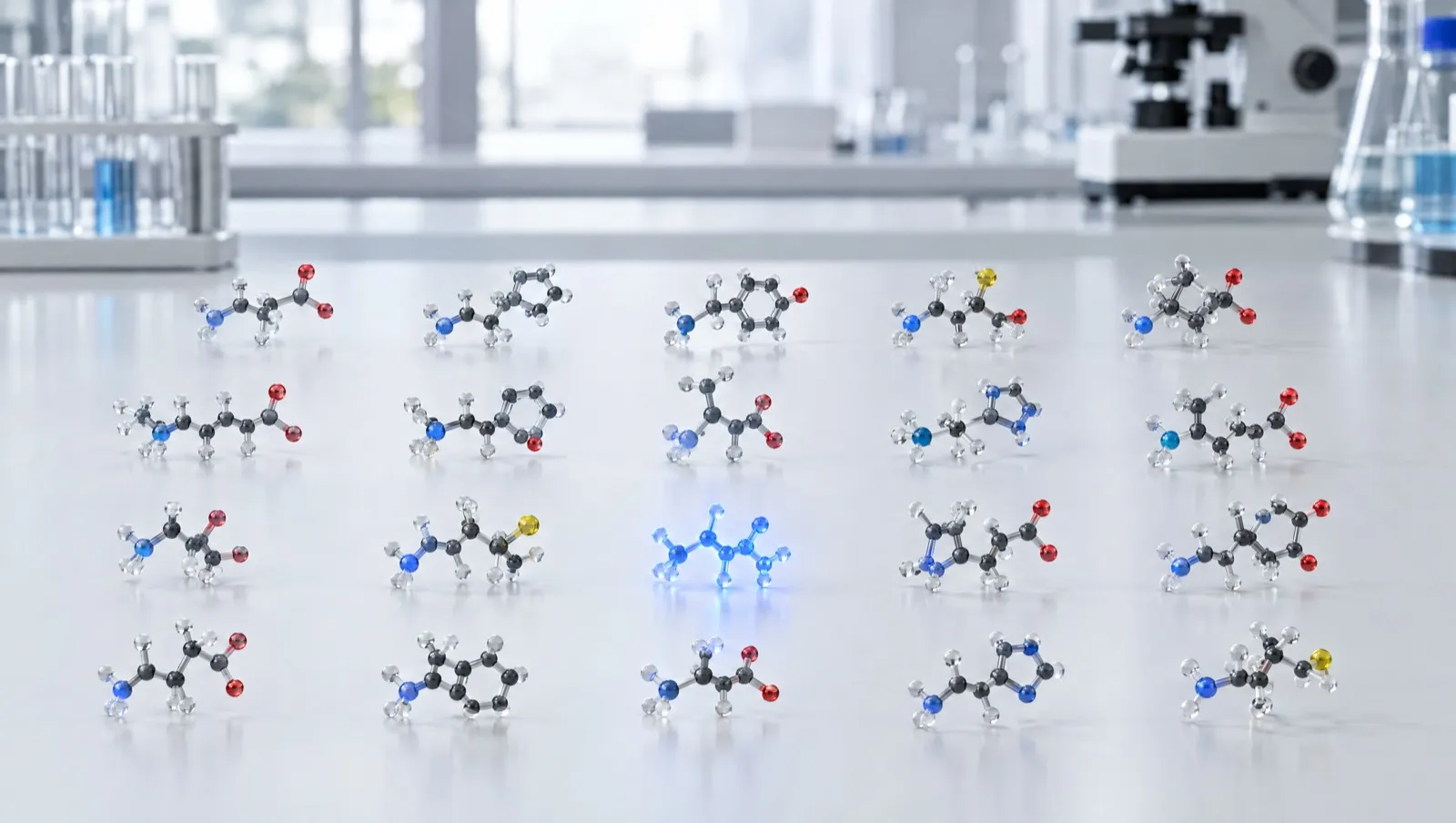
In plain English
Amino acids are small molecules. Every one has the same basic frame, plus one part that changes. That changing part is called the side chain (the “R group”). It decides whether the amino acid is small or bulky, attracted to water or repelled by it, or carries an electric charge [1].
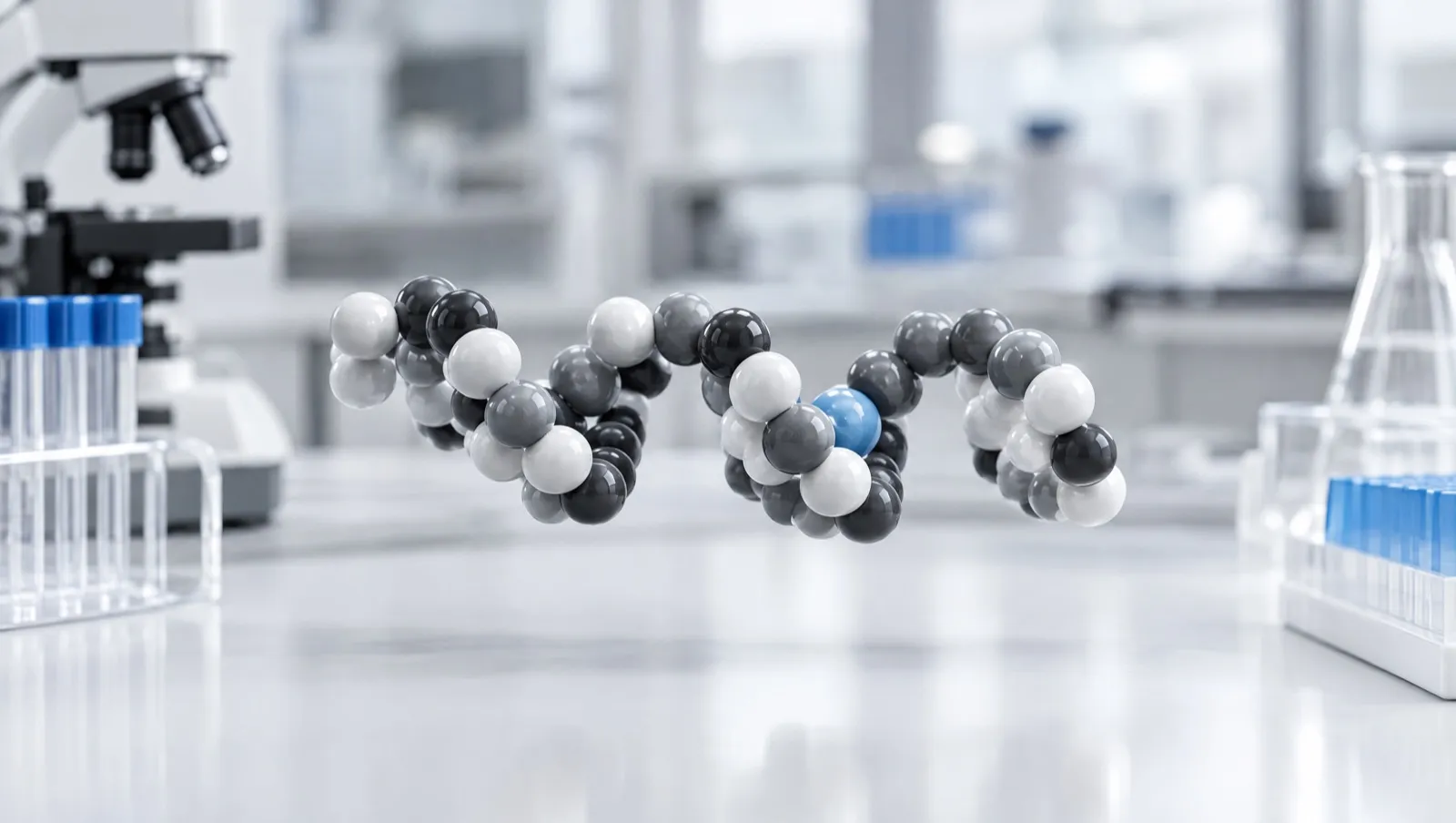
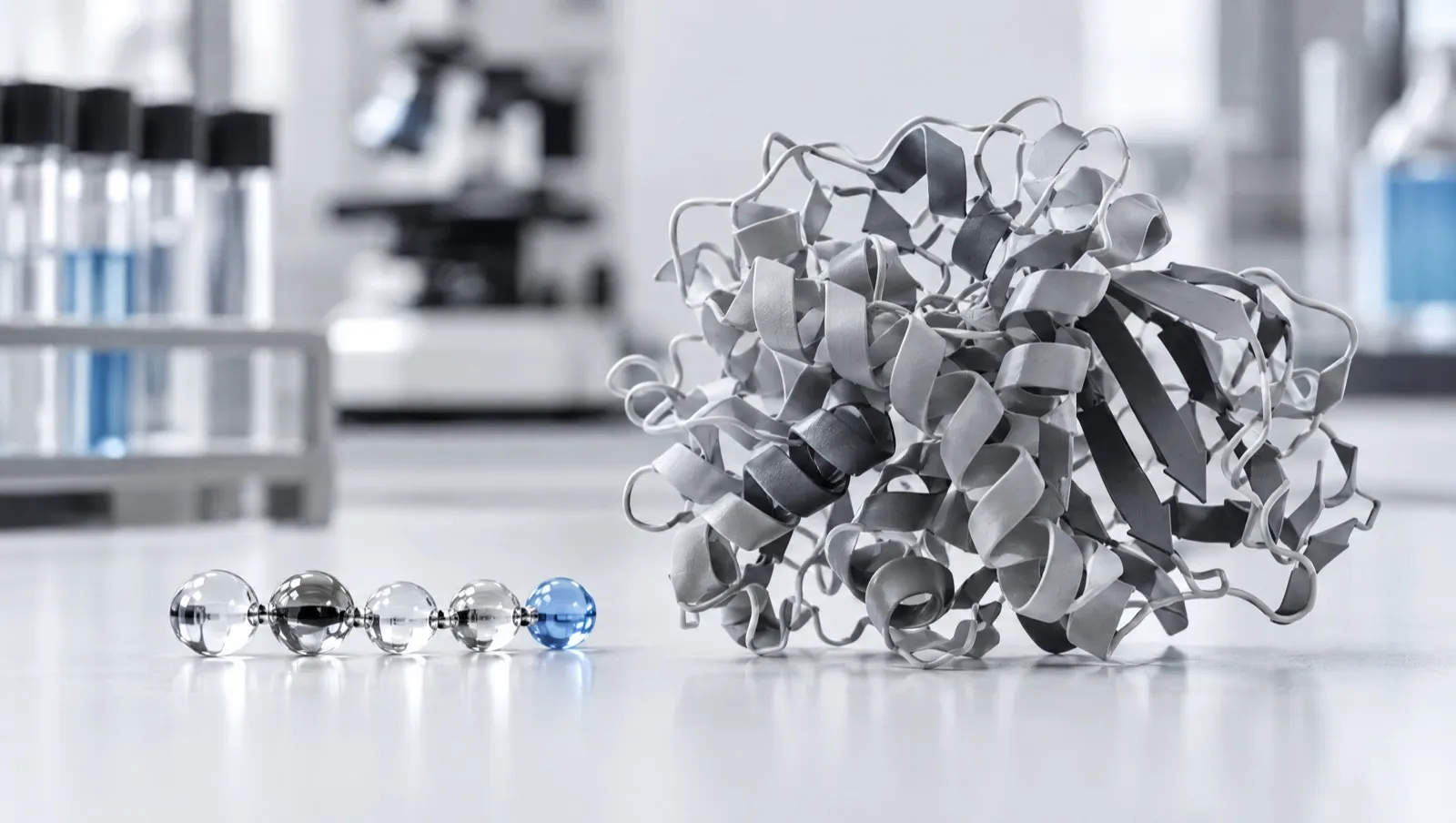
Living things use 20 standard amino acids to build proteins [1, 2]. When amino acids link up in a chain, they form a peptide (a short chain) or a protein (a long, folded chain). Each amino acid has a short code, such as Gly or G for glycine, so long chains can be written down quickly [2].
Most amino acids come in two mirror-image forms, called L and D. Natural proteins are built from the L form [2]. Laboratories can also use D forms and other unusual amino acids when they make peptides [3].
This is basic chemistry, not a claim about any product. Knowing the building blocks makes it easier to read a peptide sequence or a lab report.
The short version
- Amino acids have an amino group, a carboxyl group and a side chain [1].
- 20 standard amino acids build proteins [1, 2].
- Natural proteins use the L form [2].
Key facts
| Property | Detail |
|---|---|
| Common frame | An α-carboxyl group, an α-amino group and a side chain (R group) on the same carbon [1] |
| Standard set | 20 amino acids incorporated into protein under genetic (mRNA) direction [2] |
| Exception in the frame | Proline has a secondary amino group, closed into a ring [1, 2] |
| Mirror-image forms | Chiral amino acids exist as L and D forms; only L is used in protein biosynthesis [2] |
| Simplest example | Glycine, C₂H₅NO₂, about 75.07 g/mol, which has no mirror-image form [4] |
| Extra natural amino acids | Selenocysteine and pyrrolysine, added to the standard 20 in some organisms [1, 5] |
| Codes | Three-letter (Gly) and one-letter (G) symbols set by IUPAC-IUB [2] |
What is an amino acid?
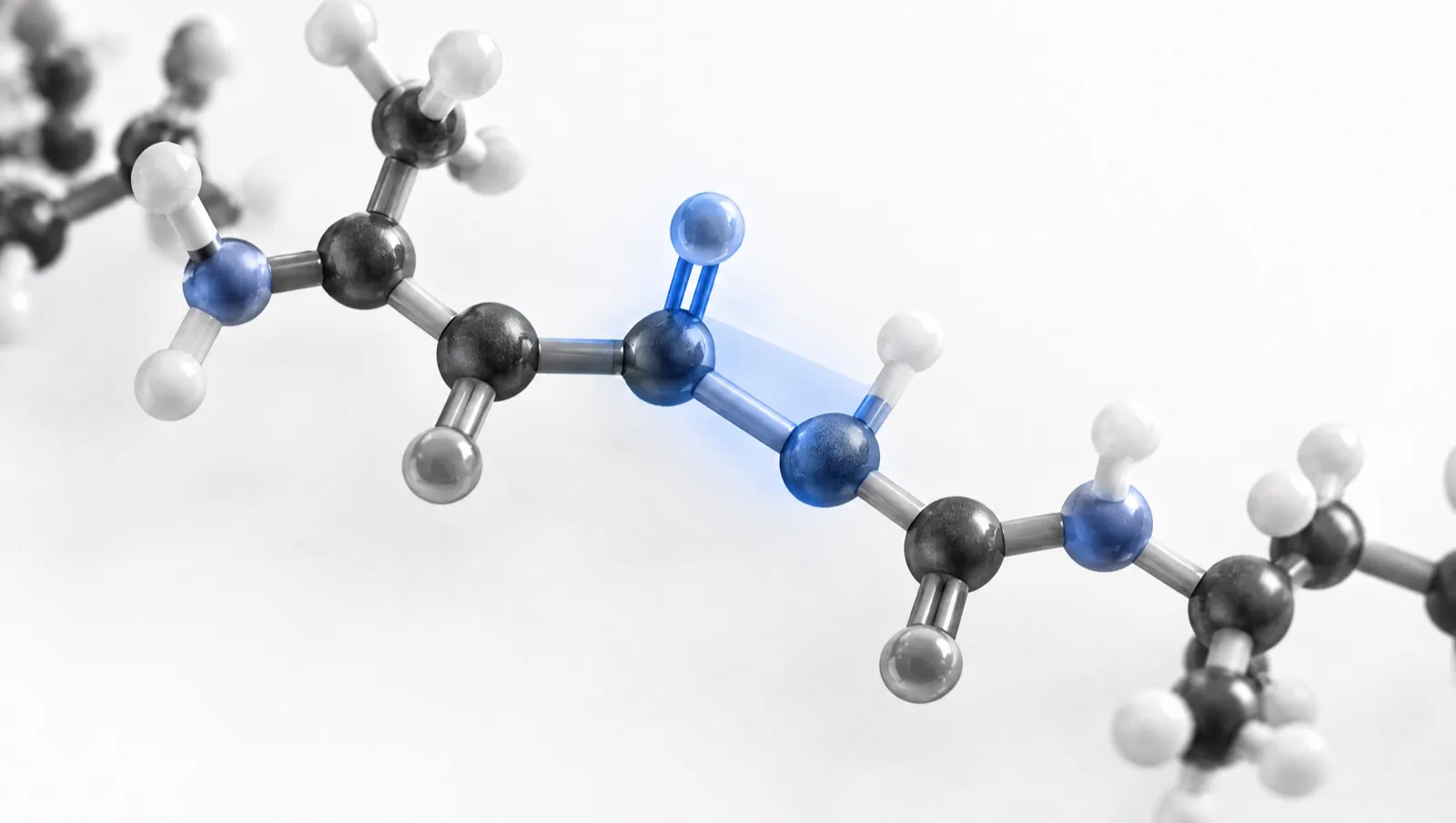
An amino acid is a molecule with two reactive ends and a side chain. One end is an amino group (–NH₂). The other is a carboxyl group (–COOH). Both attach to a central carbon, called the α-carbon, which also carries the side chain [1].
In water, these groups usually carry charges. The international naming rules note that the “neutral” formulas in textbooks are a convention, not the form most amino acid molecules actually take in solution [2].
The side chain is what makes each amino acid different. In glycine it is a single hydrogen atom, so glycine is the smallest amino acid [2, 4]. In tryptophan it is a large double-ring structure [2].
The 20 standard amino acids
The table below follows the IUPAC-IUB list of amino acids incorporated into protein under mRNA direction, with their official symbols [2]. The side-chain group uses the common three-way split into neutral, acidic and basic side chains [1].
| Amino acid | 3-letter | 1-letter | Side chain group |
|---|---|---|---|
| Alanine | Ala | A | Neutral |
| Arginine | Arg | R | Basic |
| Asparagine | Asn | N | Neutral (amide) |
| Aspartic acid | Asp | D | Acidic |
| Cysteine | Cys | C | Neutral (thiol, contains sulfur) |
| Glutamine | Gln | Q | Neutral (amide) |
| Glutamic acid | Glu | E | Acidic |
| Glycine | Gly | G | Neutral (hydrogen only) |
| Histidine | His | H | Basic |
| Isoleucine | Ile | I | Neutral |
| Leucine | Leu | L | Neutral |
| Lysine | Lys | K | Basic |
| Methionine | Met | M | Neutral (contains sulfur) |
| Phenylalanine | Phe | F | Neutral (aromatic ring) |
| Proline | Pro | P | Neutral (ring; secondary amine) |
| Serine | Ser | S | Neutral (hydroxyl) |
| Threonine | Thr | T | Neutral (hydroxyl) |
| Tryptophan | Trp | W | Neutral (aromatic double ring) |
| Tyrosine | Tyr | Y | Neutral (aromatic ring with hydroxyl) |
| Valine | Val | V | Neutral |
Why some one-letter codes look odd
Six amino acids use their first letter without conflict: cysteine, histidine, isoleucine, methionine, serine and valine. Where two names share a first letter, the letter went to the simpler or more common amino acid. Other codes were chosen as memory aids, such as F for phenylalanine (“ph” sounds like “f”) and R for arginine (“arg”) [2]. A full guide to writing sequences is in How to Read a Peptide Sequence.
Side chains: why chemistry differs between amino acids
Side chains control how an amino acid behaves inside a peptide.
- Acidic side chains (aspartic acid, glutamic acid) carry an extra carboxyl group [2].
- Basic side chains (lysine, arginine, histidine) carry extra nitrogen-containing groups that can take up a proton [2].
- Sulfur-containing side chains belong to cysteine and methionine [2]. Two cysteines can link through a disulfide bond, as in the ring of oxytocin [6].
- Hydrophobic or hydrophilic. Some side chains are drawn to water and others are not. Researchers have measured side-chain hydrophobicity using reversed-phase HPLC of designed model peptides at pH 2 and pH 7. They describe this property as fundamental to protein folding, peptide oligomerisation, and the purification and characterisation of peptides [7].
That last point links amino acid chemistry to the laboratory. HPLC separates peptides partly by how hydrophobic they are, which is one reason why a peptide’s sequence affects how it behaves on a purity test. See HPLC, LC-MS and UV-Vis.
L and D forms: amino acid chirality
All standard amino acids except glycine have a chiral α-carbon. That means they exist in two mirror-image forms, labelled L and D. For chiral amino acids, only the L form is used in protein biosynthesis [2].
The L/D labels are not the same system as the R/S labels used elsewhere in chemistry. PubChem names L-alanine as (2S)-2-aminopropanoic acid, but L-cysteine as (2R)-2-amino-3-sulfanylpropanoic acid [8, 9]. Both are L amino acids.
D-amino acids are not just laboratory curiosities. A 2017 review describes D-amino acids in microorganisms, plants and mammals, including D-serine and D-aspartate in mammalian tissues [10].
For synthetic peptides, chirality matters in two ways:
- By design. Peptide chemists sometimes swap an L-amino acid for its D form at a site where enzymes cut the chain. A 2022 review describes this as an effective strategy for extending plasma half-life, but notes that D-substituted peptides rarely keep effective biological activity [3].
- By accident. Racemisation (conversion of L to D) is one of the most common side reactions in amino acids and peptides. D-isomer impurities can form during synthesis or come in with the starting materials. Because D and L forms have identical physical and chemical properties apart from their configuration, they are hard to separate and measure [11].
See Common Peptide Impurities for how this shows up on a test report.
Beyond the standard 20
Nature uses more amino acids than the standard 20.
- Selenocysteine has the one-letter code U [2]. It occurs at the active site of several enzymes, including glutathione peroxidase [1].
- Pyrrolysine is used in some methanogenic archaea and bacteria. It is not present in humans [1].
- Many more in proteins. A review counted more than 140 amino acids found in natural proteins. Of these, only selenocysteine and pyrrolysine are known to have been added to the standard 20-member genetic alphabet [5].
Synthetic peptides can go further still. Chemists can include D-amino acids, methylated amino acids and β-amino acids in a sequence, often to make the peptide harder for enzymes to break down [3]. These changes are covered in Peptide Modifications Explained.
From amino acids to peptides
When the carboxyl group of one amino acid reacts with the amino group of the next, they form an amide bond, called a peptide bond. The elements of water are removed, and what remains of each amino acid in the chain is called an amino-acid residue [2]. Repeat the reaction and the chain grows.
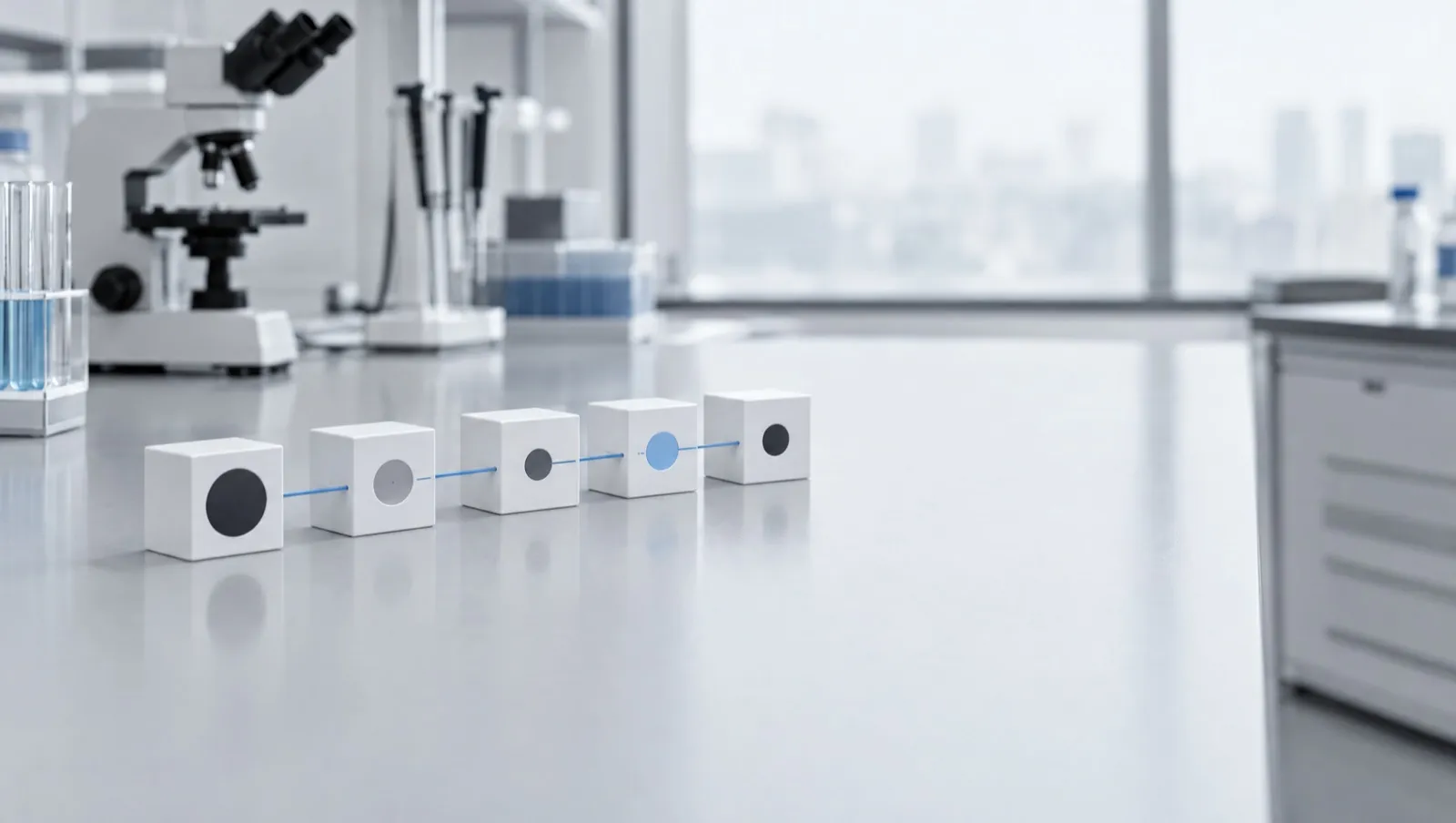
The chain has two different ends. The N-terminus has the free amino group, and the C-terminus has the free carboxyl group. By convention, sequences are written from the N-terminus on the left to the C-terminus on the right [2]. For the next steps, see Peptide Bonds and Peptide Structure Explained and Peptides vs Proteins vs Amino Acids.
What this means in Australia
Peptide products are regulated as therapeutic goods. The TGA describes peptides as short chains of amino acids, the building blocks of proteins. It states that peptide products are regulated as therapeutic goods under the Therapeutic Goods Act 1989, and that unapproved peptide products are those not included on the Australian Register of Therapeutic Goods (ARTG) [12].
Familiar building blocks do not change a peptide’s status. A peptide made entirely of standard amino acids can still be a scheduled substance. For example, the Poisons Standard (October 2026) names BPC-157 and TB-500 in Schedule 4 and Appendix D, clause 5 [13]. Schedule 4 means prescription-only. Appendix D, clause 5 means possessing the substance without authority is illegal.
“Research use only” labels. The TGA has stated that a “research use only” disclaimer does not make supply lawful, and does not change a product’s regulatory status, permit importation, or remove advertising or supply obligations [12]. See Are Peptides Legal in Australia?.
This is general information, not legal advice. Laws change; check the current Poisons Standard and TGA guidance.
Frequently asked questions
What are amino acids in simple terms?
Amino acids are small molecules with an amino group, a carboxyl group and a side chain. They are the building blocks of peptides and proteins [1].
How many amino acids are there?
Twenty standard amino acids are incorporated into proteins under genetic direction [2]. Selenocysteine and pyrrolysine are also used by some organisms, and more than 140 amino acids have been found in natural proteins [1, 5].
What is the difference between L and D amino acids?
They are mirror images of each other. Only L-amino acids are used in protein biosynthesis, but D-amino acids occur in nature and can be built into synthetic peptides [2, 3, 10].
Why is glycine different?
Glycine’s side chain is a single hydrogen atom, so it is the smallest amino acid and has no mirror-image form [2, 4].
What do the one-letter codes stand for?
They are IUPAC-IUB abbreviations, such as A for alanine and K for lysine. Some letters are first letters, and others were assigned to avoid clashes [2].
References
- Lopez MJ, Mohiuddin SS. Biochemistry, Essential Amino Acids (Archived). In: StatPearls. Treasure Island (FL): StatPearls Publishing; 2024. PMID: 32496725
- IUPAC-IUB Joint Commission on Biochemical Nomenclature (JCBN). Nomenclature and symbolism for amino acids and peptides. Recommendations 1983. Biochem J. 1984;219(2):345–373. doi:10.1042/bj2190345. PMID: 6743224. Web version: iupac.qmul.ac.uk/AminoAcid. Accessed 11 October 2026.
- Wang L, Wang N, Zhang W, et al. Therapeutic peptides: current applications and future directions. Signal Transduct Target Ther. 2022;7(1):48. doi:10.1038/s41392-022-00904-4. PMID: 35165272
- National Center for Biotechnology Information. PubChem Compound Summary for CID 750, Glycine. pubchem.ncbi.nlm.nih.gov/compound/750. Accessed 11 October 2026.
- Ambrogelly A, Palioura S, Söll D. Natural expansion of the genetic code. Nat Chem Biol. 2007;3(1):29–35. doi:10.1038/nchembio847. PMID: 17173027
- National Center for Biotechnology Information. PubChem Compound Summary for CID 439302, Oxytocin. pubchem.ncbi.nlm.nih.gov/compound/439302. Accessed 11 October 2026.
- Mant CT, Kovacs JM, Kim HM, Pollock DD, Hodges RS. Intrinsic amino acid side-chain hydrophilicity/hydrophobicity coefficients determined by reversed-phase high-performance liquid chromatography of model peptides: comparison with other hydrophilicity/hydrophobicity scales. Biopolymers. 2009;92(6):573–595. doi:10.1002/bip.21316. PMID: 19795449
- National Center for Biotechnology Information. PubChem Compound Summary for CID 5950, L-Alanine. pubchem.ncbi.nlm.nih.gov/compound/5950. Accessed 11 October 2026.
- National Center for Biotechnology Information. PubChem Compound Summary for CID 5862, L-Cysteine. pubchem.ncbi.nlm.nih.gov/compound/5862. Accessed 11 October 2026.
- Genchi G. An overview on D-amino acids. Amino Acids. 2017;49(9):1521–1533. doi:10.1007/s00726-017-2459-5. PMID: 28681245
- Badgujar D, Paritala ST, Matre S, Sharma N. Enantiomeric purity of synthetic therapeutic peptides: a review. Chirality. 2024;36(3):e23652. doi:10.1002/chir.23652. PMID: 38448043
- Therapeutic Goods Administration. Understanding your responsibilities when importing, compounding and supplying unapproved peptide products. Safety advisory, 13 April 2026. tga.gov.au. Accessed 11 October 2026.
- Therapeutic Goods (Poisons Standard—October 2026) Instrument 2026 (F2026L01327). Federal Register of Legislation. legislation.gov.au/F2026L01327/latest/text. Accessed 11 October 2026.
Important information and disclaimer
General information only. This article is published for general educational and informational purposes. It summarises published scientific literature and public regulatory information as at the “last reviewed” date shown above. It is not medical, health, pharmaceutical, veterinary or legal advice, and it must not be relied on as a substitute for advice from a qualified professional about your circumstances.
Not for human or animal use. Nothing in this article recommends, endorses or describes the use of any substance in humans or animals. Findings from cell, animal or early human studies cannot be assumed to apply to people. The compounds discussed have not been evaluated by the Therapeutic Goods Administration (TGA) for safety, quality or efficacy unless the article expressly states otherwise. Any research materials offered by Iconic Peptides are supplied solely for in vitro and laboratory research.
No therapeutic claims. Iconic Peptides makes no claim that any product treats, cures, prevents, alleviates or diagnoses any disease, condition or symptom. References to published studies, clinical trials or medicines approved by regulators are factual descriptions of the scientific and regulatory record. They are not representations about any product we supply.
Regulatory status. Many peptides are scheduled substances under the Poisons Standard. Some are prescription-only (Schedule 4), and some may not be possessed without authority (Appendix D). The TGA has stated that a “research use only” label does not make supply lawful, change a product’s regulatory status, or remove advertising or supply obligations. State and territory laws may also apply. You are responsible for knowing and complying with all laws that apply to you. Regulatory information in this article may change after the review date.
Accuracy and third-party sources. We take care to cite and verify every source, but we do not warrant that this article is complete, current or error-free. Citing a study or organisation does not mean that its authors or that organisation endorse Iconic Peptides.
Limitation of liability. To the maximum extent permitted by law, Iconic Peptides, its owners, employees and contributors exclude all liability for any loss, damage, injury or expense, whether direct, indirect or consequential, arising from use of or reliance on this article or any misuse of any product. Nothing in this disclaimer excludes, restricts or modifies any right or remedy under the Australian Consumer Law that cannot lawfully be excluded.
Age restriction. This website is intended for adults aged 18 and over.