In plain English
A peptide is a short chain of amino acids. Amino acids are small molecules, and they are the building blocks of proteins. A protein is a much longer chain that folds into a fixed 3D shape [1, 2].
Many peptides are made naturally by living things. Some act as hormones (chemical messengers that carry signals around the body). Insulin and oxytocin are well-known examples [2, 6]. Peptides can also be made in a laboratory, one amino acid at a time [2].
Some peptides are approved medicines. These have been tested in large human trials and checked by a regulator [3]. Many other peptides have only been studied in cells or animals. A peptide sold for laboratory research has not been assessed as a medicine, even if its sequence matches one [1].
“Peptides” covers a large family of different molecules, and findings for one peptide cannot be assumed to apply to another. For any single peptide, the useful questions are: what was studied, in what (cells, animals or people), and how strong is the evidence?
The short version
- Peptides are short chains of amino acids [2].
- Some are natural hormones; some are approved medicines [2, 3].
- Each peptide has its own evidence base.
Key facts
| Property | Detail |
|---|---|
| Definition | Short chains of amino acids, the building blocks of proteins [1] |
| Chemical link | Amino acids joined by amide bonds, also called peptide bonds [2] |
| Typical size (therapeutic peptides) | About 500–5,000 Da [2] |
| Naturally occurring examples | Glutathione (3 amino acids), oxytocin (9), gonadotrophin-releasing hormone (10), GLP-1 (37), insulin (51) [2, 6, 7] |
| How they are made | Chemical synthesis (mainly solid-phase peptide synthesis), recombinant DNA technology, or isolation from natural sources [2] |
| Approved medicines | More than 80 peptide drugs have reached the market worldwide since insulin [3] |
| Australian regulation | Peptide products are regulated as therapeutic goods under the Therapeutic Goods Act 1989 [1] |
What is a peptide?
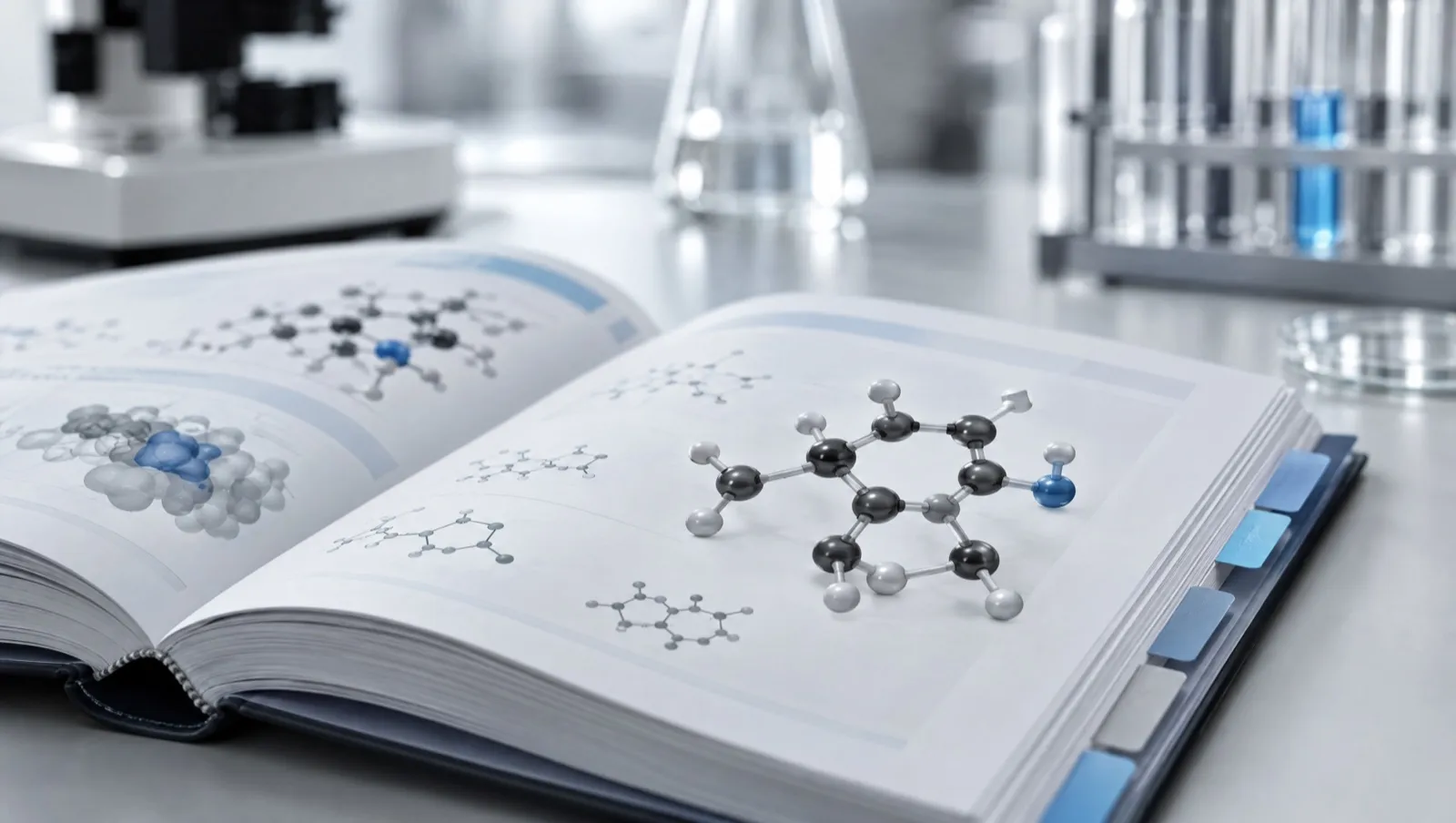
A peptide is a chain of amino acids. Each amino acid has an amino group at one end and a carboxyl group at the other. When the carboxyl group of one amino acid reacts with the amino group of the next, they form an amide bond. Chemists call this link a peptide bond. Add more amino acids in the same way and the chain grows [2].
The order of amino acids is called the sequence. It is usually written left to right, from the free amino end (the N-terminus) to the free carboxyl end (the C-terminus), using three-letter or one-letter codes. For example, the sequence of oxytocin is written CYIQNCPLG in one-letter code [6].
Natural proteins are built from 20 standard (canonical) amino acids [2]. Synthetic peptides can also include non-standard building blocks, such as D-amino acids or chemically modified residues. These are often added to make a peptide more stable [2].
Peptides, proteins and amino acids: what’s the difference?
There is no single official length at which a peptide becomes a protein. In practice, the difference is about size and structure.
| Amino acid | Peptide | Protein | |
|---|---|---|---|
| What it is | A single building block | A short chain of amino acids | A long chain (or several chains) that folds into a stable 3D shape |
| Typical size | One residue | About 500–5,000 Da for therapeutic peptides [2] | Usually much larger; human growth hormone, for example, is 191 amino acids and about 22 kDa [8] |
| Structure | n/a | Short peptides often lack the stabilising secondary and tertiary structure of proteins [2] | Defined folded structure |
| Example | Glycine | Oxytocin, 9 amino acids [6] | Growth hormone [8] |
Insulin, at 51 amino acids, sits near the border. It is usually discussed as a peptide hormone and a peptide drug [2].
Naming by length
Peptides are often named by how many amino acids they contain:
- Dipeptide: 2 amino acids
- Tripeptide: 3 (for example, glutathione [7])
- Oligopeptide: a “few” amino acids (the term is used loosely)
- Nonapeptide: 9 (for example, oxytocin [6])
- Pentadecapeptide: 15 (for example, BPC-157)
- Polypeptide: a longer chain
Where are peptides found in nature?
Peptides do many jobs in living organisms. Many are hormones, chemical messengers released in one part of the body that act on receptors elsewhere. Early peptide drug research focused on natural human hormones such as insulin, oxytocin, vasopressin and gonadotrophin-releasing hormone (GnRH) [2, 3].
A few examples, with what reference databases and reviews describe:
- Glutathione is a tripeptide made of glutamic acid, cysteine and glycine. Reference databases describe it as a cofactor found in humans, mice and bacteria [7].
- Oxytocin is a cyclic nonapeptide (9 amino acids) made in the posterior pituitary. Its molecular formula is C₄₃H₆₆N₁₂O₁₂S₂ and its molar mass is about 1007.2 g/mol [6].
- GnRH is a 10-amino-acid peptide produced by neurons in the hypothalamus [2].
- GLP-1 is a 37-amino-acid peptide involved in regulating insulin secretion. It has a very short half-life in the body [2].
- Insulin is a 51-amino-acid peptide hormone. It was first isolated in the early 1920s and became the first commercial peptide drug [2].
Peptides also come from outside the human body. Reviews describe peptide drugs derived from animal venoms and other natural sources, as well as peptides designed from scratch [3].
How are peptides made?
There are three broad routes [2]:
- Chemical synthesis. Most synthetic peptides are made by solid-phase peptide synthesis (SPPS). The first amino acid is anchored to a resin bead. Amino acids are then added one at a time, with protecting groups that stop unwanted side reactions. At the end, the finished chain is cut from the resin. Making peptides under about 50 residues this way is now relatively routine; longer chains remain challenging, especially at large scale [2].
- Recombinant DNA technology. Bacteria or other cells are engineered to produce the peptide. Human insulin and growth hormone are examples of medicines made this way [2].
- Isolation from natural sources. This was the original route; early insulin was extracted from animal pancreas [2].
Chemical synthesis is usually preferred for short peptides because it allows non-standard amino acids and chemical modifications [2]. For a step-by-step explanation, see How Peptides Are Made: Solid-Phase Peptide Synthesis Explained.
Why are peptides hard to work with?
Peptides are fragile compared with many small-molecule chemicals.
- Short half-life. Natural peptides are readily broken down by enzymes called proteases and are cleared quickly. Researchers extend their lifetime with modifications such as substituting D-amino acids at sites where proteases cut, or attaching a fatty-acid chain [2].
- Chemical instability. Peptides can oxidise, aggregate or break down into related products during storage, especially in solution [2, 4]. See Lyophilised Peptides: Storage, Stability and Degradation.
- Synthesis impurities. SPPS can leave behind deletion sequences (a missing amino acid), insertion sequences (an extra one), incompletely deprotected chains, and counter-ions such as trifluoroacetate. These impurities can affect experimental findings, as well as quality [4]. See Common Peptide Impurities and Counter-Ions in Peptides: TFA vs Acetate.
Batch-specific analytical testing checks peptide material for these problems. See How to Read a Peptide Certificate of Analysis.
Peptide medicines and research peptides
Peptide medicines have been part of medical practice since insulin in the 1920s [5]. A 2021 review counted more than 80 peptide drugs that had reached the market worldwide [3]. Some, such as liraglutide and semaglutide, are modified with a fatty-acid chain to extend their time in circulation [2]. In Australia, several peptide-based medicines, including insulin products, are approved by the TGA and included on the Australian Register of Therapeutic Goods (ARTG) [1].
“Research peptide” is a different idea. It usually refers to a peptide supplied as a chemical for laboratory research. It has not been assessed by a regulator for use as a medicine, and it is not equivalent to an approved product even when the sequence is the same. The TGA states that peptide products are regulated as therapeutic goods, and that “research use only” disclaimers do not by themselves change a product’s regulatory status [1].
For more detail, see Research Peptides vs Approved Peptide Medicines and Are Peptides Legal in Australia?.
How to read claims about peptides
Because peptides are a whole class of molecules, statements like “peptides do X” are rarely meaningful. Each peptide has its own sequence, targets and evidence base. When reading about a specific peptide, the useful questions are: which molecule, studied in which model (cells, animals or people), and at what level of evidence? See How to Read Peptide Research.
What this means in Australia
Peptide products are therapeutic goods. The TGA states that peptide products are regulated as therapeutic goods under the Therapeutic Goods Act 1989. Some peptide medicines, such as insulin products, are approved and included on the Australian Register of Therapeutic Goods (ARTG). Peptide products that are not on the ARTG are unapproved therapeutic goods [1].
Many peptides are scheduled. The Poisons Standard (October 2026) names a number of peptides individually. For example, BPC-157, TB-500 and thymosin beta-4 are each in Schedule 4 and Appendix D, clause 5 [9]. Schedule 4 means prescription-only. Appendix D, clause 5 means possessing the substance without authority is illegal. Other peptides are not named. Not being named does not mean a substance is unregulated [1, 9].
“Research use only” labels. In April 2026 the TGA stated that a “research use only” disclaimer does not make supply lawful, and does not change regulatory status, permit importation, or remove advertising or supply obligations [1]. In June 2026 it added unapproved peptide products to its compliance priorities [10]. In July 2026 it stated that advertising unapproved therapeutic goods to Australian consumers, including on websites, is generally unlawful [11].
See Are Peptides Legal in Australia?.
This is general information, not legal advice. Laws change; check the current Poisons Standard and TGA guidance.
Frequently asked questions
What are peptides in simple terms?
Peptides are short chains of amino acids, the same building blocks that make up proteins. They are linked by amide bonds, also called peptide bonds [1, 2].
What is the difference between a peptide and a protein?
Mainly size and structure. Peptides are shorter (therapeutic peptides are typically about 500–5,000 Da), while proteins are longer chains that fold into stable three-dimensional shapes [2]. There is no single official cut-off.
Are peptides natural or synthetic?
Both. Many peptides, such as oxytocin and glutathione, occur naturally [6, 7]. Peptides can also be made in a laboratory by solid-phase synthesis or recombinant DNA technology [2].
What are some examples of peptides?
Glutathione (3 amino acids), oxytocin (9), GnRH (10), GLP-1 (37) and insulin (51) are well-known examples [2, 6, 7].
Are peptides regulated in Australia?
Yes. The TGA states that peptide products are regulated as therapeutic goods under the Therapeutic Goods Act 1989 [1]. Many peptides are also named in the Poisons Standard [9]. See Are Peptides Legal in Australia?.
Where can I learn the technical terms?
See the Peptide Glossary.
References
- Therapeutic Goods Administration. Understanding your responsibilities when importing, compounding and supplying unapproved peptide products. Safety advisory, 13 April 2026. tga.gov.au. Accessed 11 October 2026.
- Wang L, Wang N, Zhang W, et al. Therapeutic peptides: current applications and future directions. Signal Transduct Target Ther. 2022;7(1):48. doi:10.1038/s41392-022-00904-4. PMID: 35165272
- Muttenthaler M, King GF, Adams DJ, Alewood PF. Trends in peptide drug discovery. Nat Rev Drug Discov. 2021;20(4):309–325. doi:10.1038/s41573-020-00135-8. PMID: 33536635
- D’Hondt M, Bracke N, Taevernier L, et al. Related impurities in peptide medicines. J Pharm Biomed Anal. 2014;101:2–30. doi:10.1016/j.jpba.2014.06.012. PMID: 25044089
- Lau JL, Dunn MK. Therapeutic peptides: historical perspectives, current development trends, and future directions. Bioorg Med Chem. 2018;26(10):2700–2707. doi:10.1016/j.bmc.2017.06.052. PMID: 28720325
- National Center for Biotechnology Information. PubChem Compound Summary for CID 439302, Oxytocin. pubchem.ncbi.nlm.nih.gov/compound/439302. Accessed 11 October 2026.
- National Center for Biotechnology Information. PubChem Compound Summary for CID 124886, Glutathione. pubchem.ncbi.nlm.nih.gov/compound/124886. Accessed 11 October 2026.
- Krug O, Thomas A, Malerød-Fjeld H, et al. Analysis of new growth promoting black market products. Growth Horm IGF Res. 2018;41:1–6. doi:10.1016/j.ghir.2018.05.001. PMID: 29864719
- Therapeutic Goods (Poisons Standard—October 2026) Instrument 2026 (F2026L01327). Federal Register of Legislation. legislation.gov.au/F2026L01327/latest/text. Accessed 11 October 2026.
- Therapeutic Goods Administration. TGA strengthens compliance focus on unapproved peptide products as part of evolving risk response. Media release, 10 June 2026. tga.gov.au. Accessed 11 October 2026.
- Therapeutic Goods Administration. Unapproved peptide product promoters and suppliers are put on notice. Media release, 20 July 2026. tga.gov.au. Accessed 11 October 2026.
Important information and disclaimer
General information only. This article is published for general educational and informational purposes. It summarises published scientific literature and public regulatory information as at the “last reviewed” date shown above. It is not medical, health, pharmaceutical, veterinary or legal advice, and it must not be relied on as a substitute for advice from a qualified professional about your circumstances.
Not for human or animal use. Nothing in this article recommends, endorses or describes the use of any substance in humans or animals. Findings from cell, animal or early human studies cannot be assumed to apply to people. The compounds discussed have not been evaluated by the Therapeutic Goods Administration (TGA) for safety, quality or efficacy unless the article expressly states otherwise. Any research materials offered by Iconic Peptides are supplied solely for in vitro and laboratory research.
No therapeutic claims. Iconic Peptides makes no claim that any product treats, cures, prevents, alleviates or diagnoses any disease, condition or symptom. References to published studies, clinical trials or medicines approved by regulators are factual descriptions of the scientific and regulatory record. They are not representations about any product we supply.
Regulatory status. Many peptides are scheduled substances under the Poisons Standard. Some are prescription-only (Schedule 4), and some may not be possessed without authority (Appendix D). The TGA has stated that a “research use only” label does not make supply lawful, change a product’s regulatory status, or remove advertising or supply obligations. State and territory laws may also apply. You are responsible for knowing and complying with all laws that apply to you. Regulatory information in this article may change after the review date.
Accuracy and third-party sources. We take care to cite and verify every source, but we do not warrant that this article is complete, current or error-free. Citing a study or organisation does not mean that its authors or that organisation endorse Iconic Peptides.
Limitation of liability. To the maximum extent permitted by law, Iconic Peptides, its owners, employees and contributors exclude all liability for any loss, damage, injury or expense, whether direct, indirect or consequential, arising from use of or reliance on this article or any misuse of any product. Nothing in this disclaimer excludes, restricts or modifies any right or remedy under the Australian Consumer Law that cannot lawfully be excluded.
Age restriction. This website is intended for adults aged 18 and over.