In plain English
A peptide is a short chain of amino acids (the building blocks of proteins). Most peptides sold for research are made by chemists, not extracted from living things [1, 5].
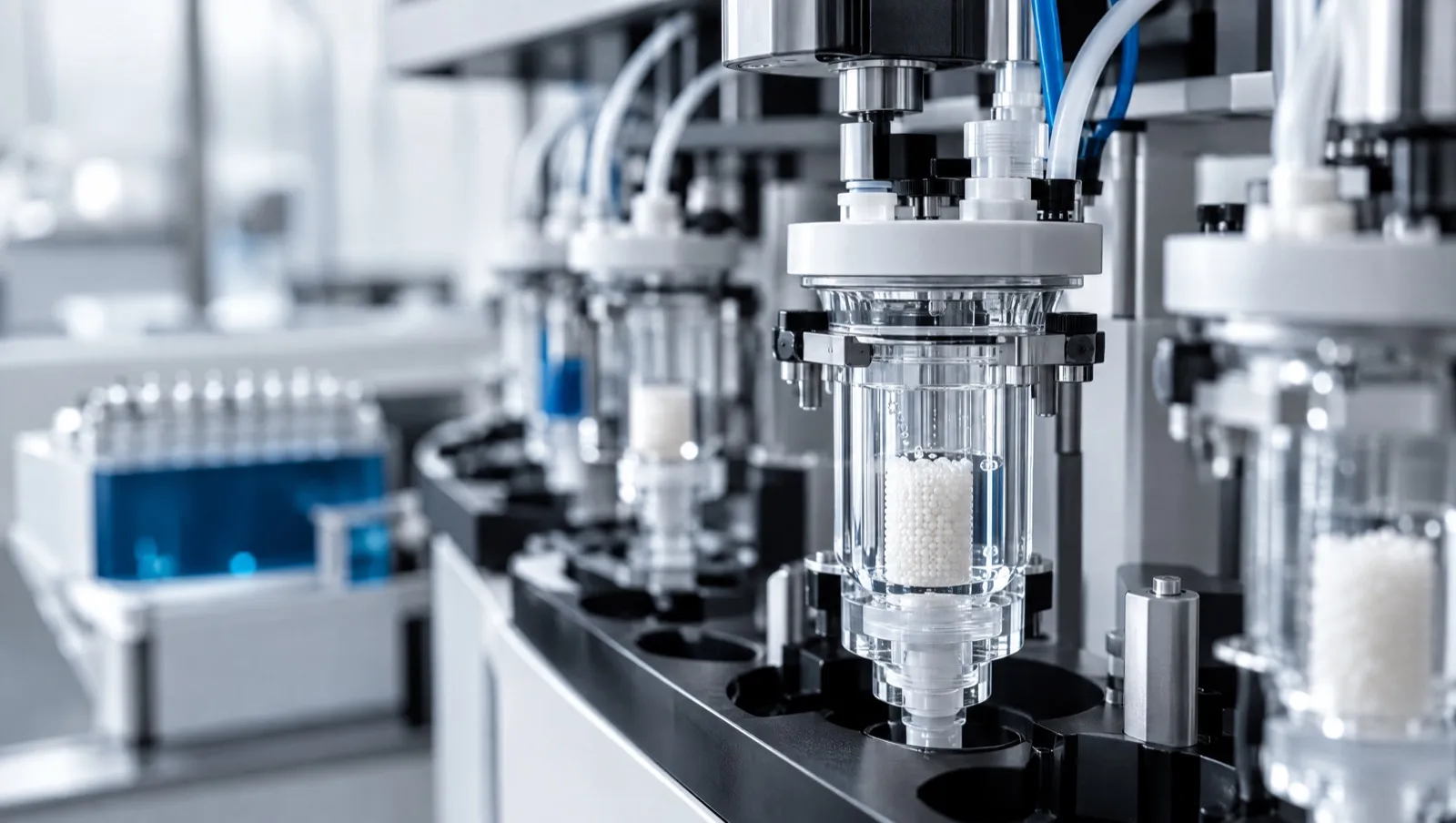
The usual method is called solid-phase peptide synthesis, or SPPS. Chemists attach the first amino acid to a tiny plastic-like bead. They then add the rest one at a time, washing away leftover chemicals after each step [6, 7]. Each new amino acid has a “cap” (a protecting group) that stops it reacting in the wrong place. The cap is removed before the next one is added [2].
When the chain is finished, an acid called TFA cuts it off the bead [2, 3]. The crude product is then cleaned up by a technique called HPLC (a way of separating molecules), and freeze-dried into a powder [1].
Small losses at each step add up, so the raw product always contains shorter or damaged chains [1, 2]. The test results for each batch show how well the purification worked.
The short version
- Built one amino acid at a time on beads [6].
- Cut off with acid, purified, then freeze-dried [1, 2].
- Every batch contains some impurities and is tested before release [1].
How are peptides made?
Peptides can be produced in several ways: biologically (for example, by recombinant DNA technology), by classical solution-phase chemistry, by solid-phase synthesis, by liquid-phase synthesis, or by hybrids of these [4]. For short and medium-length synthetic peptides, solid-phase peptide synthesis has become the predominant platform [5]. European regulators likewise note that most peptides are manufactured by solid-phase synthesis [1].
Merrifield’s idea: build the chain on a bead
Before solid-phase methods, peptides were made in solution, and the growing chain had to be recovered from solution before each new amino acid was added [7]. In 1963, R. B. Merrifield published Solid Phase Peptide Synthesis. I. The Synthesis of a Tetrapeptide [6]. His insight was to anchor the first amino acid to an insoluble polymer support. The growing chain stays attached to the support, so excess reagents and by-products can simply be washed away after each step instead of being separated from the product [7].
Merrifield was awarded the 1984 Nobel Prize in Chemistry for this work [7]. Conventional SPPS builds the chain from the carboxyl (C-) terminus towards the amino (N-) terminus [8].
Boc/Bzl and Fmoc/tBu: the two main chemistries
Each amino acid added to the chain needs two kinds of protection:
- A temporary protecting group on its α-amino group, removed before the next amino acid is added.
- Permanent protecting groups on reactive side chains, which stay on until the very end.
| Boc/Bzl (classical) | Fmoc/tBu (current standard) | |
|---|---|---|
| Temporary α-amino group | Boc, removed with TFA | Fmoc, removed with a base (usually piperidine) |
| Side-chain protection | Benzyl-based | tert-butyl, trityl and related acid-labile groups |
| Final cleavage | Anhydrous hydrogen fluoride (HF) | Trifluoroacetic acid (TFA) |
| Orthogonal? | Not fully: repeated TFA can slowly remove side-chain groups | Yes: base removes Fmoc, acid removes side-chain groups |
Source: Behrendt et al. [2].
The Fmoc group was introduced by Carpino and Han for solution chemistry. It was then developed for solid-phase work by Atherton and Sheppard in Cambridge. On a solid support, the by-products of Fmoc removal could be washed away [2]. Fmoc SPPS is now the method of choice, and Boc chemistry is mostly reserved for specialist applications [2]. Its advantages include:
- Avoiding anhydrous HF, which is highly hazardous.
- Milder conditions that are compatible with modifications such as phosphorylation and glycosylation.
- A built-in progress check: the released Fmoc group absorbs UV strongly, so deprotection can be monitored [2].
Typical side-chain protecting groups in Fmoc/tBu chemistry are Pbf for arginine; trityl (Trt) for asparagine, glutamine, cysteine and histidine; tert-butyl esters or ethers for aspartic acid, glutamic acid, serine, threonine and tyrosine; and Boc for lysine and tryptophan [2].
The synthesis steps, one round at a time
European guidance describes SPPS as repeated rounds of deprotection, washing, coupling and capping [1]:
- Loading. The first (C-terminal) amino acid is attached to the resin through a linker. Resins pre-loaded with the first amino acid are treated as a starting material in their own right [1].
- Deprotection. The Fmoc group is removed with base, freeing the α-amino group.
- Washing. Solvent washes remove the base and by-products.
- Coupling. The next Fmoc-protected amino acid is chemically activated and coupled to the free amino group, forming a new peptide bond. Couplings may be repeated to drive the reaction to completion [1].
- Capping (optional). Any chains that failed to couple are acetylated so they can’t grow further. This turns potential deletion sequences into shorter, capped (truncated) sequences that are easier to separate [1].
- Repeat until the full sequence is assembled.
As a simple arithmetic illustration, if every coupling were 99% complete, a 30-residue peptide would come off the resin with only about 74% full-length chains (0.99³⁰ ≈ 0.74). This is why crude peptides always need purification and why longer sequences are harder to make.
Known side reactions
- Aspartimide formation, triggered by repeated base exposure at aspartic acid, has been described as the most serious side reaction in Fmoc chemistry [2, 9].
- Cysteine racemisation can occur with base-mediated activation and is particularly high with microwave heating and pre-activation [2].
- Diketopiperazine formation can cut the first two residues from the chain, especially in proline-rich sequences [10].
Their products are described in Common Impurities in Synthetic Peptides.
Cleavage and global deprotection
Once the chain is complete, the peptide is released from the resin and its side-chain protecting groups are removed in one step, using a TFA-based cleavage cocktail [2, 3]. As the protecting groups come off, they form reactive cations. These can attack sensitive side chains such as tryptophan, tyrosine and methionine, so scavengers are added to trap them [1]. Methionine-containing peptides are particularly prone to oxidation and S-alkylation at this stage [11]. The crude peptide is commonly precipitated from the cleavage mixture with ether [2].
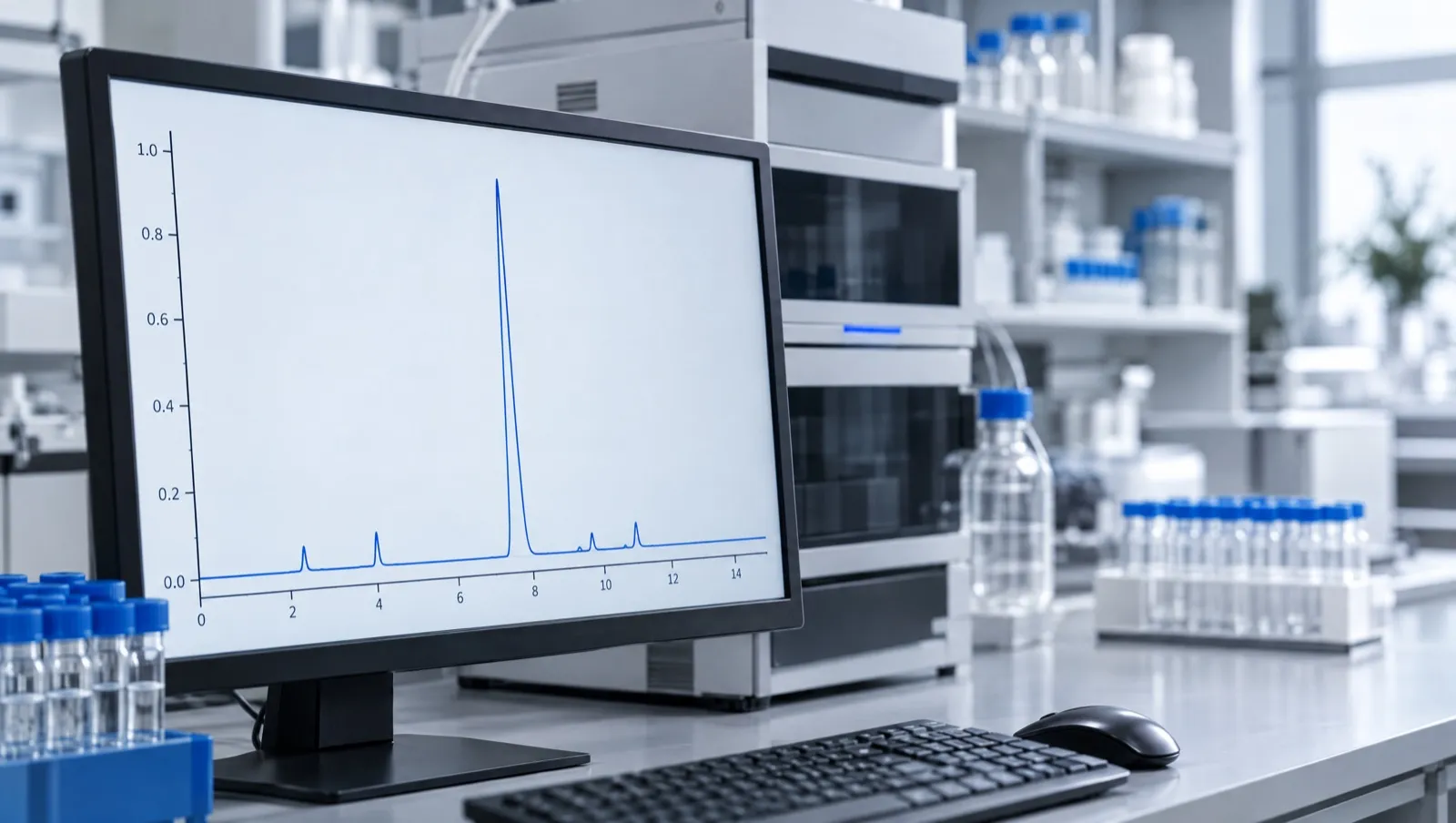
Purification by preparative HPLC
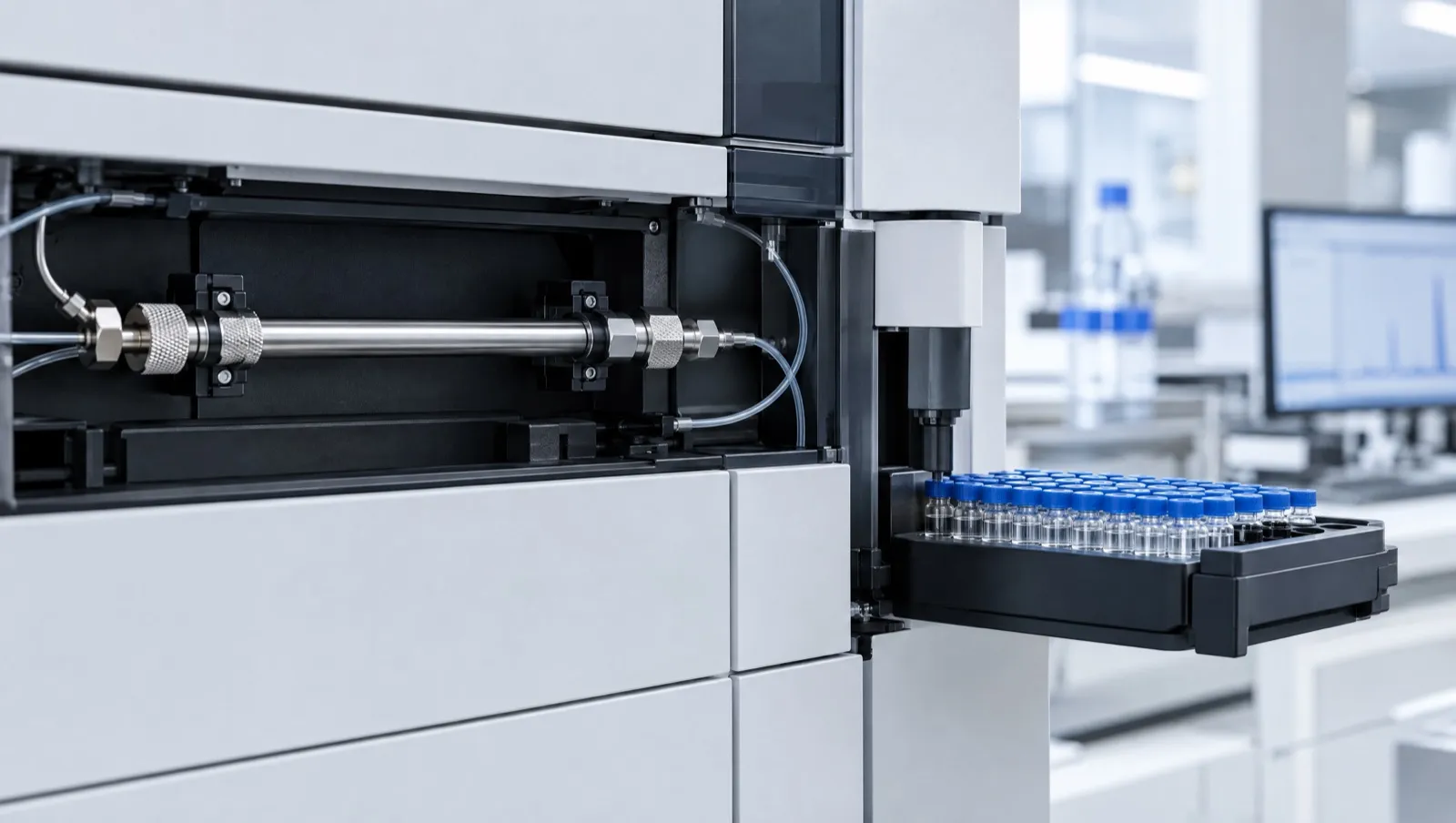
The crude product is a mixture of the target peptide and closely related by-products. It is purified by preparative chromatography, usually reversed-phase HPLC [1]:
- TFA is commonly added to the mobile phase as an ion-pairing reagent. It changes how peptides interact with the column and improves separation [12].
- Fractions are collected as they leave the column. Because separation is never perfect, the purest fractions are pooled according to defined purity criteria [1].
- Because TFA is present at both the cleavage and purification stages, peptides made this way are usually obtained as trifluoroacetate salts [3]. An optional ion-exchange step can replace TFA with acetate or chloride. See Counter-Ions in Peptides: TFA vs Acetate vs HCl.
Lyophilisation: from solution to powder
The pooled fractions are a dilute solution of peptide in water and organic solvent. Lyophilisation (freeze-drying) is common practice for isolating synthetic peptides [1]. The solution is frozen, and the solvent is then removed under vacuum by sublimation, leaving a dry, fluffy powder. Volatile acids used in purification, such as TFA, acetic acid and formic acid, can be removed by lyophilisation [13]. Alternatives such as precipitation, crystallisation and spray drying are also used [1].
Lyophilised peptides can be hygroscopic, so moisture uptake is a stability consideration [1]. Storage of lyophilised material is covered in Lyophilised Peptides: Storage, Stability and Degradation.
Analytical release
The finished powder is tested before release. Typical tests are HPLC purity, mass spectrometry for identity, peptide content, and, where relevant, water and counter-ion content [1]. See HPLC, LC-MS and UV-Vis: How Peptide Purity Is Actually Measured.
The environmental cost of SPPS
SPPS uses large excesses of solvents and reagents. An analysis of 40 synthetic peptide processes by 14 pharmaceutical companies found an average process mass intensity (kilograms of material used per kilogram of product) of about 13,000 for SPPS. This compares with a median of 168–308 for small-molecule drugs [5]. Greener solvents, liquid-phase and hybrid approaches, and synthesis in the N-to-C direction are active research areas [4, 8].
What this means in Australia
“Research use only” labels. The TGA states that, under the Therapeutic Goods Act 1989, peptide products are regulated as therapeutic goods in Australia [14]. It also states that a “research use only” disclaimer does not change a product’s regulatory status, permit importation, or remove advertising or supply obligations [14]. A clean synthesis route or a high purity figure does not change this either.
“Manufacture” is broad. The TGA has said that manufacture includes any step in the manufacturing process, including applying a label to a blank vial, packaging for distribution, and storage before the product is in its final state [15]. So relabelling imported vials counts as a manufacturing step in the TGA’s view.
Scheduling depends on the compound. Whether a given peptide is a scheduled poison depends on the substance itself, not on how it was synthesised. Many growth hormone secretagogues, for example, are named in Schedule 4 (prescription only) and Appendix D, clause 5 (possession without authority is illegal) of the current Poisons Standard (October 2026) [16]. Each compound article in this library states its own status. See Are Peptides Legal in Australia?.
Quality documents. For a description of how purity and identity are reported for each batch, see How to Read a Peptide Certificate of Analysis.
This is general information, not legal advice. Laws change; check the current Poisons Standard and TGA guidance.
Frequently asked questions
How are research peptides made?
Most are made by solid-phase peptide synthesis. The chain is built one amino acid at a time on resin beads, then cleaved with TFA, purified by preparative HPLC and lyophilised [1, 2].
What is Fmoc chemistry?
Fmoc/tBu chemistry uses a base-removable Fmoc group to protect each amino acid’s α-amino group, and acid-removable groups to protect side chains. It is now the standard method for SPPS [2].
Who invented solid-phase peptide synthesis?
R. B. Merrifield, who published the method in 1963 and received the 1984 Nobel Prize in Chemistry for it [6, 7].
Why are synthetic peptides often TFA salts?
TFA is used both to cleave the peptide from the resin and as an ion-pairing reagent during HPLC purification. Peptides with basic groups therefore usually come out as trifluoroacetate salts unless the counter-ion is exchanged [3].
Why are peptides supplied as a lyophilised powder?
Freeze-drying is the standard way to isolate purified peptides from HPLC fractions. It removes water and volatile solvents, giving a dry solid [1, 13].
References
- European Medicines Agency. Guideline on the development and manufacture of synthetic peptides. EMA/CHMP/CVMP/QWP/367182/2025. Adopted 4 December 2025; effective 1 June 2026. ema.europa.eu. Accessed 11 October 2026.
- Behrendt R, White P, Offer J. Advances in Fmoc solid-phase peptide synthesis. J Pept Sci. 2016;22(1):4–27. doi:10.1002/psc.2836. PMID: 26785684
- Roux S, Zékri E, Rousseau B, Paternostre M, Cintrat JC, Fay N. Elimination and exchange of trifluoroacetate counter-ion from cationic peptides: a critical evaluation of different approaches. J Pept Sci. 2008;14(3):354–359. doi:10.1002/psc.951. PMID: 18035848
- Cai Z, Liu L, Zou C, et al. Peptide synthesis: a review of classical and emerging methods. Biofabrication. 2025;18(1). doi:10.1088/1758-5090/ae1bdc. PMID: 41191975
- Kekessie I, Wegner K, Martinez I, et al. Process mass intensity (PMI): a holistic analysis of current peptide manufacturing processes informs sustainability in peptide synthesis. J Org Chem. 2024;89(7):4261–4282. doi:10.1021/acs.joc.3c01494. PMID: 38508870
- Merrifield RB. Solid phase peptide synthesis. I. The synthesis of a tetrapeptide. J Am Chem Soc. 1963;85(14):2149–2154. doi:10.1021/ja00897a025. (Verified via Crossref; not indexed in PubMed.)
- Nobel Prize Outreach. The Nobel Prize in Chemistry 1984: summary and “Speed read: Supporting protein chains”. nobelprize.org. Accessed 11 October 2026.
- Ghosh K, Lubell WD. N- to C-peptide synthesis, arguably the future for sustainable production. J Pept Sci. 2025;31(6):e70019. doi:10.1002/psc.70019. PMID: 40312131
- Kong MJW, van den Braak TJHP, Neumann K. Aspartimide formation and its prevention in Fmoc chemistry solid phase peptide synthesis. ChemBioChem. 2025;26(18):e202500490. doi:10.1002/cbic.202500490. PMID: 40857621
- Wang J, Berglund MR, Braden T, et al. Mechanistic study of diketopiperazine formation during solid-phase peptide synthesis of tirzepatide. ACS Omega. 2022;7(50):46809–46824. doi:10.1021/acsomega.2c05915. PMID: 36570276
- Nandhini KP, Alhassan M, Veale CGL, Albericio F, de la Torre BG. Methionine-containing peptides: avoiding secondary reactions in the final global deprotection. ACS Omega. 2023;8(17):15631–15637. doi:10.1021/acsomega.3c01058. PMID: 37151509
- Åsberg D, Langborg Weinmann A, Leek T, et al. The importance of ion-pairing in peptide purification by reversed-phase liquid chromatography. J Chromatogr A. 2017;1496:80–91. doi:10.1016/j.chroma.2017.03.041. PMID: 28363419
- Sikora K, Jaśkiewicz M, Neubauer D, Migoń D, Kamysz W. The role of counter-ions in peptides: an overview. Pharmaceuticals (Basel). 2020;13(12):442. doi:10.3390/ph13120442. PMID: 33287352
- Therapeutic Goods Administration. Understanding your responsibilities when importing, compounding and supplying unapproved peptide products. Safety advisory, 13 April 2026. tga.gov.au. Accessed 11 October 2026.
- Therapeutic Goods Administration. Unapproved peptide product promoters and suppliers are put on notice. Media release, 20 July 2026. tga.gov.au. Accessed 11 October 2026.
- Therapeutic Goods (Poisons Standard—October 2026) Instrument 2026 (F2026L01327). Federal Register of Legislation. legislation.gov.au/F2026L01327/latest/text. Accessed 11 October 2026.
Important information and disclaimer
General information only. This article is published for general educational and informational purposes. It summarises published scientific literature and public regulatory information as at the “last reviewed” date shown above. It is not medical, health, pharmaceutical, veterinary or legal advice, and it must not be relied on as a substitute for advice from a qualified professional about your circumstances.
Not for human or animal use. Nothing in this article recommends, endorses or describes the use of any substance in humans or animals. Findings from cell, animal or early human studies cannot be assumed to apply to people. The compounds discussed have not been evaluated by the Therapeutic Goods Administration (TGA) for safety, quality or efficacy unless the article expressly states otherwise. Any research materials offered by Iconic Peptides are supplied solely for in vitro and laboratory research.
No therapeutic claims. Iconic Peptides makes no claim that any product treats, cures, prevents, alleviates or diagnoses any disease, condition or symptom. References to published studies, clinical trials or medicines approved by regulators are factual descriptions of the scientific and regulatory record. They are not representations about any product we supply.
Regulatory status. Many peptides are scheduled substances under the Poisons Standard. Some are prescription-only (Schedule 4), and some may not be possessed without authority (Appendix D). The TGA has stated that a “research use only” label does not make supply lawful, change a product’s regulatory status, or remove advertising or supply obligations. State and territory laws may also apply. You are responsible for knowing and complying with all laws that apply to you. Regulatory information in this article may change after the review date.
Accuracy and third-party sources. We take care to cite and verify every source, but we do not warrant that this article is complete, current or error-free. Citing a study or organisation does not mean that its authors or that organisation endorse Iconic Peptides.
Limitation of liability. To the maximum extent permitted by law, Iconic Peptides, its owners, employees and contributors exclude all liability for any loss, damage, injury or expense, whether direct, indirect or consequential, arising from use of or reliance on this article or any misuse of any product. Nothing in this disclaimer excludes, restricts or modifies any right or remedy under the Australian Consumer Law that cannot lawfully be excluded.
Age restriction. This website is intended for adults aged 18 and over.