In plain English
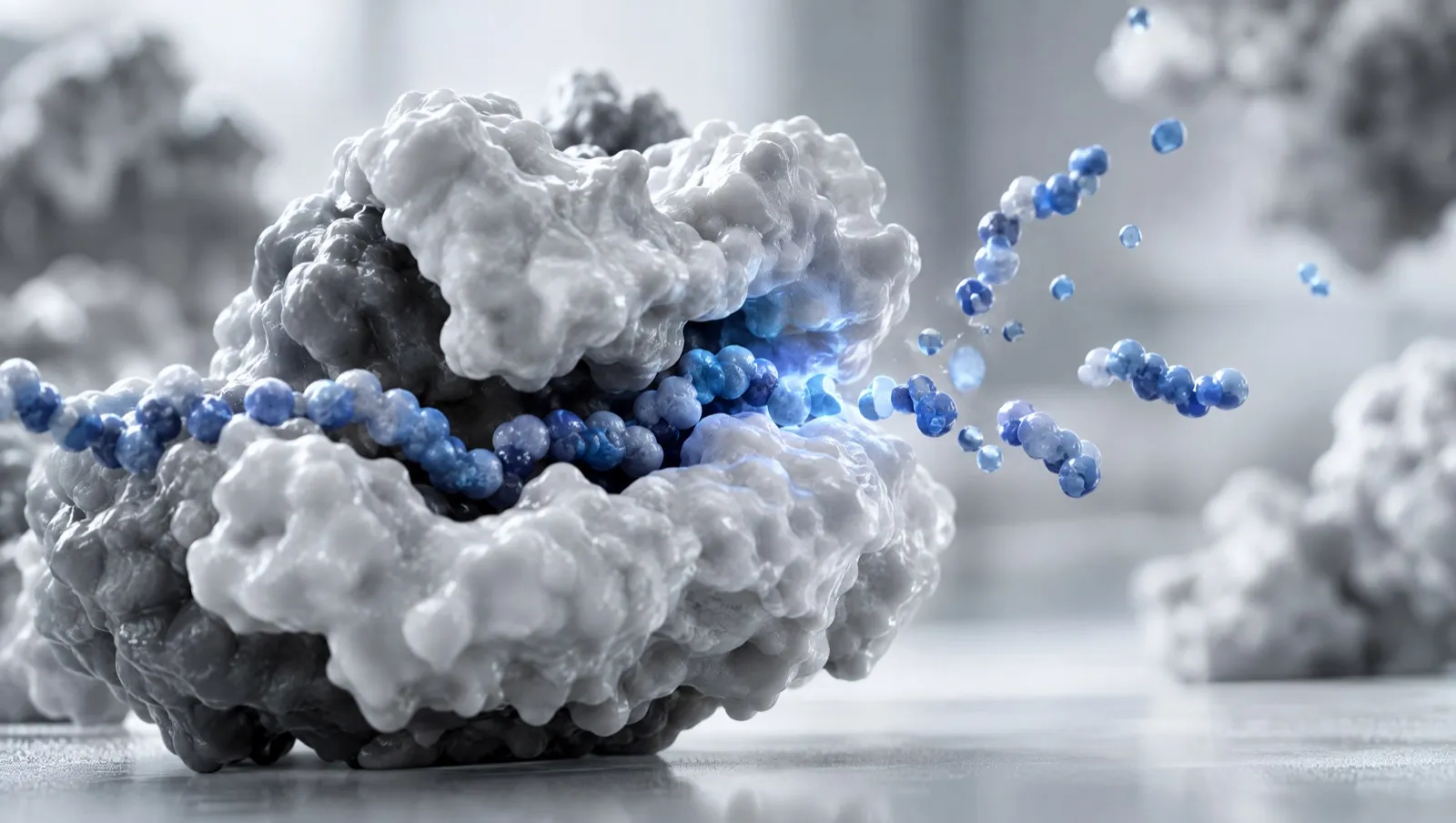
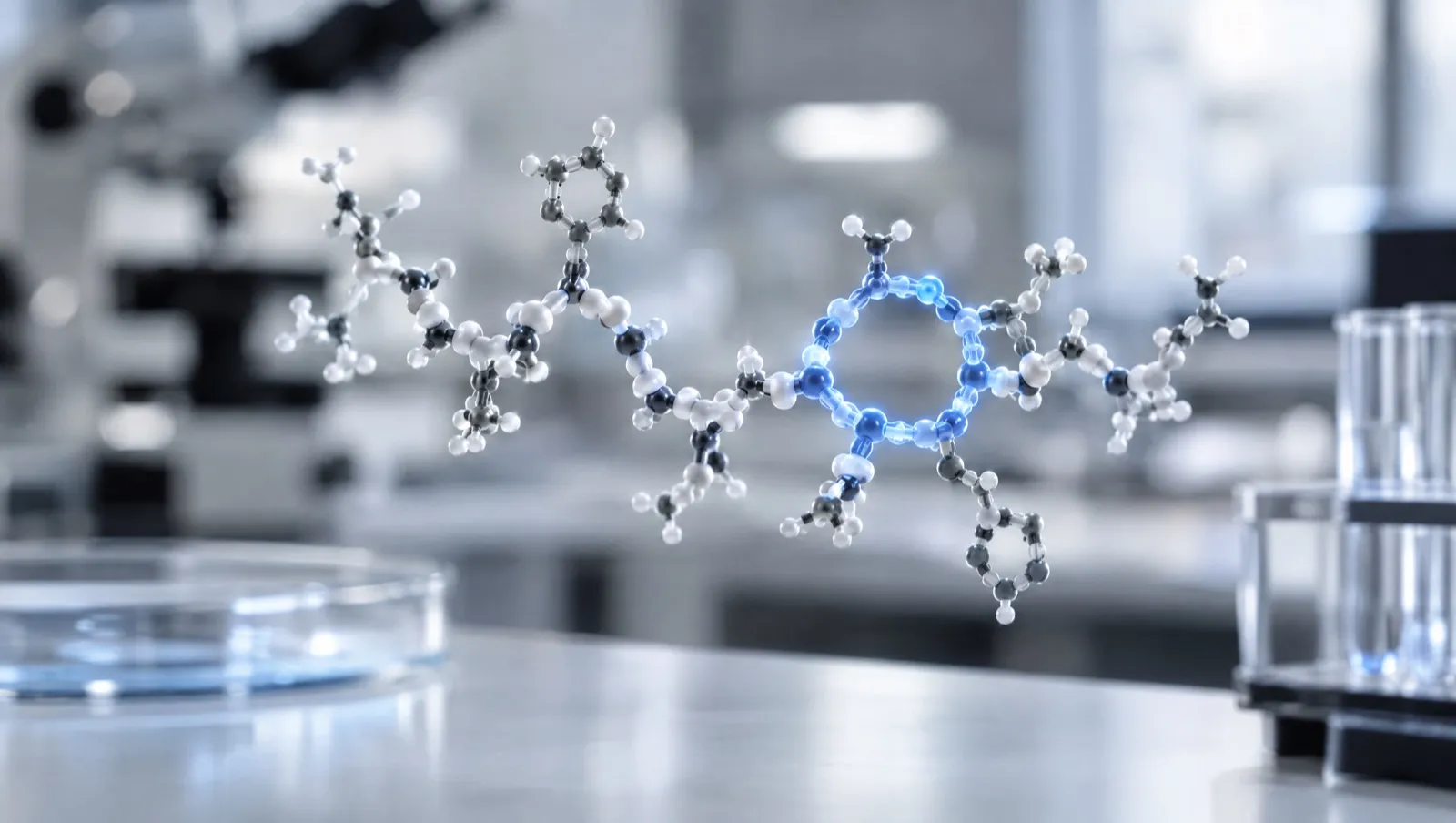
Natural peptides are fragile. Enzymes in the body cut them up quickly, and many do not keep a fixed shape [1]. Chemists change peptides to alter how they behave. These changes are called modifications.
Some changes are small. Adding an acetyl group to the start of the chain, or turning the acid at the end into an amide, changes the charge at that end [2, 3]. Some changes are bigger. Joining the two ends to make a ring (cyclisation), swapping in mirror-image amino acids, or attaching a long polymer or fatty-acid chain can make a peptide harder for enzymes to break down [1].
Modifications are a trade-off. A change that makes a peptide last longer can also reduce how well it binds its target [1].
A modified peptide is a different molecule from the original. Findings for one version cannot be assumed to apply to another.
The short version
- Modifications change a peptide’s ends, backbone or side chains [1].
- Many are designed to resist enzyme breakdown [1].
- Each modified version is a separate substance.
Why are peptides modified?
A 2022 review of therapeutic peptides describes the core problem. Natural peptides are chains of amino acids joined by amide bonds, but they lack the stability that secondary and tertiary structure gives proteins. Their amide bonds can be hydrolysed by enzymes, so natural peptides tend to have short half-lives and fast elimination [1].
Modifications are used to address this. The same review lists liraglutide and semaglutide among peptide drugs whose chemical modifications improved stability and activity, and it notes that some modifications cannot improve both at once [1]. For more on breakdown, see Why Peptides Break Down.
Modifications at a glance
| Modification | Where | What is added or changed | Reported effects |
|---|---|---|---|
| N-terminal acetylation | N-terminus | Acetyl group on the terminal amino group | Changes charge, hydrophobicity and size of the N-terminus [2] |
| C-terminal amidation | C-terminus | Carboxyl group replaced by an amide (-NH₂) | Required for full activity of most naturally amidated peptide hormones [3] |
| Cyclisation | Ends or side chains | A ring formed head-to-tail, backbone-to-side chain or side chain-to-side chain | Can increase proteolytic stability and stabilise secondary structure [1] |
| D-amino acid and other backbone changes | Within the chain | D-residues, methylated amino acids, β-amino acids | Can extend plasma half-life; activity may be lost [1] |
| PEGylation | Often Lys or Cys side chains [1] | Polyethylene glycol (PEG) polymer | Larger effective size, less renal clearance, shielding from enzymes [1, 4] |
| Lipidation | For example, a Lys side chain [5] | Fatty-acid chain, often via a linker | Albumin binding and longer circulation time [1, 5] |
N-terminal acetylation
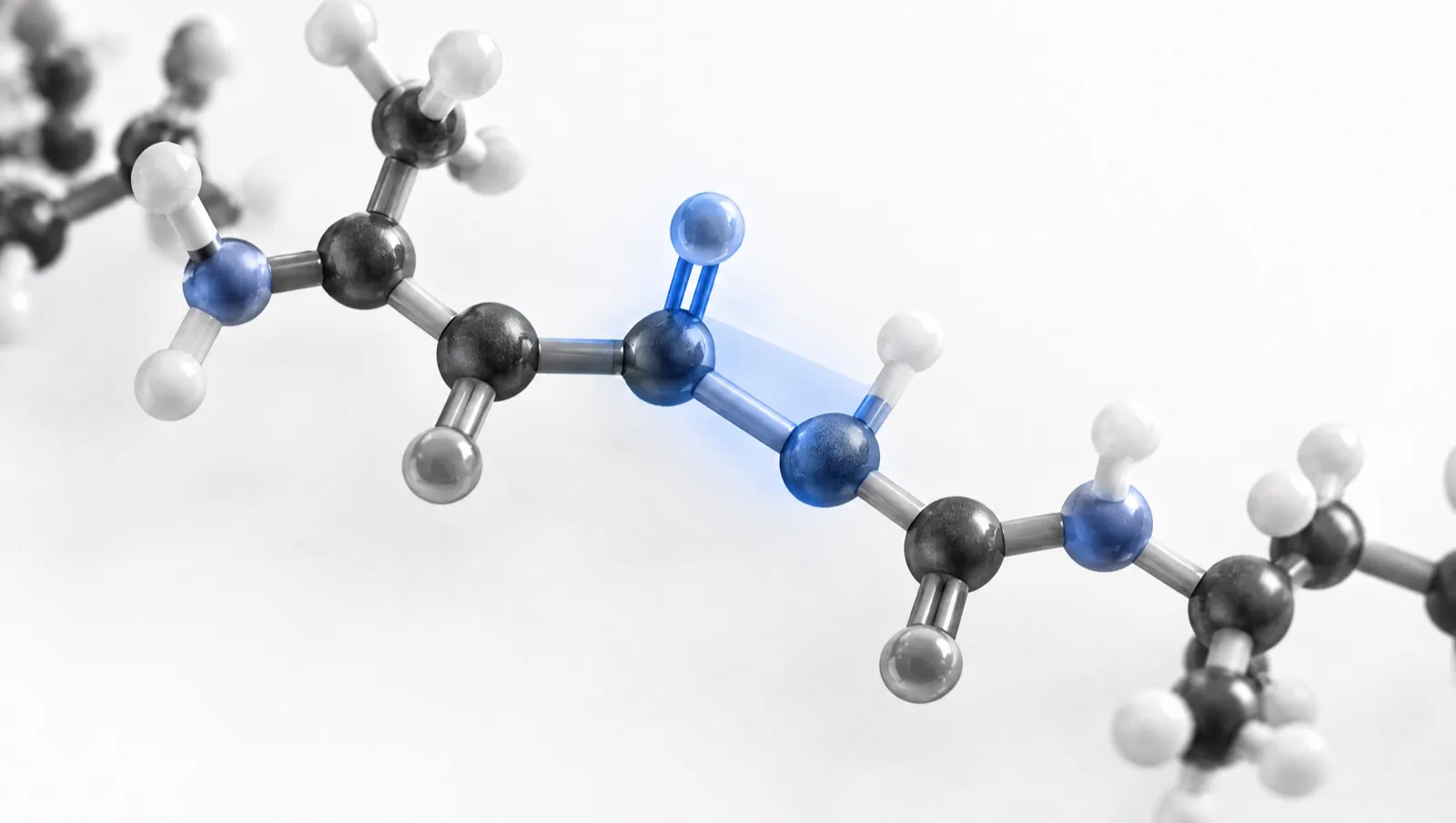
Acetylation adds an acetyl group (CH₃CO–) to the free amino group at the N-terminus. In sequence notation, it is written Ac- at the start of the chain [6].
In nature, N-terminal acetylation is a widespread protein modification in both eukaryotes and prokaryotes. A 2018 review explains that it alters the charge, hydrophobicity and size of the N-terminus irreversibly. That change has implications for the lifespan, folding and binding properties of the acetylated protein [2].
For a synthetic peptide, acetylation removes the positive charge that a free N-terminal amino group usually carries. It also adds 42 Da to the molecular mass, so an acetylated and a non-acetylated version are distinguishable by mass spectrometry.
C-terminal amidation
Amidation converts the C-terminal carboxyl group (–COOH) into a primary amide (–CONH₂). In sequence notation, it is written -NH₂ at the end [6].
Many peptide hormones are amidated. Amidated peptides can be produced from precursors that end in an extra glycine, using an enzyme called peptidylglycine α-amidating enzyme [3]. A review of structure-activity data for 45 bioactive peptides found that the C-terminal amide is required for the full biological activity of most amidated peptide hormones [3]. Oxytocin is a familiar example: its C-terminal residue is glycinamide [7].
In solid-phase synthesis, the choice of resin decides whether the finished chain ends in an amide or a free carboxylic acid [1]. Amidation removes the negative charge of the C-terminal carboxylate. The amide and acid forms differ in mass by about 1 Da, so a COA should state which form was tested. See How Peptides Are Made.
Cyclisation
Cyclisation joins two parts of a peptide to form a ring. A 2022 review describes three main strategies [1]:
- Head-to-tail: the N-terminus is joined to the C-terminus by a peptide bond.
- Backbone-to-side chain: one end is joined to a side chain.
- Side chain-to-side chain: two side chains are joined, for example by a disulfide bond between two cysteines.
The same review reports that cyclisation can increase proteolytic stability and cell permeability, and can pre-organise a peptide to stabilise loops, turns, α-helices and β-sheets [1].
Cyclic peptides are well established. A 2017 review counted more than 40 cyclic peptide drugs in clinical use, most derived from natural products such as antimicrobials or human peptide hormones [8]. Oxytocin is a natural cyclic peptide: its two cysteines (positions 1 and 6) are joined by a disulfide bond [7]. For how rings are written, see How to Read a Peptide Sequence.
D-amino acids and other backbone changes
Changing the backbone at a site where enzymes cut the chain can slow breakdown. Backbone modifications include replacing L-amino acids with D-amino acids, inserting methylated amino acids, and incorporating β-amino acids or peptoids [1].
The 2022 review describes these substitutions, particularly at the cleavage site, as an effective strategy for extending plasma half-life. It also cautions that peptides with D-amino acid substitutions rarely keep effective biological activity [1]. This is the trade-off in its clearest form.
PEGylation
PEGylation attaches polyethylene glycol (PEG), a polymer made of repeating ethylene oxide units, to a peptide or protein [1].
According to published reviews, PEGylation:
- increases the effective molecular size, which reduces clearance by kidney filtration [1]
- shields the molecule from protein-cutting enzymes through steric hindrance [1, 4]
- can increase water solubility [1, 4]
- changes the conjugate’s conformation, electrostatic binding and hydrophobicity [4].
PEGylation has been used to modify protein therapeutics since the 1970s [1, 4]. The size and structure of the PEG chain (linear or branched), the number of chains and the attachment site all affect the activity of the final product [4].
There is a practical catch. Conventional PEGylation often targets lysine or cysteine residues. If a molecule has more than one reactive site, PEG can attach at any of them, giving a mixture of products that is hard to separate [1]. A 2024 review covers site-specific approaches and the factors that influence PEGylation [9].
Lipidation
Lipidation attaches a fatty-acid chain to a peptide. In the best-known examples, the fatty acid is attached through a linker to a lysine side chain, and binding to serum albumin (a large blood protein) keeps the peptide in circulation longer [1, 5].
A 2022 review notes that the approved peptide drugs liraglutide, semaglutide and insulin degludec are conjugated with C14, C16 or C18 fatty acids. This increased their plasma circulation times and reduced their degradation during kidney elimination [1].
The discovery paper for semaglutide shows how this was designed. Researchers aimed to increase albumin affinity and secure stability against metabolic degradation. They identified the fatty-acid moiety and the linking chemistry as the key features for high albumin affinity. The selected molecule has two amino acid substitutions compared with human GLP-1 and is derivatised at lysine 26. Its plasma half-life in minipigs was 46.1 hours [5].
Liraglutide and semaglutide are the active ingredients of approved medicines [1]. Those products are specific, regulated pharmaceuticals and are not equivalent to research material. See Research Peptides vs Approved Medicines.
How modifications show up in analysis
Every modification changes the molecule, and most change its mass. That makes mass spectrometry the main way to confirm that the intended modification is present.
| Modification | What to check |
|---|---|
| Acetylation | Mass increase of 42 Da compared with the free amine |
| Amidation | Mass about 1 Da lower than the free acid; a different HPLC retention time |
| Disulfide cyclisation | Mass 2 Da lower than the reduced (open) form, as two hydrogens are lost |
| PEGylation | Possible mixtures of products, because PEG may attach at more than one site [1] |
| Lipidation | Large mass increase and a shifted HPLC retention time |
See How to Read a Peptide COA and Reading a Peptide Mass Spectrum.
What this means in Australia
A modified peptide is a separate substance. The Poisons Standard (October 2026) names some modified analogues individually. For example, CJC-1295 is named with its CAS number (863288-34-0) in Schedule 4 and Appendix D, clause 5. It also falls under the class entry for growth hormone releasing hormones (GHRHs) [10]. Schedule 4 means prescription-only. Appendix D, clause 5 means possessing the substance without authority is illegal. Other analogues are not named individually; whether a class entry captures a specific compound is a legal question.
Peptide products are therapeutic goods. The TGA states that peptide products are regulated as therapeutic goods under the Therapeutic Goods Act 1989, and names CJC-1295 among its examples of unapproved peptide products [11].
“Research use only” labels. The TGA has stated that a “research use only” disclaimer does not make supply lawful, and does not change a product’s regulatory status, permit importation, or remove advertising or supply obligations [11].
This is general information, not legal advice. Laws change; check the current Poisons Standard and TGA guidance.
Frequently asked questions
What is a peptide modification?
It is a chemical change to a peptide’s ends, backbone or side chains, such as acetylation, amidation, cyclisation, PEGylation or lipidation [1].
What does C-terminal amidation do?
It replaces the C-terminal carboxyl group with an amide. For most naturally amidated peptide hormones, the amide is required for full biological activity [3].
Why are peptides cyclised?
Cyclisation can increase resistance to enzymes and stabilise a particular shape [1]. More than 40 cyclic peptide drugs were in clinical use by 2017 [8].
What is PEGylation?
Attaching polyethylene glycol chains to a peptide or protein. It increases effective size and can reduce kidney clearance and enzyme breakdown [1, 4].
Is a modified peptide the same as the original?
No. A modification changes the structure and mass, so the modified version is a different substance with its own properties [1].
References
- Wang L, Wang N, Zhang W, et al. Therapeutic peptides: current applications and future directions. Signal Transduct Target Ther. 2022;7(1):48. doi:10.1038/s41392-022-00904-4. PMID: 35165272
- Ree R, Varland S, Arnesen T. Spotlight on protein N-terminal acetylation. Exp Mol Med. 2018;50(7):1–13. doi:10.1038/s12276-018-0116-z. PMID: 30054468
- Merkler DJ. C-terminal amidated peptides: production by the in vitro enzymatic amidation of glycine-extended peptides and the importance of the amide to bioactivity. Enzyme Microb Technol. 1994;16(6):450–456. doi:10.1016/0141-0229(94)90014-0. PMID: 7764886
- Veronese FM, Mero A. The impact of PEGylation on biological therapies. BioDrugs. 2008;22(5):315–329. doi:10.2165/00063030-200822050-00004. PMID: 18778113
- Lau J, Bloch P, Schäffer L, et al. Discovery of the once-weekly glucagon-like peptide-1 (GLP-1) analogue semaglutide. J Med Chem. 2015;58(18):7370–7380. doi:10.1021/acs.jmedchem.5b00726. PMID: 26308095
- IUPAC-IUB Joint Commission on Biochemical Nomenclature (JCBN). Nomenclature and symbolism for amino acids and peptides. Recommendations 1983. Biochem J. 1984;219(2):345–373. doi:10.1042/bj2190345. PMID: 6743224. Web version: iupac.qmul.ac.uk/AminoAcid. Accessed 11 October 2026.
- National Center for Biotechnology Information. PubChem Compound Summary for CID 439302, Oxytocin. pubchem.ncbi.nlm.nih.gov/compound/439302. Accessed 11 October 2026.
- Zorzi A, Deyle K, Heinis C. Cyclic peptide therapeutics: past, present and future. Curr Opin Chem Biol. 2017;38:24–29. doi:10.1016/j.cbpa.2017.02.006. PMID: 28249193
- Li C, Li T, Tian X, et al. Research progress on the PEGylation of therapeutic proteins and peptides (TPPs). Front Pharmacol. 2024;15:1353626. doi:10.3389/fphar.2024.1353626. PMID: 38523641
- Therapeutic Goods (Poisons Standard—October 2026) Instrument 2026 (F2026L01327). Federal Register of Legislation. legislation.gov.au/F2026L01327/latest/text. Accessed 11 October 2026.
- Therapeutic Goods Administration. Understanding your responsibilities when importing, compounding and supplying unapproved peptide products. Safety advisory, 13 April 2026. tga.gov.au. Accessed 11 October 2026.
Important information and disclaimer
General information only. This article is published for general educational and informational purposes. It summarises published scientific literature and public regulatory information as at the “last reviewed” date shown above. It is not medical, health, pharmaceutical, veterinary or legal advice, and it must not be relied on as a substitute for advice from a qualified professional about your circumstances.
Not for human or animal use. Nothing in this article recommends, endorses or describes the use of any substance in humans or animals. Findings from cell, animal or early human studies cannot be assumed to apply to people. The compounds discussed have not been evaluated by the Therapeutic Goods Administration (TGA) for safety, quality or efficacy unless the article expressly states otherwise. Any research materials offered by Iconic Peptides are supplied solely for in vitro and laboratory research.
No therapeutic claims. Iconic Peptides makes no claim that any product treats, cures, prevents, alleviates or diagnoses any disease, condition or symptom. References to published studies, clinical trials or medicines approved by regulators are factual descriptions of the scientific and regulatory record. They are not representations about any product we supply.
Regulatory status. Many peptides are scheduled substances under the Poisons Standard. Some are prescription-only (Schedule 4), and some may not be possessed without authority (Appendix D). The TGA has stated that a “research use only” label does not make supply lawful, change a product’s regulatory status, or remove advertising or supply obligations. State and territory laws may also apply. You are responsible for knowing and complying with all laws that apply to you. Regulatory information in this article may change after the review date.
Accuracy and third-party sources. We take care to cite and verify every source, but we do not warrant that this article is complete, current or error-free. Citing a study or organisation does not mean that its authors or that organisation endorse Iconic Peptides.
Limitation of liability. To the maximum extent permitted by law, Iconic Peptides, its owners, employees and contributors exclude all liability for any loss, damage, injury or expense, whether direct, indirect or consequential, arising from use of or reliance on this article or any misuse of any product. Nothing in this disclaimer excludes, restricts or modifies any right or remedy under the Australian Consumer Law that cannot lawfully be excluded.
Age restriction. This website is intended for adults aged 18 and over.