In plain English
Freeze-dried (lyophilised) peptide powders look dry, but they are never completely dry. They keep some water from the drying step, and many take up more water from the air once a vial is opened [3, 4]. That water adds mass, but it is not peptide.
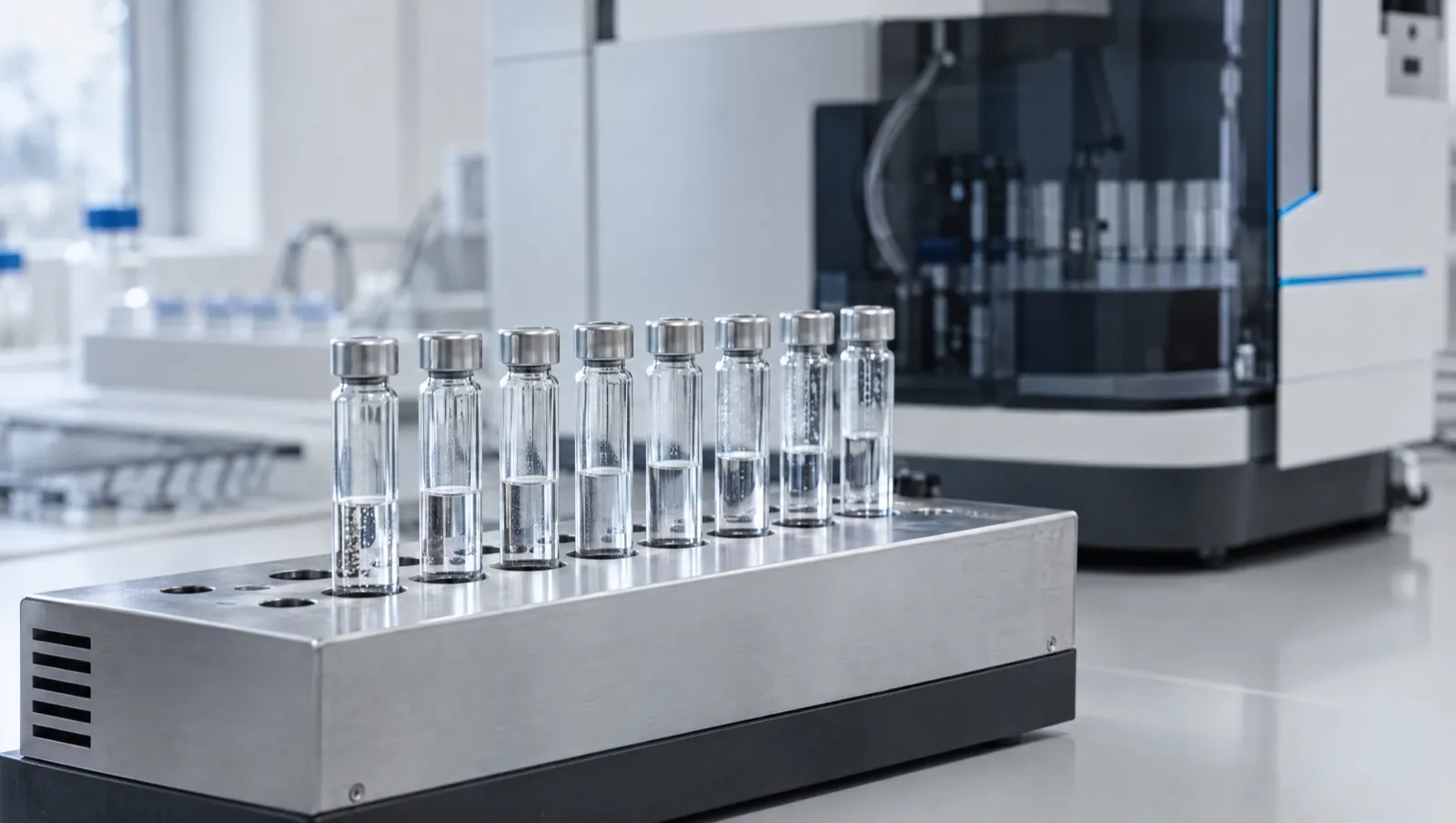
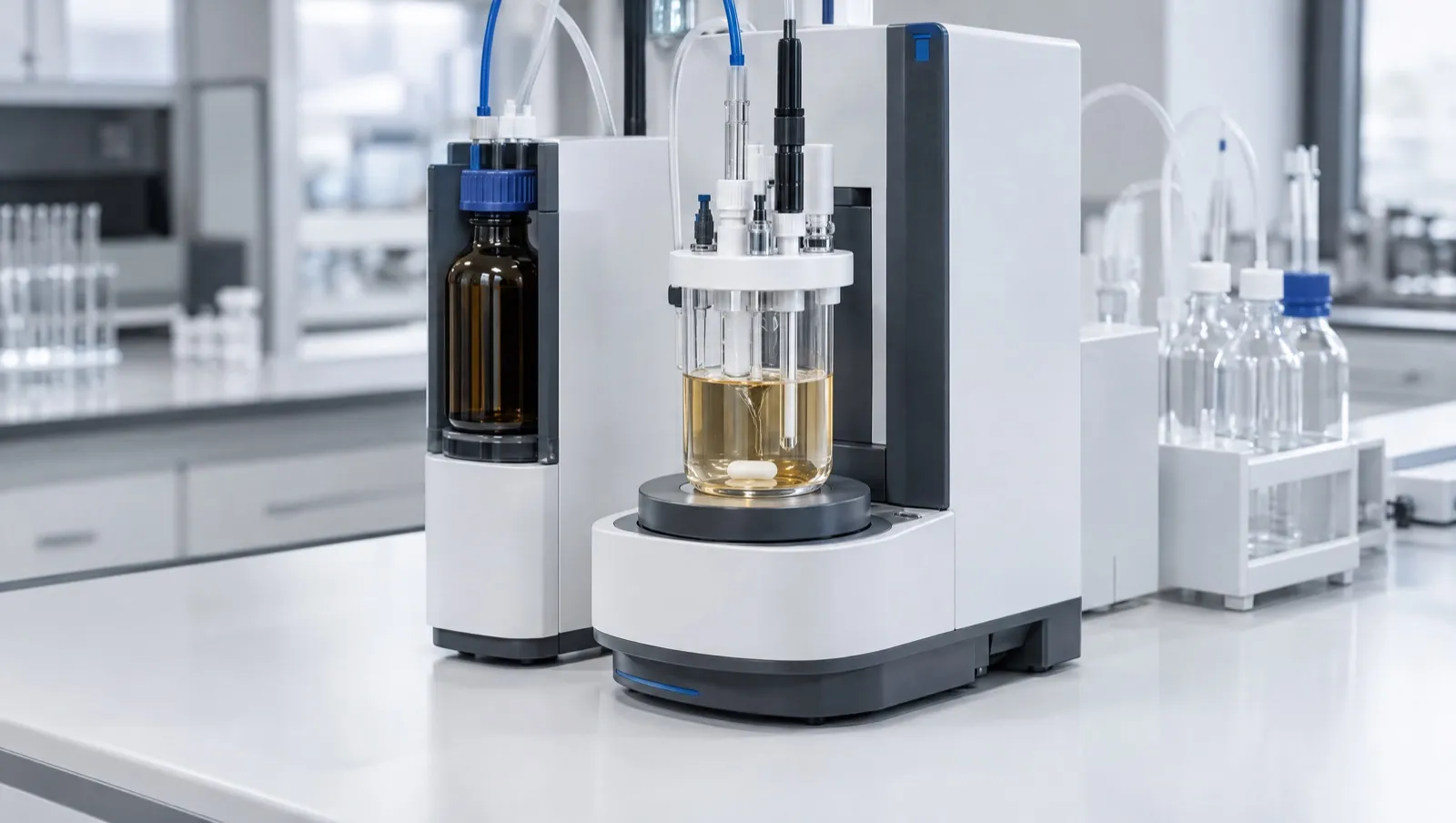
Karl Fischer titration (a chemical test that counts water molecules) measures how much water is there. Water reacts with iodine in a special solvent. The instrument tracks how much iodine is used up and works out the water from that [1].
Simpler tests, such as drying a sample and weighing it again, measure everything that evaporates, not only water [5, 6].
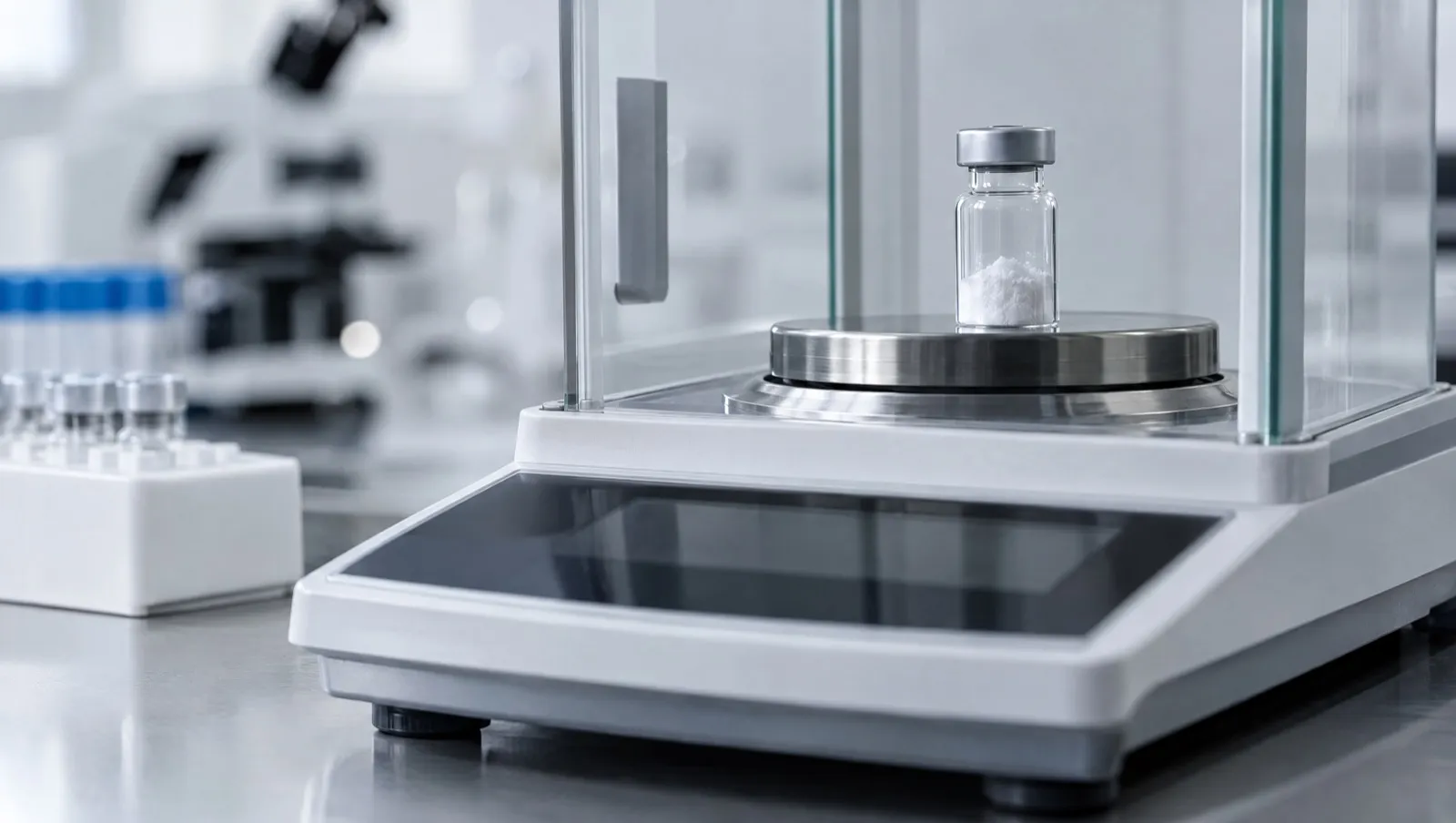
Water content matters because it changes how much peptide a weighed amount of powder really contains.
The short version
- Lyophilised peptides always hold some water.
- Karl Fischer titration measures water specifically [1].
- The coulometric version suits small samples [1].
- Water is one part of a mass balance with peptide and counter-ions [2].
Why lyophilised peptides contain water
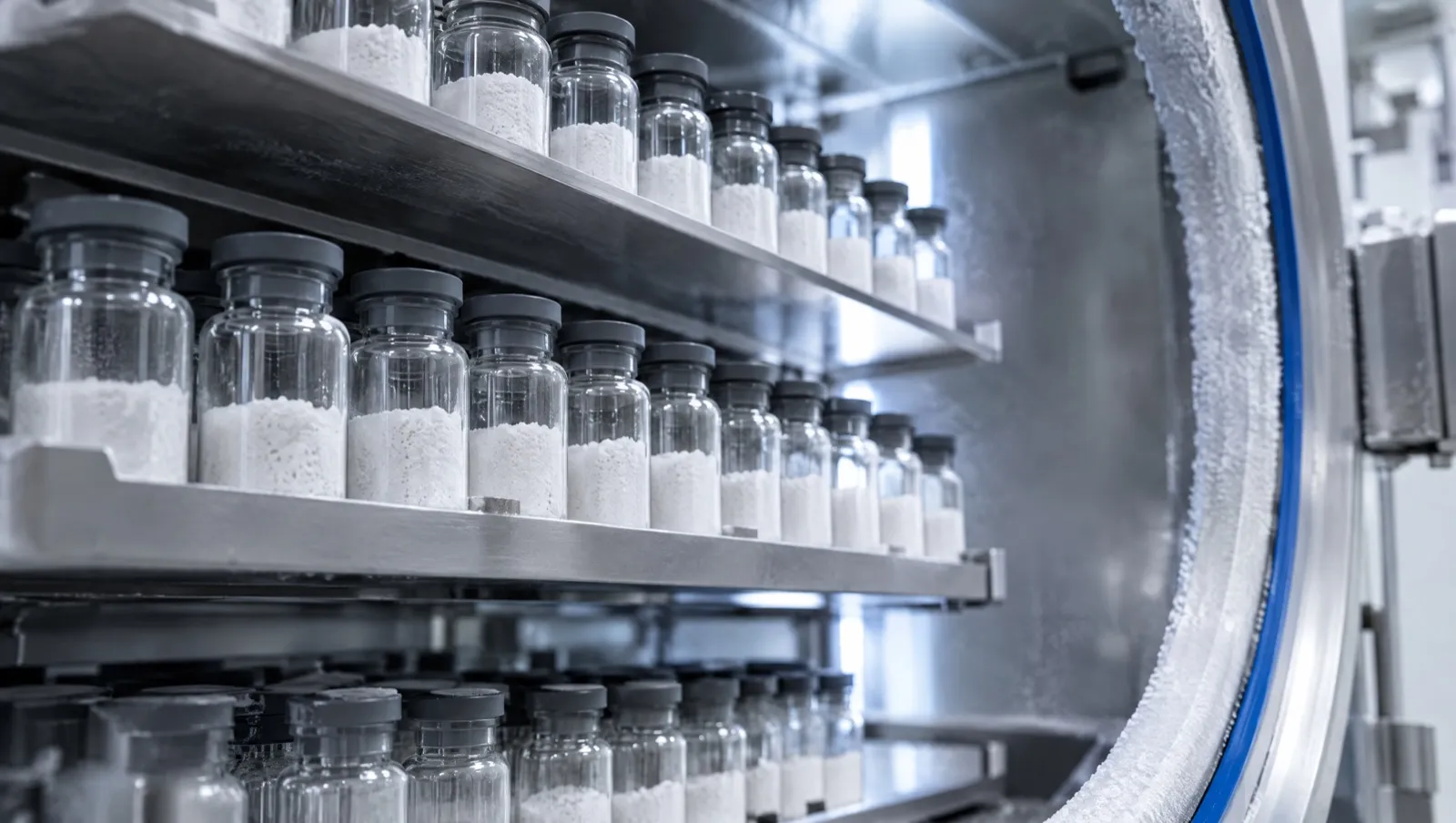
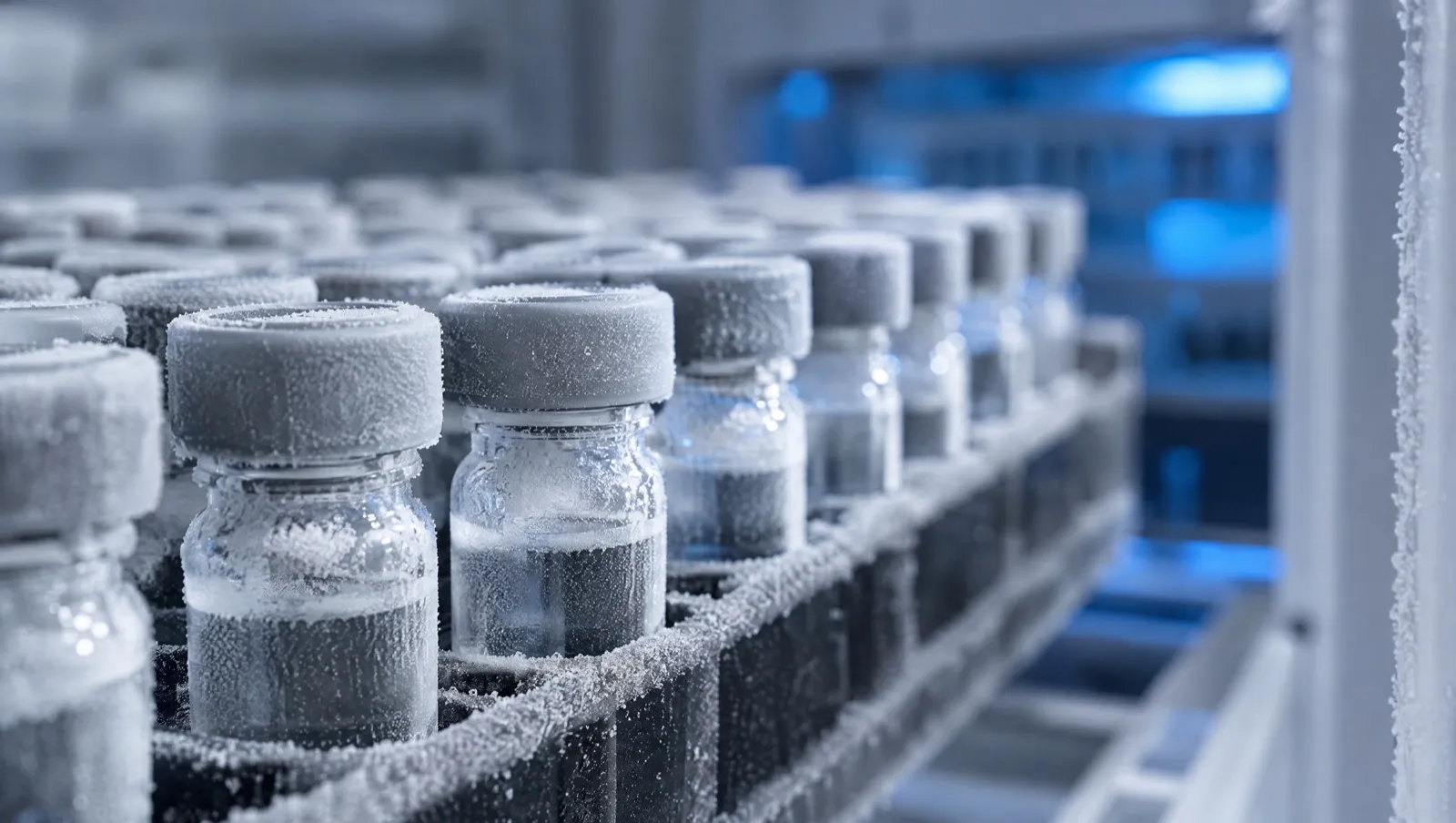
Freeze-drying removes most water, but some remains even after secondary drying. The level matters. Too much water increases its chemical reactivity in the solid and lowers the glass transition temperature, because water acts as a plasticiser; over-drying has also been reported to harm protein stability [3]. In a paper on freeze-dried biological products, scientists at the US Food and Drug Administration noted that residual moisture should usually be low, from under 1.0% to 3.0% [7]. See Freeze-Drying Explained.
Water also arrives after drying. European guidance notes that peptides are often very hygroscopic powders (they absorb water from the air). It asks for precautions against moisture uptake by peptide reference standards during storage and analysis, and expects water content to be included in stability studies of hygroscopic powders [4]. The relative humidity inside ordinary refrigerators and cold rooms can be high, and a cold vial opened too soon lets moisture condense on the contents [8]. See Peptide Storage and Stability.
Because humidity varies, so does water content. In pharmacopoeial value assignment of peptide reference standards, each laboratory’s own water result is applied, and water is measured at the time the sample is prepared for the HPLC assay [2].
How Karl Fischer titration works
Water reacts quantitatively with iodine and sulfur dioxide in the presence of a lower alcohol, such as methanol, and an organic base, such as pyridine or imidazole [1]. With pyridine as the base, the reaction is:
I₂ + SO₂ + 3 C₅H₅N + CH₃OH + H₂O → 2 C₅H₅NH⁺I⁻ + C₅H₅NH⁺ CH₃OSO₃⁻
One molecule of iodine is consumed for each molecule of water. The end point is detected electrically with a pair of platinum electrodes, either at constant voltage (amperometric) or at constant current (potentiometric) [1]. The reagents are themselves strongly hygroscopic, so the titration vessel is sealed and protected with desiccants [1].
The key advantage is specificity. KF responds to water, and it is calibrated directly against water standards, which is why it is used as a reference for empirical drying methods [6]. It is not free of error: a study by the US National Institute of Standards and Technology found biases from the accuracy of the water standard, incorrectly set instrument parameters (a negative bias of less than 7%), solvent composition and vessel design (a negative bias of up to 10%), and the sample itself [9].
Volumetric or coulometric: which suits milligram samples?
The two versions differ in where the iodine comes from [1].
| Volumetric KF | Coulometric KF | |
|---|---|---|
| Iodine source | Dissolved in the titrant and added from a burette | Generated in the cell by electrolysis of iodide |
| Water per determination | 5–30 mg | 0.2–5 mg |
| Calibration | Titrant strength (mg water per mL) is standardised against weighed water and drifts as the reagent takes up moisture | Based on electric charge: 10.71 coulombs per mg of water |
| Best suited to | Larger samples or higher water levels | Small samples and low water levels |
The figures in the table are from the Japanese Pharmacopoeia’s water determination chapter [1].
Worked example. A 15.0 mg portion of lyophilised peptide containing about 6% water holds about 0.90 mg of water. That sits inside the coulometric working amount (0.2–5 mg). The volumetric method would need at least 5 mg of water, or about 83 mg of this powder for one determination, which is often more than a whole vial.
In the coulometric cell, the 0.90 mg of water needs 0.90 × 10.71 = 9.64 C of charge to generate the matching iodine. The instrument reports water as C ÷ (10.71 × sample mass in mg) × 100 = 9.64 ÷ (10.71 × 15.0) × 100 = 6.0% [1].
Coulometric KF is the technique reported in recent peptide reference-standard work [2, 10]. Low water levels are hard to measure precisely, whatever the method: in freeze-dried biological products with less than 1% moisture, gravimetric results varied by a relative standard deviation of 16.7–47%, and KF and thermogravimetric results showed similar variability [11]. Replicate determinations are therefore normal. USP laboratories measured water in triplicate, from three independent weighings [2].
Periodically, and whenever operating conditions change, the system is checked with known amounts of added water. For the volumetric method, the system must find on average 97.5–102.5% of the water added, and the slope of water found against water added must lie between 0.975 and 1.025 [1].
Oven KF for samples that don’t dissolve or that interfere
Some samples do not dissolve in the KF solvent, or react with the reagents. For these, a water vaporiser (KF oven) heats the sample and a stream of dry nitrogen carries the released water into the titration cell [1]. The oven conditions (temperature, time and sample amount) are checked against a substance with a known water content, such as a stable hydrate [1].
Oven KF can also be the more reproducible option for peptides. A study of a lyophilised peptide active substance found that extracting water with anhydrous methanol before coulometric KF was significantly more variable than using an oven KF autosampler [12].
Temperature matters. In a study of rubber vial stoppers, KF results rose with oven temperature as more tightly bound water was released, although each fixed temperature gave reproducible results [13]. A water result from oven KF should therefore state the oven temperature.
Loss on drying and thermogravimetric analysis
| Method | What it measures | Water-specific? |
|---|---|---|
| Karl Fischer titration | Water, by chemical reaction [1] | Yes |
| Loss on drying | Mass lost under set conditions, for example 105 °C for 4 hours, or under vacuum over phosphorus pentoxide [5] | No: includes water of crystallisation and other volatile matter [5] |
| Thermogravimetric analysis | Mass recorded continuously as the sample is heated [5, 14] | Only if nothing else volatile is present [5] |
| Thermogravimetric analysis with mass spectrometry | Mass loss, with the released vapour analysed by mass spectrometry | Listed with KF among residual-moisture methods for freeze-dried biological products [7] |
Loss on drying is simple, but it is an empirical method. A review of moisture testing recommended that oven-drying results be called “loss on drying”, with the drying conditions stated, rather than “moisture” [6]. The Japanese Pharmacopoeia allows thermogravimetric analysis to replace its water determination only once it has been confirmed that no volatile component other than water is present [5]. A heating curve can also show the temperature at which water is lost separately from other volatile products [14].
How water fits the mass balance: a worked example
A mass balance accounts for every component of a powder. In pharmacopoeial value assignment of peptide reference standards, all detectable impurities (peptide-related impurities, counter-ion, water, residual solvents and non-combustible residue) are measured and subtracted from 100% [2]. Peptide impurities come from HPLC as % of peak area; the rest are measured as % by mass [2].
The figures below are illustrative, with every mass result on the same “as is” basis.
| Component | Typical method | Result |
|---|---|---|
| Water | Coulometric KF | 6.0% w/w |
| Acetate counter-ion | HPLC or ion chromatography | 9.4% w/w |
| Residual trifluoroacetate | HPLC or fluorine NMR | 0.2% w/w |
| Residual solvents | Gas chromatography | 0.1% w/w |
| Residue on ignition | Gravimetric | 0.1% w/w |
| Non-peptide total | 15.8% w/w | |
| Peptide material, by difference | 84.2% w/w | |
| HPLC purity | Area % | 98.2% |
| Target peptide content | 84.2% × 0.982 | 82.7% w/w |
Cross-check. Amino acid analysis measures all peptide material, target and related peptides together. An AAA result of 83.7% would agree with the 84.2% above within 0.5 percentage points, well inside the roughly 5% quantitation usually achievable by AAA [15]. See Amino Acid Analysis.
Sensitivity. If KF had read 5.0% instead of 6.0%, the target peptide content would be 83.7%. Each percentage point of water moves the answer by about one percentage point, which is why water is measured when the sample is weighed [2].
Real mass balances follow the same pattern. For a synthetic nine-residue peptide, one metrology institute measured water by coulometric KF, counter-ions by ion chromatography, inorganic elements by ICP-MS and volatile organic compounds by headspace GC-MS, and assigned a value of 796.5 mg/g with an expanded uncertainty of 6.5 mg/g (k = 2) [10]. Counter-ion can be a much larger term than water: in one angiotensin II candidate reference material, trifluoroacetate was nearly 25% by mass [16]. See Purity vs Peptide Content and Counter-Ions in Peptides.
Handling hygroscopic powders for a water result
- Let the closed vial reach room temperature before opening, so moisture does not condense on the powder [8].
- Weigh quickly and add the sample to the cell promptly; work at low humidity, and run a blank and correct for it if the sample is exposed for long [1].
- Use a dry atmosphere where possible. In one pharmacopoeial reference-standard study, vials were opened in a dry nitrogen environment for coulometric KF [2]; single-use vials are an option for hygroscopic materials [8].
- Run replicates from independent weighings [2].
- Record the details: method type, sample mass, oven temperature if used, and the blank.
- Store with protection from moisture, such as a desiccant or an inert atmosphere [4].
What this means in Australia
- Pharmacopoeial methods. For medicines, the Therapeutic Goods Act 1989 defines monographs in the British Pharmacopoeia, European Pharmacopoeia and United States Pharmacopeia–National Formulary as standards [17]. The USP peptide reference-standard work described above used the USP water determination chapter, <921> [2].
- Accredited testing. NATA accredits Australian laboratories to ISO/IEC 17025, which covers the validity of methods, calibration of equipment and traceability of measurements [18].
- Labels. The Therapeutic Goods Administration (TGA) has stated that a “research use only” disclaimer does not make supply lawful, change regulatory status, permit importation, or remove advertising or supply obligations [19]. A water result describes one batch; it does not change any of this.
This is general information, not legal advice. Laws change; check the current Poisons Standard and TGA guidance.
Frequently asked questions
What is Karl Fischer titration?
It is a titration that measures water through its reaction with iodine and sulfur dioxide in an alcohol containing a base. The amount of iodine consumed gives the amount of water [1].
Should a laboratory use coulometric or volumetric KF for peptides?
For milligram samples with a few per cent water, coulometric KF is usually the better fit, because it works with 0.2–5 mg of water rather than 5–30 mg [1].
Why not just dry the sample and weigh it again?
Loss on drying measures everything volatile, not only water, so it can overstate water content. KF responds specifically to water [5, 6].
How much water does a lyophilised peptide contain?
It varies by batch, by drying conditions and by exposure to air, so it must be measured. A pharmacopoeial worked example for a peptide reference standard used water contents of 1.5–2% [2].
Why let a cold vial warm up before opening it?
Opening a cold vial lets moisture from the air condense on the powder, which raises its water content [8].
References
- The Japanese Pharmacopoeia, 18th edition (English version). General Tests, Processes and Apparatus: 2.48 Water Determination (Karl Fischer Method). mhlw.go.jp. Accessed 25 October 2026.
- McCarthy D, Han Y, Carrick K, et al. Reference standards to support quality of synthetic peptide therapeutics. Pharm Res. 2023;40(6):1317–1328. doi:10.1007/s11095-023-03493-1. PMID: 36949371
- Lo Presti K, Frieß W. Adjustment of specific residual moisture levels in completely freeze-dried protein formulations by controlled spiking of small water volumes. Eur J Pharm Biopharm. 2021;169:292–296. doi:10.1016/j.ejpb.2021.10.011. PMID: 34757155
- European Medicines Agency. Guideline on the development and manufacture of synthetic peptides. EMA/CHMP/CVMP/QWP/367182/2025. Adopted 4 December 2025; effective 1 June 2026. ema.europa.eu. Accessed 25 October 2026.
- The Japanese Pharmacopoeia, 18th edition (English version). General Tests, Processes and Apparatus: 2.41 Loss on Drying Test; 2.52 Thermal Analysis. mhlw.go.jp. Accessed 25 October 2026.
- Thiex N, Richardson CR. Challenges in measuring moisture content of feeds. J Anim Sci. 2003;81(12):3255–3266. doi:10.2527/2003.81123255x. PMID: 14677883
- May JC, Wheeler RM, Etz N, Del Grosso A. Measurement of final container residual moisture in freeze-dried biological products. Dev Biol Stand. 1992;74:153–164. PMID: 1592165
- WHO Expert Committee on Specifications for Pharmaceutical Preparations. WHO general guidelines for the establishment, maintenance and distribution of chemical reference substances. WHO Technical Report Series 943, Annex 3. 2007. who.int. Accessed 25 October 2026.
- Margolis SA. Sources of systematic bias in the measurement of water by the coulometric and volumetric Karl Fischer methods. Anal Chem. 1997;69(23):4864–4871. doi:10.1021/ac9704826. PMID: 9406534
- Wang S, Wu P, Li M, et al. Mass balance method for SI-traceable purity assignment of synthetic oxytocin. J Pharm Biomed Anal. 2022;207:114401. doi:10.1016/j.jpba.2021.114401. PMID: 34656934
- May JC, Wheeler RM, Grim E. The gravimetric method for the determination of residual moisture in freeze-dried biological products. Cryobiology. 1989;26(3):277–284. doi:10.1016/0011-2240(89)90023-0. PMID: 2743789
- Walsh PL, Lena J, Drake J, Lavrich D. Determining the sources of variance in the preparation of analytical standards for chromatographic analysis of a lyophilized peptide drug substance by nested ANOVA statistical analysis. AAPS PharmSciTech. 2020;21(2):70. doi:10.1208/s12249-020-1623-5. PMID: 31953771
- Wang Z, Frankel BA, Lambert WJ. Determination of moisture in rubber stoppers: effect of Karl Fischer oven temperatures. PDA J Pharm Sci Technol. 2001;55(3):162–170. PMID: 11417106
- Ducat G, Felsner ML, da Costa Neto PR, Quináia SP. Development and in house validation of a new thermogravimetric method for water content analysis in soft brown sugar. Food Chem. 2015;177:158–164. doi:10.1016/j.foodchem.2015.01.030. PMID: 25660872
- Højrup P. Analysis of polypeptides by amino acid analysis. Methods Mol Biol. 2024;2821:71–82. doi:10.1007/978-1-0716-3914-6_6. PMID: 38997481
- Melanson JE, Thibeault MP, Stocks BB, et al. Purity assignment for peptide certified reference materials by combining qNMR and LC-MS/MS amino acid analysis results: application to angiotensin II. Anal Bioanal Chem. 2018;410(26):6719–6731. doi:10.1007/s00216-018-1272-7. PMID: 30143839
- Therapeutic Goods Act 1989 (Cth), section 3: definitions of “standard” and “default standard”. Federal Register of Legislation. legislation.gov.au. Accessed 25 October 2026.
- National Association of Testing Authorities, Australia (NATA). Laboratory accreditation: ISO/IEC 17025. nata.com.au. Accessed 25 October 2026.
- Therapeutic Goods Administration. Understanding your responsibilities when importing, compounding and supplying unapproved peptide products. Safety advisory, 13 April 2026. tga.gov.au. Accessed 25 October 2026.