In plain English
Peptides (short chains of amino acids) slowly break down over time, even as a dry powder.
Most research peptides are freeze-dried (lyophilised, meaning the water is removed from a frozen sample). Dry powder lasts much longer than a peptide dissolved in liquid, because most of the damaging reactions need water [2, 3]. The main reactions are oxidation (oxygen attaching to the molecule), deamidation (a small chemical group falling off certain amino acids) and hydrolysis (water splitting the chain) [2, 5].
Four things speed these reactions up: moisture, heat, light, and freezing and thawing again and again [1, 7, 8]. Most of this knowledge comes from studies of protein and peptide medicines, not from studies of each research peptide.
The short version
- Dry powder is far more stable than a solution.
- Keep vials sealed, cold, dry and dark.
- Let a cold vial warm up before opening, so water does not condense inside.
- Split solutions into single-use portions and thaw each once.
Why peptides are supplied lyophilised
Most of the chemical reactions that damage peptides need water, or run much faster in it. Removing water by freeze-drying (lyophilisation) is the standard way to give peptide and protein materials an acceptable shelf life [3].
Lyophilisation does not stop degradation completely. A 1999 review of solid-state stability listed the reactions that still occur in dried peptides and proteins: deamidation, peptide-bond cleavage, oxidation, the Maillard reaction, beta-elimination and dimerisation or aggregation. Their rates depend on temperature, residual moisture, any excipients present, and whether the solid is amorphous or crystalline [2].
Degradation pathways at a glance
| Pathway | What happens | Residues most at risk | Main accelerating factors | Ref |
|---|---|---|---|---|
| Oxidation | Oxygen is added to susceptible side chains (e.g. methionine to methionine sulfoxide) | Met, Cys, His, Trp, Tyr | Oxygen and peroxides, trace metal ions, light, higher temperature | [4] |
| Deamidation | Asparagine (and, more slowly, glutamine) loses its amide group, often via a cyclic succinimide intermediate, forming Asp or isoAsp | Asn, especially Asn-Gly | Water, neutral to basic pH, temperature | [5, 6] |
| Hydrolysis | A peptide bond is cleaved, giving two shorter fragments | Bonds next to aspartic acid, notably Asp-Pro | Water, acidic pH, temperature | [2, 5, 12] |
| Aggregation | Peptide molecules associate into dimers, oligomers or insoluble particles | Hydrophobic or self-associating sequences | Concentration, interfaces, freezing and thawing | [1, 8] |
| Photodegradation | Light energy drives oxidation and other changes | Trp, Tyr, Phe, Cys/cystine | UV and visible light | [7] |
How peptides degrade
Oxidation
Oxidation is one of the main chemical degradation routes for peptide and protein materials. Methionine, cysteine, histidine, tryptophan and tyrosine are the residues most susceptible, because their side chains react readily with reactive oxygen species [4].
Oxidation can be started by contaminating oxidants such as peroxides, catalysed by trace transition-metal ions, or induced by light. pH, temperature and buffer composition also influence the rate [4]. Free cysteine thiols can also oxidise to form disulfide-linked dimers.
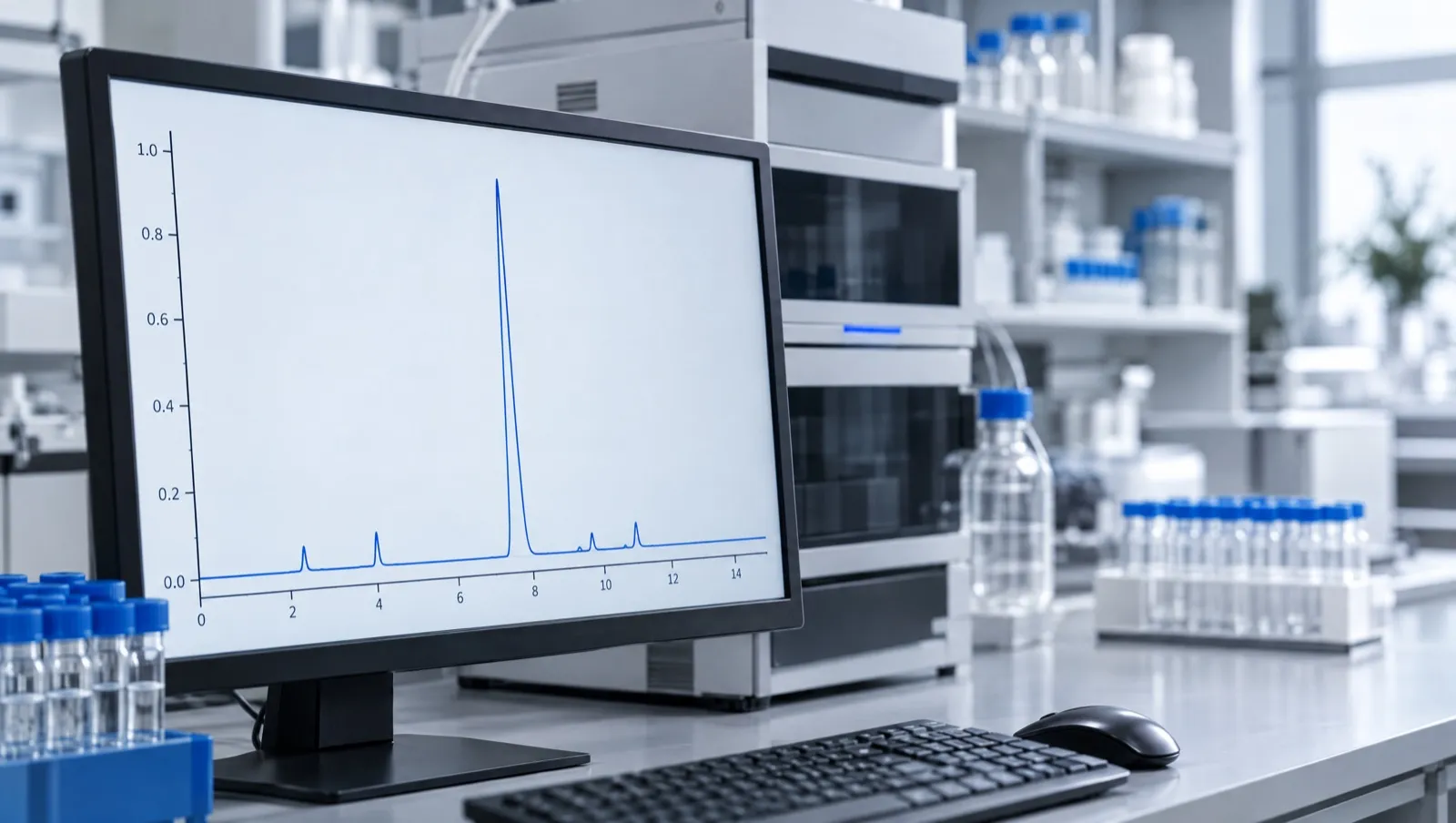
On a mass spectrum, oxidation of one methionine adds one oxygen atom, a shift of about +16 Da. On an HPLC chromatogram, oxidised forms usually appear as new peaks close to the main peak [9].
Deamidation
Deamidation converts asparagine to aspartic acid or isoaspartic acid. In a classic study of synthetic peptides, an Asn-Gly-containing hexapeptide deamidated with a half-life of only 1.4 days at 37 °C and pH 7.4, through a succinimide intermediate. Replacing the glycine next to the asparagine with a bulkier leucine or proline slowed degradation 33–50-fold [5]. The amino acid that follows asparagine therefore has a large effect on the deamidation rate.
Deamidation also happens in dried solids. A 2018 analysis of freeze-dried peptides and proteins found two patterns: in some systems the rate rose steadily with water content, while in others it stayed low until water content passed a threshold and then accelerated [6]. In both cases, deamidation stayed slower when water content was kept low.
On a mass spectrum, deamidation adds only about +1 Da (0.98 Da), which is easy to miss without high-resolution data. Isoaspartate has the same mass as aspartate, so chromatographic separation is usually needed to see it.
Hydrolysis
Hydrolysis breaks peptide bonds. Bonds next to aspartic acid are the classic weak points [1, 2]. In a comparison of closely related nonapeptides, the Asp-Pro bond was readily cleaved under acidic conditions, while the equivalent bonds with alanine, isoleucine, serine, phenylalanine, glutamic acid or lysine before proline were not sensitive to acid [12]. In the same study of Asn-containing peptides, cleavage products appeared in sequences containing Asn-Leu and Asn-Pro [5].
Hydrolysis produces shorter fragments. These show up as new peaks on HPLC and as lower-mass species on a mass spectrum [9].
Aggregation
Peptides can stick to each other as well as react. Aggregation can be physical (non-covalent association) or chemical (for example, disulfide-linked dimers). Chemical and physical instability are linked: a chemical change such as oxidation can make a peptide more likely to aggregate, and vice versa [1].
What speeds degradation up
Moisture
Water is a reactant in hydrolysis and deamidation, and it increases molecular mobility in the solid [2, 6]. Lyophilised peptides are often hygroscopic: they take up water from the air.
Practical points for laboratory storage:
- Keep vials sealed until use, ideally with a desiccant in the secondary container.
- Let a cold vial reach room temperature before opening. Opening a cold vial lets atmospheric moisture condense on the powder.
- Re-seal promptly, and limit how often a vial of dry powder is opened.
Temperature
Almost every degradation reaction runs faster at higher temperature [1, 2]. This is why stability studies for medicines use defined storage conditions. The ICH stability guideline Q1A(R2) sets long-term test conditions of 5 °C ± 3 °C for products intended for refrigerated storage and −20 °C ± 5 °C for drug substances intended for freezer storage. Its “accelerated” condition, used to stress samples, is 40 °C ± 2 °C at 75% relative humidity [10].
For research material, general laboratory practice is:
| Form | Typical storage | Notes |
|---|---|---|
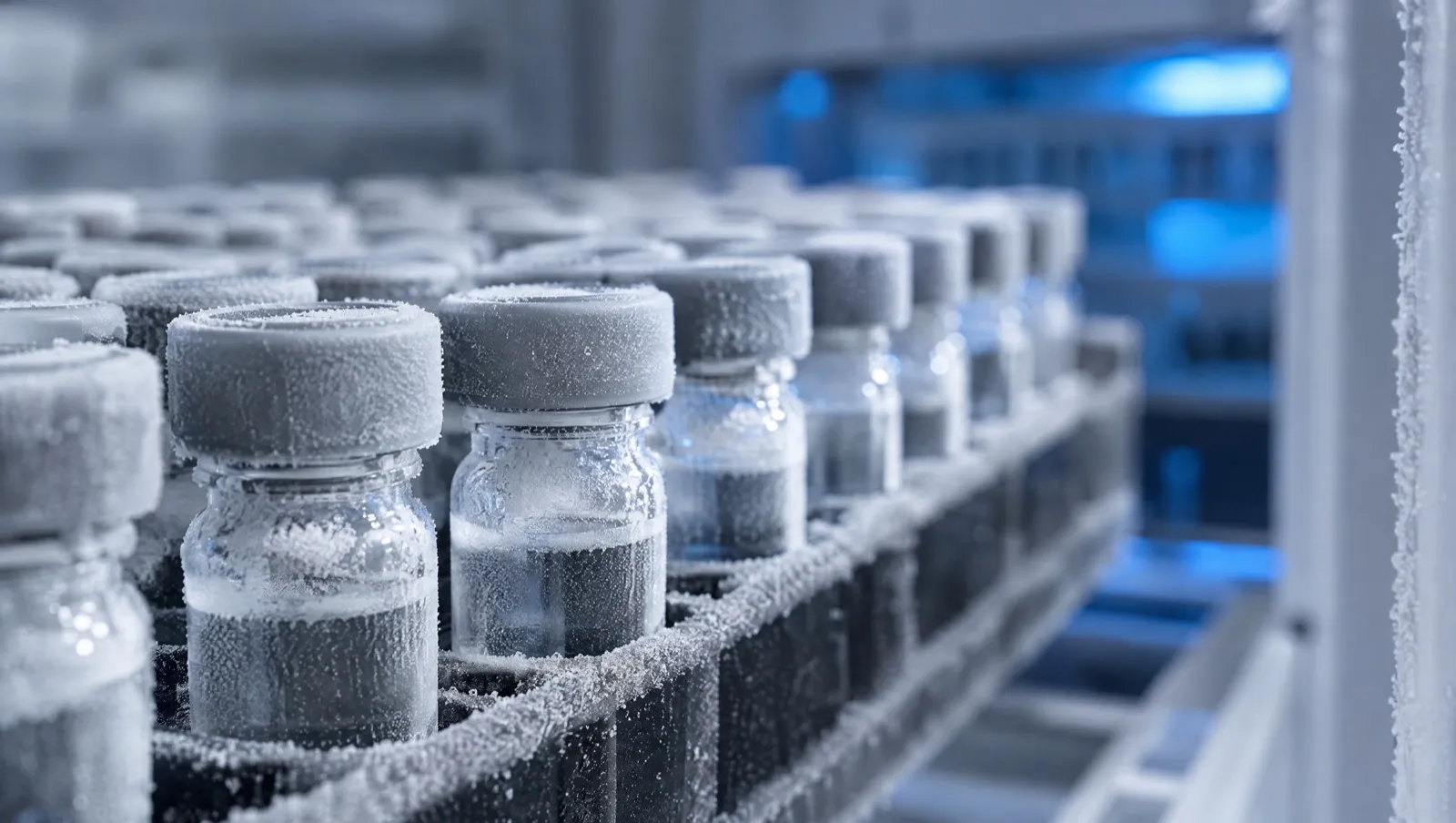
| Lyophilised, sealed, long term | −20 °C or colder | Dry, dark, in the original sealed vial |
| Lyophilised, sealed, short term | 2–8 °C | Acceptable for many peptides for short periods; check batch documentation |
| Lyophilised, in transit | Cool and protected | Short ambient exposure is usually tolerated by dry powder, but is not a storage condition |
| In solution | Single-use aliquots, frozen | Solutions are much less stable than dry powder; see below |
Always follow the storage conditions on the batch documentation where they differ.
Light
Light can drive photo-oxidation of tryptophan, tyrosine, phenylalanine and cysteine/cystine residues. Photodegradation can change a peptide’s primary structure and, for larger molecules, its folding [7]. Regulators handle light as a separate stress: ICH Q1B describes photostability testing using defined exposures of visible and near-ultraviolet light [11].
Store vials in their outer packaging or in amber containers, and avoid leaving material on a bench under strong light.
Freezing and thawing
Freezing a solution creates its own stresses. As water turns to ice, solutes and peptide are concentrated in the remaining liquid, buffer pH can shift, and large ice–liquid interfaces form. In a study of model proteins frozen without cryoprotectants, damage was attributed largely to surface-induced denaturation at the ice–liquid interface, with additional damage during thawing as ice recrystallised. Changes in buffer pH during freezing also reduced activity [8].
Each additional freeze and thaw adds another exposure to these stresses. That is the main reason peptide solutions are divided into single-use aliquots before freezing (see below).
Dry, sealed lyophilised powder is much less sensitive to freezing than a solution. The bigger risk for a frozen vial of powder is condensation when it is opened cold.
Peptides in solution
Once dissolved, a peptide is exposed to all of the water-dependent reactions at once, and stability drops sharply [1, 3]. Laboratory practice for solutions:
- Prepare only what is needed. Keep the remainder as dry powder where possible.
- Aliquot, then freeze. Divide stock solutions into single-use volumes so that each aliquot is thawed once.
- Choose pH with the sequence in mind. Asparagine deamidation is rapid at neutral pH, while Asp-Pro cleavage is favoured by acidic conditions [1, 5, 12].
- Minimise oxygen and metals for oxidation-prone sequences, for example by using high-purity water and clean containers [4].
- Label each aliquot with compound, batch number, concentration, solvent and date.
How degradation shows up analytically
| Change | HPLC | Mass spectrometry |
|---|---|---|
| Oxidation | New peak(s) near the main peak; main-peak purity falls | +16 Da per oxygen added |
| Deamidation | New, often closely eluting peak(s) | +0.98 Da; isoAsp needs separation to distinguish |
| Hydrolysis | New peaks for fragments | Lower-mass fragments |
| Aggregation | Loss of main-peak area; possible additional peaks | Dimers at about 2× mass (for covalent dimers) |
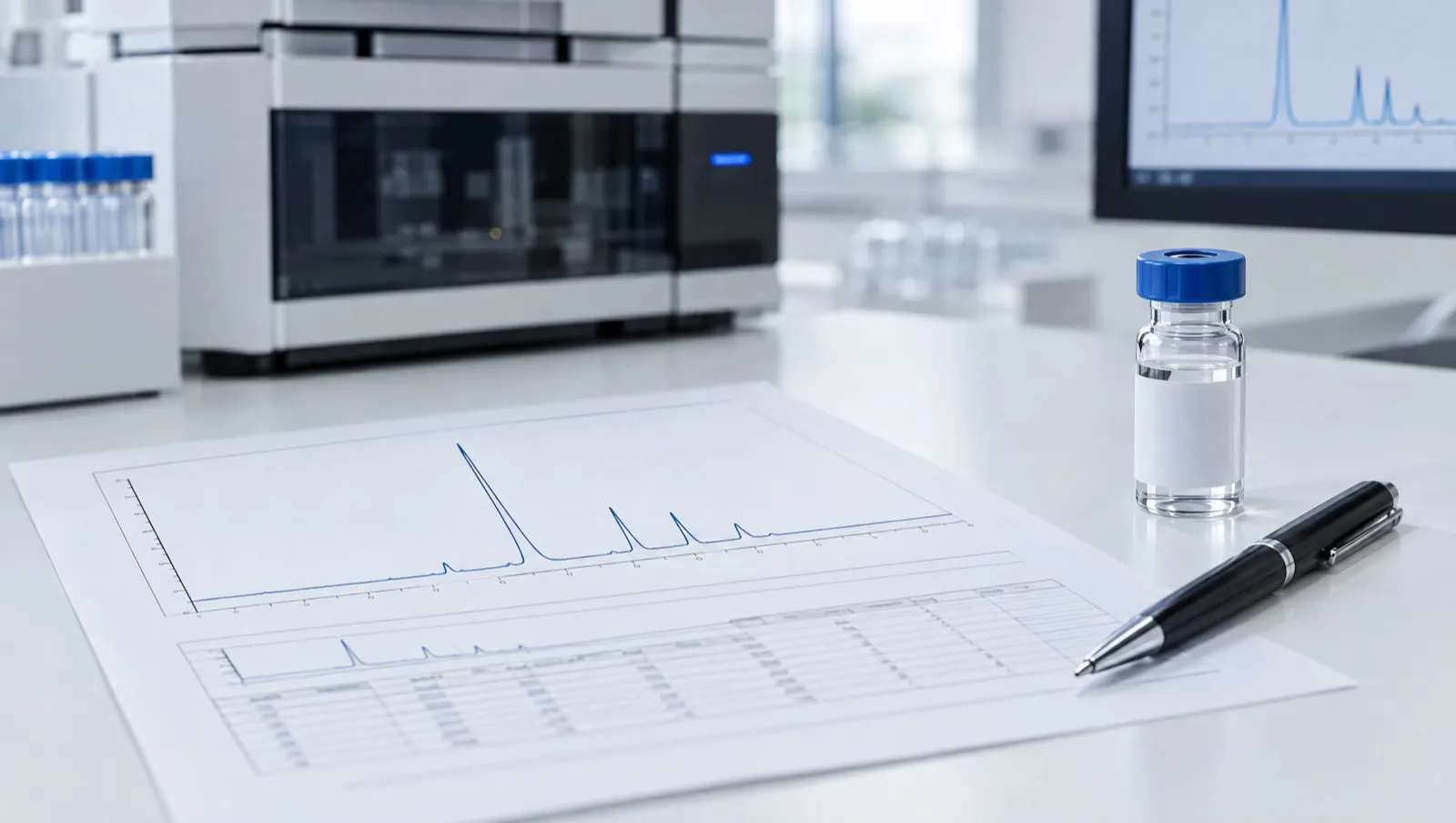
These are the same impurity classes that regulators and analysts look for in peptide medicines [9]. A Certificate of Analysis tested close to the time of supply is the best evidence of a batch’s current state. See How to Read a Peptide Certificate of Analysis and Common Impurities in Synthetic Peptides.
What this means in Australia
In Australia, storage and stability are addressed by the rules for making and supplying therapeutic goods.
- Peptides are therapeutic goods. Peptide products are regulated as therapeutic goods under the Therapeutic Goods Act 1989. Unapproved peptide products are not on the ARTG (the Australian Register of Therapeutic Goods) and have not been assessed by the TGA for safety, quality or effectiveness [14].
- Storage can count as manufacture. The TGA has said that manufacture includes any step in the process, including packaging for distribution and storing products before they are in their final state [15]. Manufacturers of therapeutic goods generally need a licence, and good manufacturing practice (GMP) applies [16].
- GMP covers every stage of manufacture. The TGA sums up GMP as: quality cannot be tested into a batch; it must be built in at every stage of manufacture [16]. Controlled storage is part of that.
- Scheduling is compound by compound. Some research peptides are named in the Poisons Standard. For example, BPC-157 and TB-500 are Schedule 4 (prescription-only) and Appendix D, clause 5 (possessing them without authority is illegal) [13].
- Labels don’t change status. The TGA has stated that a “research use only” disclaimer does not make supply lawful. It does not change a product’s regulatory status, permit importation, or remove advertising or supply obligations [14].
This is general information, not legal advice. Laws change; check the current Poisons Standard and TGA guidance.
Frequently asked questions
How should lyophilised peptides be stored?
Sealed, dry, dark and cold. General laboratory practice is −20 °C or colder for long-term storage of lyophilised peptides, with 2–8 °C acceptable for short periods for many sequences. The batch documentation takes precedence [1–3].
Do lyophilised peptides need to be refrigerated?
Cold storage slows degradation, so refrigeration or freezing is standard practice. Dry powder tolerates brief periods at room temperature much better than solutions do, but room temperature is not a storage condition [2, 3].
Why should a cold vial warm up before opening?
Opening a cold vial lets moisture from the air condense on the powder. Water speeds up deamidation and hydrolysis in the solid state [2, 6].
Why avoid repeated freezing and thawing?
Each freeze and thaw exposes the peptide to ice–liquid interfaces, concentrated solutes and possible pH shifts, which can denature or aggregate it [8]. Single-use aliquots avoid this.
Which amino acids make a peptide less stable?
Methionine, cysteine and tryptophan are prone to oxidation. Asparagine, especially when followed by glycine, is prone to deamidation. Aspartic acid bonds, especially Asp-Pro, are prone to cleavage [2, 4, 5, 12].
Does light damage peptides?
It can. Light can drive oxidation of tryptophan, tyrosine, phenylalanine and cysteine residues, so peptides are stored in the dark or in amber containers [7, 11].
References
- Manning MC, Chou DK, Murphy BM, Payne RW, Katayama DS. Stability of protein pharmaceuticals: an update. Pharm Res. 2010;27(4):544–575. doi:10.1007/s11095-009-0045-6. PMID: 20143256
- Lai MC, Topp EM. Solid-state chemical stability of proteins and peptides. J Pharm Sci. 1999;88(5):489–500. doi:10.1021/js980374e. PMID: 10229638
- Wang W. Lyophilization and development of solid protein pharmaceuticals. Int J Pharm. 2000;203(1–2):1–60. doi:10.1016/s0378-5173(00)00423-3. PMID: 10967427
- Li S, Schöneich C, Borchardt RT. Chemical instability of protein pharmaceuticals: mechanisms of oxidation and strategies for stabilization. Biotechnol Bioeng. 1995;48(5):490–500. doi:10.1002/bit.260480511. PMID: 18623513
- Geiger T, Clarke S. Deamidation, isomerization, and racemization at asparaginyl and aspartyl residues in peptides: succinimide-linked reactions that contribute to protein degradation. J Biol Chem. 1987;262(2):785–794. PMID: 3805008
- Ohtake S, Feng S, Shalaev E. Effect of water on the chemical stability of amorphous pharmaceuticals: 2. Deamidation of peptides and proteins. J Pharm Sci. 2018;107(1):42–56. doi:10.1016/j.xphs.2017.09.003. PMID: 28923320
- Kerwin BA, Remmele RL Jr. Protect from light: photodegradation and protein biologics. J Pharm Sci. 2007;96(6):1468–1479. doi:10.1002/jps.20815. PMID: 17230445
- Cao E, Chen Y, Cui Z, Foster PR. Effect of freezing and thawing rates on denaturation of proteins in aqueous solutions. Biotechnol Bioeng. 2003;82(6):684–690. doi:10.1002/bit.10612. PMID: 12673768
- D’Hondt M, Bracke N, Taevernier L, et al. Related impurities in peptide medicines. J Pharm Biomed Anal. 2014;101:2–30. doi:10.1016/j.jpba.2014.06.012. PMID: 25044089
- International Council for Harmonisation. ICH Q1A(R2): Stability testing of new drug substances and products. 2003. database.ich.org. Accessed 11 October 2026.
- International Council for Harmonisation. ICH Q1B: Stability testing: photostability testing of new drug substances and products. 1996. database.ich.org. Accessed 11 October 2026.
- Skribanek Z, Mező G, Mák M, Hudecz F. Mass spectrometric and chemical stability of the Asp-Pro bond in herpes simplex virus epitope peptides compared with X-Pro bonds of related sequences. J Pept Sci. 2002;8(8):398–406. doi:10.1002/psc.395. PMID: 12212803
- Therapeutic Goods (Poisons Standard—October 2026) Instrument 2026 (F2026L01327). Federal Register of Legislation. legislation.gov.au. Accessed 11 October 2026.
- Therapeutic Goods Administration. Understanding your responsibilities when importing, compounding and supplying unapproved peptide products. Safety advisory, 13 April 2026. tga.gov.au. Accessed 11 October 2026.
- Therapeutic Goods Administration. Unapproved peptide product promoters and suppliers are put on notice. Media release, 20 July 2026. tga.gov.au. Accessed 11 October 2026.
- Therapeutic Goods Administration. Good manufacturing practice (GMP); and Manufacturing. tga.gov.au; tga.gov.au. Accessed 11 October 2026.
Important information and disclaimer
General information only. This article is published for general educational and informational purposes. It summarises published scientific literature and public regulatory information as at the “last reviewed” date shown above. It is not medical, health, pharmaceutical, veterinary or legal advice, and it must not be relied on as a substitute for advice from a qualified professional about your circumstances.
Not for human or animal use. Nothing in this article recommends, endorses or describes the use of any substance in humans or animals. Findings from cell, animal or early human studies cannot be assumed to apply to people. The compounds discussed have not been evaluated by the Therapeutic Goods Administration (TGA) for safety, quality or efficacy unless the article expressly states otherwise. Any research materials offered by Iconic Peptides are supplied solely for in vitro and laboratory research.
No therapeutic claims. Iconic Peptides makes no claim that any product treats, cures, prevents, alleviates or diagnoses any disease, condition or symptom. References to published studies, clinical trials or medicines approved by regulators are factual descriptions of the scientific and regulatory record. They are not representations about any product we supply.
Regulatory status. Many peptides are scheduled substances under the Poisons Standard. Some are prescription-only (Schedule 4), and some may not be possessed without authority (Appendix D). The TGA has stated that a “research use only” label does not make supply lawful, change a product’s regulatory status, or remove advertising or supply obligations. State and territory laws may also apply. You are responsible for knowing and complying with all laws that apply to you. Regulatory information in this article may change after the review date.
Accuracy and third-party sources. We take care to cite and verify every source, but we do not warrant that this article is complete, current or error-free. Citing a study or organisation does not mean that its authors or that organisation endorse Iconic Peptides.
Limitation of liability. To the maximum extent permitted by law, Iconic Peptides, its owners, employees and contributors exclude all liability for any loss, damage, injury or expense, whether direct, indirect or consequential, arising from use of or reliance on this article or any misuse of any product. Nothing in this disclaimer excludes, restricts or modifies any right or remedy under the Australian Consumer Law that cannot lawfully be excluded.
Age restriction. This website is intended for adults aged 18 and over.