In plain English
Metals and similar elements can get into almost anything made in a factory. They can come from a catalyst used in a chemical step, from processing equipment, from the glass or rubber of a vial, or from the raw materials themselves [1].
These traces are called elemental impurities. Some, such as lead and mercury, are toxic at very low levels. Traces of others can also affect quality, for example by catalysing the degradation of the product [1].
The international rulebook is ICH Q3D, written by the International Council for Harmonisation (ICH, the organisation that writes shared technical rules for medicine regulators) [1]. Instead of testing everything for everything, it asks the manufacturer to work out which elements could be present, and then to control those.
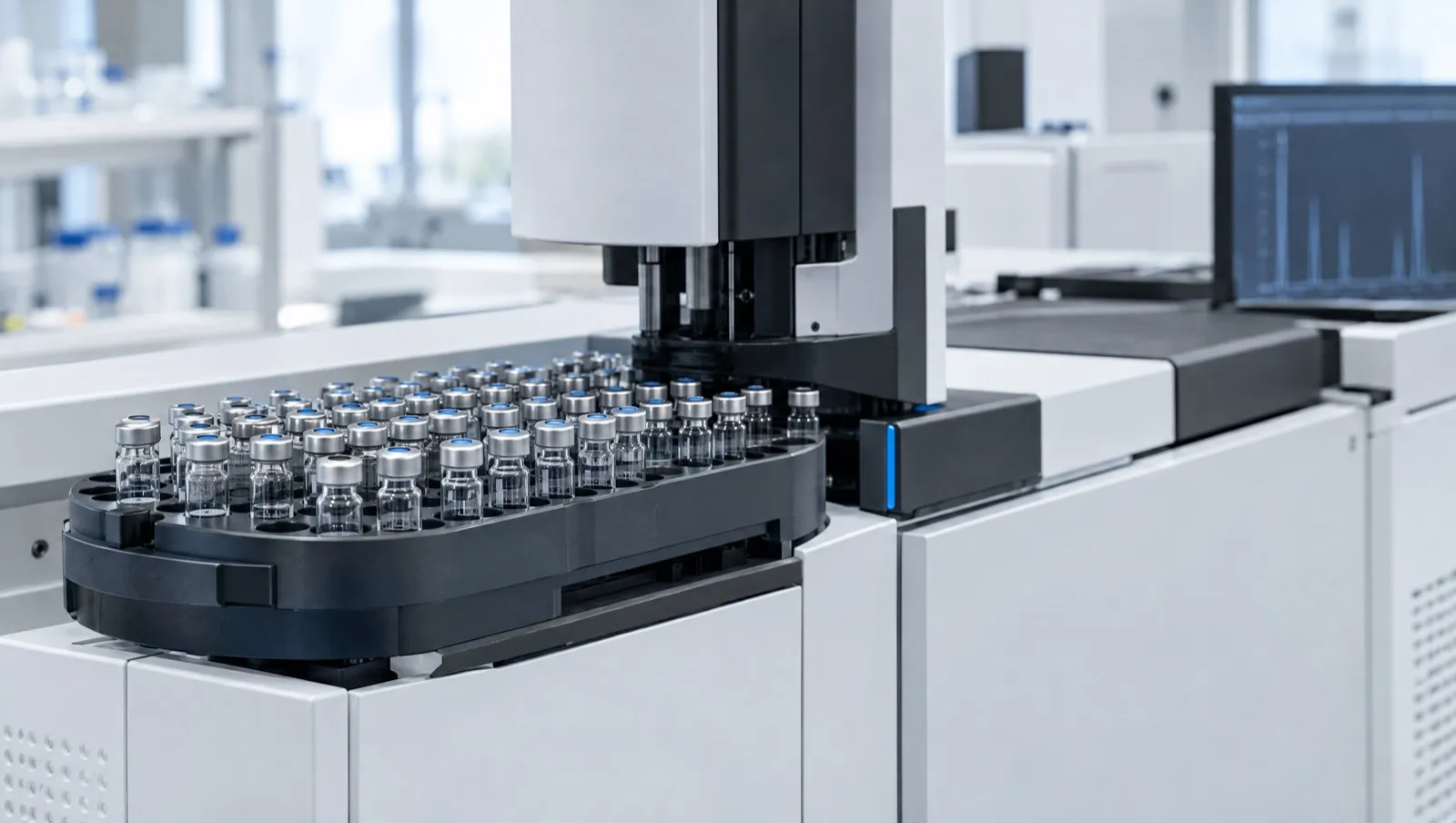
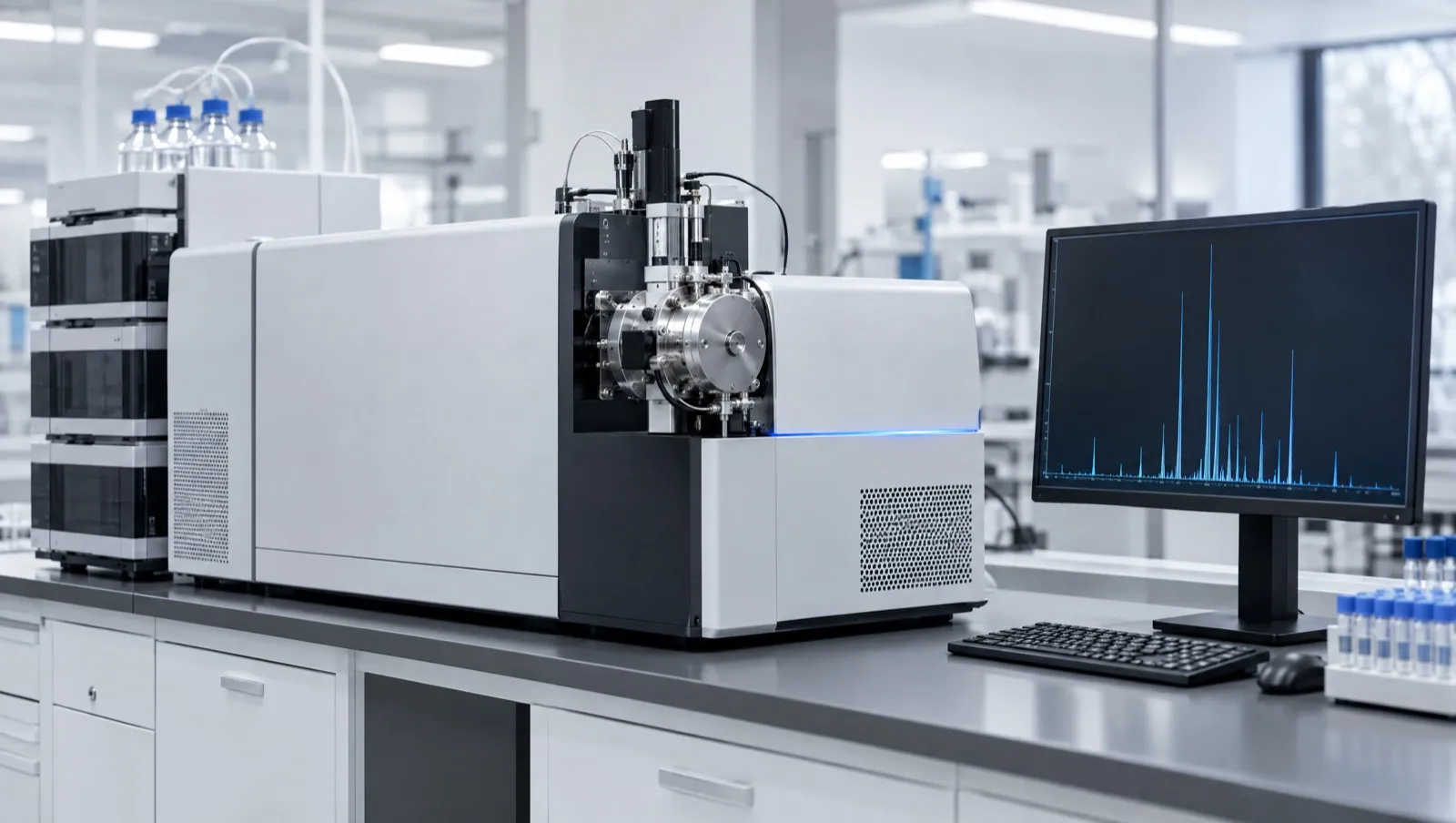
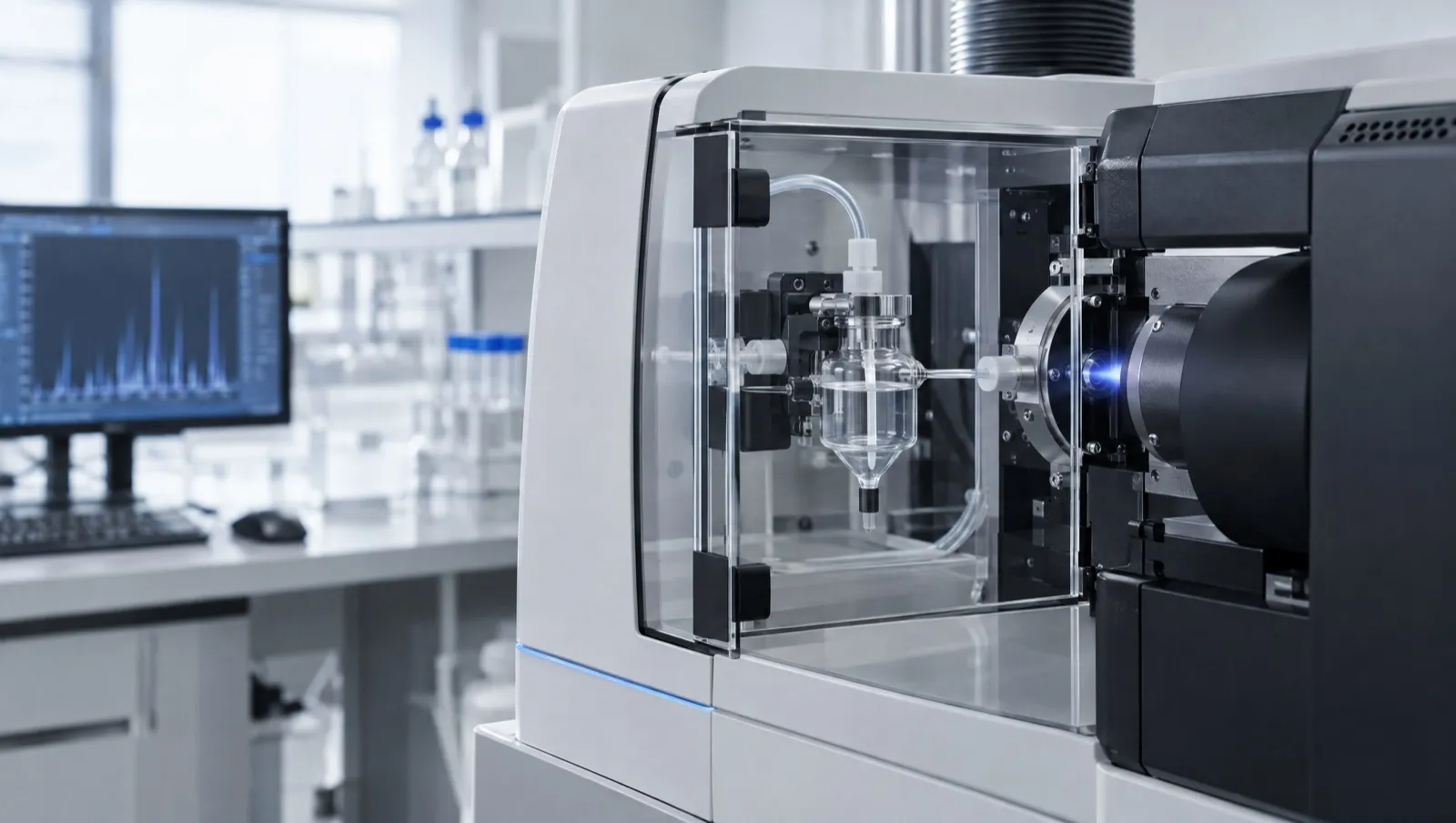
The usual measuring tool is ICP-MS (inductively coupled plasma mass spectrometry). It breaks a sample down into charged atoms in a plasma and counts each element by its mass [11].
The short version
- Elemental impurities are traces of elements from catalysts, equipment, containers and materials [1].
- ICH Q3D covers 24 elements in Classes 1, 2A, 2B and 3 [1].
- Synthetic polypeptides are within the scope of Q3D [1].
- The old non-specific “heavy metals” test was withdrawn from the USP in 2018 [6].
- ICP-MS and ICP-OES measure each element separately [12, 13].
What are elemental impurities?
ICH Q3D describes elemental impurities in finished products as either residual catalysts that were added on purpose during synthesis, or impurities picked up along the way, for example through contact with processing equipment or container closures, or because they were present in a component [1]. Because they add nothing to the product, their levels should be controlled within acceptable limits [1].
The guideline has three parts: an evaluation of toxicity data for each element, a PDE for each element of toxicological concern, and a risk-based approach to control [1]. It was first finalised in November 2014. The current version, Q3D(R2), was adopted by ICH on 26 April 2022; it corrected the PDEs for gold, silver and nickel and added an appendix on further product types [1].
Its scope explicitly includes products containing purified proteins and polypeptides, their derivatives and conjugates, and products containing synthetically produced polypeptides [1].
From “heavy metals” to element-specific testing
For decades, pharmacopoeias used a single non-specific test for “heavy metals”. Those methods were found inadequate for elemental specificity and accurate measurement, and the United States Pharmacopeia (USP) withdrew its <231> Heavy Metals procedure as of January 2018. It was replaced by two chapters consistent with Q3D: <232> Elemental Impurities – Limits and <233> Elemental Impurities – Procedures [6]. Laboratories now report a number for each named element rather than one total.
Q3D itself asks that the test be specific for each elemental impurity identified for control, unless otherwise justified, and that pharmacopoeial or suitable alternative procedures be used [1].
The Q3D element classes
Q3D places elements into classes by toxicity and by how likely they are to turn up in a product [1]:
| Class | Elements | Why they are in this class |
|---|---|---|
| Class 1 | Arsenic (As), cadmium (Cd), mercury (Hg), lead (Pb) | Human toxicants with little or no use in pharmaceutical manufacture; usually arrive in materials such as mined excipients. Always evaluated in the risk assessment [1]. |
| Class 2A | Cobalt (Co), nickel (Ni), vanadium (V) | Relatively high probability of occurring in a product; always evaluated [1]. |
| Class 2B | Silver (Ag), gold (Au), iridium (Ir), osmium (Os), palladium (Pd), platinum (Pt), rhodium (Rh), ruthenium (Ru), selenium (Se), thallium (Tl) | Low natural abundance; can be left out of the risk assessment unless deliberately added during manufacture [1]. |
| Class 3 | Barium (Ba), chromium (Cr), copper (Cu), lithium (Li), molybdenum (Mo), antimony (Sb), tin (Sn) | Relatively low toxicity for some product types (PDEs generally above 500 µg/day), but they need consideration for others [1]. |
Other elements, such as aluminium, iron, manganese, tungsten and zinc, have no Q3D PDE because of low inherent toxicity or differences between regional rules. Q3D notes they may still matter for quality, giving the example of tungsten impurities in protein products [1].
PDEs, concentration limits and the 30% control threshold
A PDE is the maximum permitted quantity of an element, in micrograms per day, in the maximum daily amount of a finished product [1]. Q3D sets separate PDEs for different kinds of finished medicine, depending on how the medicine is given [1]. A few examples from the guideline’s table show the spread [1]:
| Element | Class | PDE range across product types (µg/day) | Option 1 concentration range (µg/g) |
|---|---|---|---|
| Lead | 1 | 5 in each main category | 0.5 in each main category |
| Cadmium | 1 | 2–5 | 0.2–0.5 |
| Arsenic | 1 | 2–15 | 0.2–1.5 |
| Nickel | 2A | 6–200 | 0.6–20 |
| Palladium | 2B | 1–100 | 0.1–10 |
| Copper | 3 | 30–3,000 | 3–300 |
Turning a PDE into a concentration. Q3D’s Option 1 assumes no more than 10 g of finished product per day, and that each identified element is present in every component [1]:
Concentration (µg/g) = PDE (µg/day) ÷ 10 (g/day)
So lead, with a PDE of 5 µg/day, has an Option 1 concentration of 0.5 µg/g. Other options use the actual maximum daily amount of the product (Option 2a), set limits component by component (Option 2b), or test the finished product directly (Option 3) [1].
The control threshold. Q3D defines a control threshold as 30% of the PDE. If the total level of an element from all sources is expected to be consistently below this threshold, no additional controls are required, provided the data have been properly assessed. If not, controls must make sure the PDE is not exceeded [1]. For lead under Option 1, 30% of 0.5 µg/g is 0.15 µg/g.
Note: 1 µg/g is the same as 1 ppm.
Where elements come from in peptide manufacture
Q3D lists four broad sources: elements added on purpose (such as catalysts), elements naturally present in materials and water, elements from manufacturing equipment, and elements leached from container closure systems [1]. Each has a peptide-specific angle.
Catalysts and reagents. Palladium is one example. Alloc and allyl ester protecting groups, used in solid-phase synthesis for on-resin cyclisation, are removed with the palladium complex Pd(PPh₃)₄ and phenylsilane [9]. Other palladium complexes are used for selective cysteine deprotection in chemical protein synthesis [10]. European guidance for synthetic peptide medicines lists elemental impurities among possible specification tests, “e.g. in case of use of metal catalysts”, and among the attributes that may be specified for amino acid starting materials [2]. See How Peptides Are Made.
Equipment. Q3D expects a low contribution from manufacturing equipment when process knowledge, equipment selection and qualification, and GMP controls are in place. It notes that processes used to make a drug substance are usually more aggressive than later formulation steps in their potential to leach elements from equipment [1].
Containers and closures. A literature review found that elements are present in packaging and manufacturing materials, either as additives or from their production, but that usually only a very small fraction can be leached under relevant conditions [7]. Studies have measured extractable elements from rubber elastomers [6] and elemental leachables from one type of glass vial, which posed no safety concern in that study [4].
Excipients. An industry database held 26,723 elemental results for 201 excipients by 2018, and found levels generally low [5]. It is now used as one line of evidence in Q3D risk assessments [5, 8]. A lyophilised research peptide supplied without excipients removes that source, but not the others.
How a Q3D risk assessment works
Q3D describes the risk assessment in three steps [1]:
- Identify known and potential sources of elemental impurities.
- Evaluate each potential impurity by comparing its observed or predicted level with the PDE.
- Summarise and document the assessment, and decide whether built-in controls are enough or more are needed.
The evidence can include prior knowledge, published literature, data from similar processes, supplier information, and testing of components or the finished product [1]. Without other justification, level and variability can be shown with data from three representative production-scale lots or six pilot-scale lots [1]. If the process later changes (a new synthetic route, supplier, piece of equipment or container), the assessment should be re-evaluated [1].
The approach is not “test everything”. Testing is expected only where the risk assessment shows it is the appropriate control [1].
How ICP-MS and ICP-OES measure elements
Both techniques use an inductively coupled plasma, which breaks the sample down into atoms and ions [11].
- ICP-OES (optical emission spectrometry) measures the light each element emits.
- ICP-MS (mass spectrometry) separates the ions by mass-to-charge ratio and counts them, which suits (ultra)trace work. Some signals overlap with “polyatomic” ions formed from the plasma gas and sample matrix. Collision and reaction cells, and tandem ICP-MS/MS, are used to remove these interferences [11].
Sample preparation. Samples are commonly digested into solution first. Microwave-assisted acid digestion followed by ICP-MS was used, for example, to measure palladium in a model API intermediate [12]. Direct analysis of solids by laser ablation ICP-MS has also been validated for screening against USP and Q3D requirements [13].
Uncertainty near the limit. A result just below a limit is not as reassuring as one far below it. A 2020 study of palladium by ICP-MS showed how measurement uncertainty, estimated from validation data, gives the risk of wrongly accepting a material whose true level is close to the limit [12]. See Analytical Method Validation.
Speciation. Q3D defines speciation as the distribution of an element among chemical forms, such as oxidation state or complex. Total element levels are normally enough to compare with the PDE; speciation data are optional and can justify different limits [1].
Reading an elemental-impurities result: a worked example
The figures below are illustrative, for one batch of a synthetic peptide made with a palladium-mediated deprotection step, tested by ICP-MS after microwave digestion.
| Element | Class | Result (µg/g) | Option 1 limit (µg/g) | 30% control threshold (µg/g) |
|---|---|---|---|---|
| Lead | 1 | < 0.05 | 0.5 | 0.15 |
| Arsenic | 1 | < 0.05 | 0.2–1.5 | 0.06–0.45 |
| Cadmium | 1 | < 0.02 | 0.2–0.5 | 0.06–0.15 |
| Mercury | 1 | < 0.05 | 0.1–3 | 0.03–0.9 |
| Nickel | 2A | 0.4 | 0.6–20 | 0.18–6 |
| Palladium | 2B | 2.4 | 0.1–10 | 0.03–3 |
How to read it:
- Lead is unambiguous. Its limit is the same in each main product category, and < 0.05 µg/g is well under the 0.15 µg/g threshold.
- Palladium depends on the product category. At 2.4 µg/g it sits below the least strict Option 1 value of 10 µg/g but well above the strictest, 0.1 µg/g. A certificate that says only “pass” for palladium, without naming the limit used, cannot be interpreted.
- Detection limits matter. For mercury, a reporting limit of < 0.05 µg/g sits above the strictest 30% threshold (0.03 µg/g), so it could not show that level was met.
- Palladium belongs on the list. Class 2B elements are optional in Q3D unless intentionally added; here palladium was used in synthesis, so it must be assessed [1].
In a peptide mass balance, inorganic elements are usually a tiny term. A metrology institute’s purity assignment of a synthetic peptide measured inorganic elements by ICP-MS alongside water, counter-ions and volatile organics [3]. See Peptide Impurities and Residual Solvents in Synthetic Peptides.
What this means in Australia
- Adopted guidance. The TGA adopted ICH Q3D(R2) on 26 June 2024, with no Australian annotations [14].
- Scope. Q3D applies to new finished medicines and new medicines containing existing drug substances. It does not apply to products during the clinical research stages of development [1]. For a research chemical it is a benchmark for reading a certificate, not a legal requirement.
- Research-use labels. The TGA has stated that a “research use only” disclaimer does not make supply lawful, change a product’s regulatory status, permit importation, or remove advertising or supply obligations [15]. An elemental-impurities result describes one batch; it does not change any of this.
This is general information, not legal advice. Laws change; check the current Poisons Standard and TGA guidance.
Frequently asked questions
What are elemental impurities?
Traces of elements in a product that come from catalysts, materials, manufacturing equipment or container closures, and that add nothing to the product [1].
What are the four ICH Q3D element classes?
Class 1 (As, Cd, Hg, Pb), Class 2A (Co, Ni, V), Class 2B (ten elements including palladium and platinum) and Class 3 (seven elements including copper and chromium) [1].
What is the 30% control threshold?
A level equal to 30% of an element’s PDE. If total levels are consistently below it, Q3D does not require additional controls [1].
Does ICH Q3D apply to peptides?
Its scope explicitly includes products containing synthetically produced polypeptides [1].
Why did ICP-MS replace the heavy metals test?
The old test could not identify or accurately measure individual elements. USP withdrew it in 2018 and replaced it with element-specific chapters <232> and <233> [6].
References
- International Council for Harmonisation. ICH Q3D(R2): Guideline for elemental impurities. Adopted 26 April 2022. database.ich.org. Accessed 25 October 2026.
- European Medicines Agency. Guideline on the development and manufacture of synthetic peptides. EMA/CHMP/CVMP/QWP/367182/2025. Adopted 4 December 2025; effective 1 June 2026. ema.europa.eu. Accessed 25 October 2026.
- Wang S, Wu P, Li M, et al. Mass balance method for SI-traceable purity assignment of synthetic oxytocin. J Pharm Biomed Anal. 2022;207:114401. doi:10.1016/j.jpba.2021.114401. PMID: 34656934
- Breckenridge L, Oni Y, Evans C, et al. Determination of ICH-Q3D elemental impurity leachables in glass vials by inductively coupled plasma mass spectrometry. PDA J Pharm Sci Technol. 2023;77(3):197–210. doi:10.5731/pdajpst.2021.012655. PMID: 36241213
- Boetzel R, Ceszlak A, Day C, et al. An elemental impurities excipient database: a viable tool for ICH Q3D drug product risk assessment. J Pharm Sci. 2018;107(9):2335–2340. doi:10.1016/j.xphs.2018.04.009. PMID: 29679706
- Paskiet D, Kraft C, Tullo E, et al. Assessment of extractable elements from elastomers. PDA J Pharm Sci Technol. 2019;73(1):83–91. doi:10.5731/pdajpst.2017.008193. PMID: 30030347
- Jenke DR, Stults CL, Paskiet DM, et al. Materials in manufacturing and packaging systems as sources of elemental impurities in packaged drug products: a literature review. PDA J Pharm Sci Technol. 2015;69(1):1–48. doi:10.5731/pdajpst.2015.01005. PMID: 25691713
- Torres S, Boetzel R, Gatimu E, et al. ICH Q3D drug product elemental risk assessment: the use of an elemental impurities excipients database. J Pharm Sci. 2022;111(5):1421–1428. doi:10.1016/j.xphs.2021.10.012. PMID: 34673095
- Wilson KR, Sedberry S, Pescatore R, et al. Microwave-assisted cleavage of Alloc and allyl ester protecting groups in solid phase peptide synthesis. J Pept Sci. 2016;22(10):622–627. doi:10.1002/psc.2910. PMID: 27501347
- Kamo N, Hayashi G, Okamoto A. Chemical synthesis of Cys-containing protein via chemoselective deprotection with different palladium complexes. Org Lett. 2019;21(20):8378–8382. doi:10.1021/acs.orglett.9b03152. PMID: 31560553
- Balcaen L, Bolea-Fernandez E, Resano M, Vanhaecke F. Inductively coupled plasma – tandem mass spectrometry (ICP-MS/MS): a powerful and universal tool for the interference-free determination of (ultra)trace elements – a tutorial review. Anal Chim Acta. 2015;894:7–19. doi:10.1016/j.aca.2015.08.053. PMID: 26423624
- Milde D, Pluháček T, Kuba M, et al. Measurement uncertainty evaluation from correlated validation data: determination of elemental impurities in pharmaceutical products by ICP-MS. Talanta. 2020;220:121386. doi:10.1016/j.talanta.2020.121386. PMID: 32928409
- Pluháček T, Ručka M, Maier V. A direct LA-ICP-MS screening of elemental impurities in pharmaceutical products in compliance with USP and ICH-Q3D. Anal Chim Acta. 2019;1078:1–7. doi:10.1016/j.aca.2019.06.004. PMID: 31358206
- Therapeutic Goods Administration. ICH guideline Q3D (R2) on elemental impurities. International scientific guidelines adopted in Australia. tga.gov.au. Accessed 25 October 2026.
- Therapeutic Goods Administration. Understanding your responsibilities when importing, compounding and supplying unapproved peptide products. Safety advisory, 13 April 2026. tga.gov.au. Accessed 25 October 2026.